10 Romantic Things to Do in Budapest on Valentine’s Day 2024


Valentine’s Day is just around the corner, and there’s no better place to celebrate love than in the enchanting city of Budapest. Whether you’re an expat looking for last-minute plans or a visitor seeking a romantic getaway, we’ve curated a list of 10 romantic things to do in Budapest to make your Valentine’s Day unforgettable. From iconic landmarks to hidden gems, let’s explore the romantic and quirky side of the Hungarian capital.

1. Free Budapest Tours: Hand-in-Hand Exploration

Take your sweetheart on a stroll through the heart of Budapest with our daily free tours, passing by major sights like St. Stephen’s Basilica, the Chain Bridge, Hungarian Parliament, Gresham Palace, Buda Castle Hill with Matthias Church, and Fisherman’s Bastion.

Capture moments at these top attractions and ask your tour guide to snap a photo of you two, creating memories to last a lifetime.

2. Floral Delights: Bouquet from Budapest’s Blooms

Visit a local flower shop and pick a beautiful bouquet for your loved one. Gifting flowers is a classic romantic gesture in Hungary, with red roses particularly associated with love and romance.

Discover the charm of Budapest’s flowers, creating a fragrant and romantic atmosphere. If you ask me walking amongst beautiful living flowers is one of the most romantic things to do in Budapest or anywhere else matter of fact. So if you are not a big fan of dead flowers then see some unique living ones as a date on Margaret Island or in the Botanical Garden of ELTE.
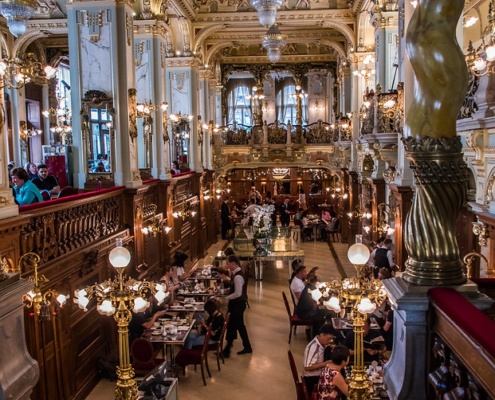
3. Café House Indulgence: Sweet Treats for Two

Satisfy your sweet tooth at a Café House offering Valentine’s Day menus. Hungarian cuisine is rich and flavorful, making a romantic meal at a cozy restaurant or café a wonderful experience.

Dive into the world of Hungarian pastries, from sponge cakes to sweet cottage cheese strudels or unique kürtőskalács (Chimney Cake) variations. Note: Pastry shops don’t sell them, but plenty of kürtőskalács vendors exist in Budapest’s downtown, including the Jewish District.

Our favorite most romantic coffeehouses are of course the historical ones, like the Central Café, New York Café, or the Gerbeaud Café.

4. Rooftop Romance: Cocktails with a View

Sip on cocktails at Budapest’s best rooftop bars, enjoying stunning cityscapes.

Revel in the romance of elevated views, creating a memorable atmosphere.  If you really want to impress your other half we recommend checking out the most elegant sky bars, like the Leo Rooftop, and the White Raven Skybar.
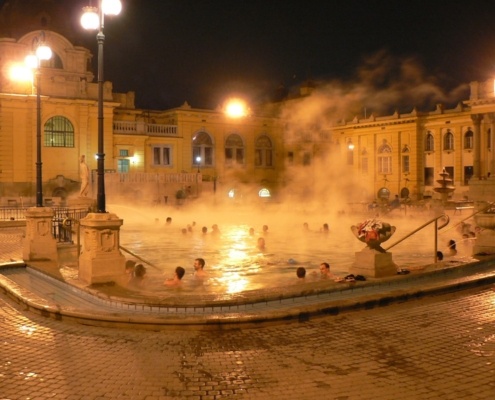
 

thermal baths in Budapest_romantic things to do in Budapest

5. Thermal Baths Experience: Relaxing Together

Explore the enchanting Széchenyi Baths, the largest natural hot spring bath in Europe.

Indulge in the soothing waters and treat yourselves to spa treatments in a romantic setting. For a more intimate environment we recommend discovering the smaller Turkish bathhouses, for example, the Rudas Bath or Veli Bej can be great if you want to avoid the crowds.

6. Danube Delight: Night Boat Tour with Champagne

Take a magical night boat tour on the Danube, sipping champagne under the stars.

Enjoy the illuminated cityscape and the charm of Budapest at night. Make sure to book your tour around sunset for the most romantic experience.

7. Budapest Eye: Panoramic Views of Love

Experience a bit of a romance cliché with a trip around the Budapest Eye.

Marvel at unmatched views of the city center from Europe’s largest Ferris wheel.
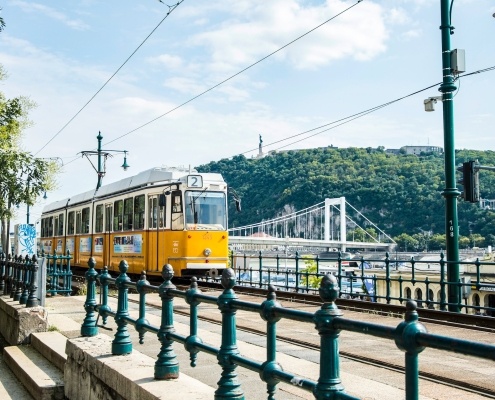
sightseeing public tram in Budapest - Budapest on a budget

sightseeing public tram in Budapest – Budapest on a budget

8. Tramline Tranquility: Panoramic Danube Ride

Embark on a panoramic tramline ride along the Danube for breathtaking views. Take Tram N.2 on the Pest side of the river Danube, or Tram 41 and 19 on the Buda side.

Enjoy the beauty of Budapest’s riverside landmarks in a unique and romantic way.

9. Attend a Concert or Opera

Experience the cultural scene by attending a classical concert or opera performance together.

10.  The nr 1 option amongst the romantic things to do in Budapest: The Proposal!

Make Your Love Story Unforgettable

Propose at one of Budapest’s most romantic locations, such as Fisherman’s Bastion, Vajdahunyad Castle, or Liberty Bridge.

Choose a backdrop that echoes the charm and history of this magical city. If you want to make this special moment less stressful, you can ask our friends to set up a tailor-made proposal experience for you.


As you can see there is a myriad of romantic things to do in Budapest, making it the perfect destination for Valentine’s Day. Whether you prefer a classic walking tour, an intimate dinner, or a proposal in a fairytale setting, the Hungarian capital has something special for every couple. So, grab your partner’s hand and explore the romantic side of Budapest this Valentine’s Day – because sometimes, the simplest moments are the most timeless.

Just in case you are wondering how romantic the Hungarians are, please read the following short vocabulary:

Besides The Romantic Things to do in Budapest, The most Romantic Phrases in Hungarian

  • I love you – Szeretlek.
  • You are my everything – Te vagy a mindenem.
  • You are beautiful – Gyönyörű vagy.
  • I miss you – Hiányzol.
  • You make me happy – Boldoggá teszel.
  • I can’t stop thinking about you – Nem tudok nem rád gondolni.
  • You are my soulmate – Te vagy a lelki társam.

These phrases are sure to add a touch of romance to your communication in Hungarian!


The source for the cover picture:

<a href=”https://www.freepik.com/free-photo/lovely-couple-love-embracing-standing-alley_2913943.htm#query=romantic%20budapest&position=4&from_view=search&track=ais&uuid=de185929-8f4b-40d6-a682-45ca850cf465″>Image by freepic.diller</a> on Freepi
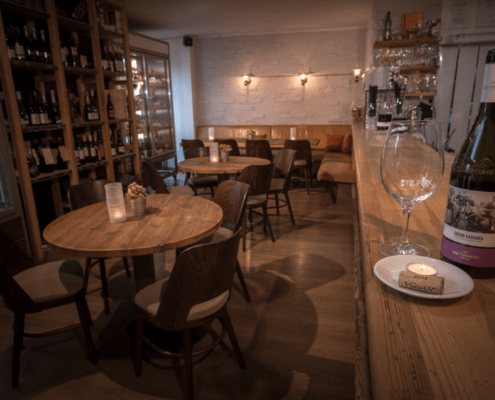
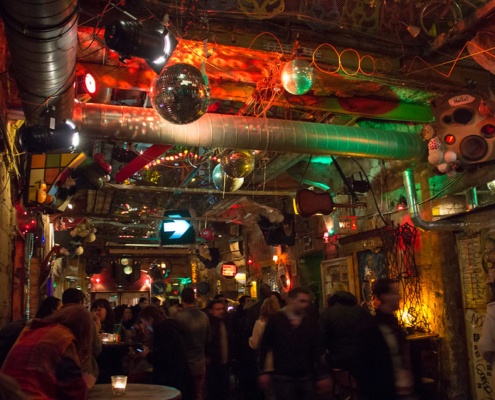
Mature Budapest Nightlife: Sophisticated Bars for 45+ in Budapest

Welcome to Budapest, where the night comes alive with sophistication and a dash of humor. If you’re 45 and beyond, we’ve curated the ultimate guide to Budapest Nightlife tailored just for you. It’s all about sipping fine wine, enjoying smooth jazz, experiencing night baths, and cruising on the Danube with a hot drink while reveling in the city’s rich cultural tapestry. 

Join us on a journey through Budapest’s after-hours charm, where every moment is a celebration of the finer things in life.  However, it’s worth noting that venues designed specifically for this age group, where you can unwind in a cultured manner with your age buddies, are not very common in Budapest.

So what to look for?

Wine Bars

Fortunately, wine bars in Budapest are not concentrated in a specific location. Whether near the historical buildings of the city center, amidst the buzz of the Jewish District, or strolling along the Grand Boulevard, you can find great spots on both the inner and outer parts of the Buda side of the Danube. A wine bar differs from a traditional hospitality venue in that everything revolves around wine here. The selection is carefully curated, shaping not only the menu but often also the layout of the interior, with wine as the guiding principle. This creates a unique atmosphere, distinctly characteristic of each wine bar. Local wine bars showcase specialties from every region of Hungary and, upon request, bring flavors from France, Italy, Spain, or even Australia. As accompaniments, you can choose from traditional options like cheese and meat platters, taste olives, or, for those with a sweet tooth, find a perfect place where macarons and chocolates accompany the wine tasting. If you want to hang out amongst locals in one of our favorite neighborhoods in Buda, we can recommend the Palack Wine Bar, but if you want to stay in the heart of the town in an elegant bistro environment it is worth trying the Marlou Bistro.

Ruin Bars 

After World War II and the Cold War years, numerous buildings in Budapest’s old Jewish Quarter were left in disrepair. In the early 2000s, several enterprising individuals took on the task of transforming these rundown structures and courtyards into unique underground bars and pubs, ultimately earning them the moniker “ruin bars,” known locally as “romkocsma” in Hungarian. These bars are characterized by their eclectic and quirky decor, featuring mismatched furniture, vintage items, art installations, and graffiti. The majority of ruin bars are concentrated in the historic Jewish Quarter of Budapest, particularly in District VII. Szimpla Kert, one of the pioneering ruin bars, is often considered the flagship and is located in this district. 


Plenty of tourists, including those with gray hair, visit Szimpla Kert:-) Arrive early evening to avoid the crowd. Free Entry. 

Jazz Clubs

Intimate and cozy clubs are favored venues for jazz enthusiasts, serving as the bastions of a direct connection between musicians and the audience. Typically falling within the hospitality sector, these establishments feature live music with varying frequency, ranging from daily performances to several times a week. Those interested can find music to suit their taste every day of the week. 

For updated clubs in Budapest with Jazz music, please refer to Hunjazzfed.com

Winter Cruise on the Danube

Seeing the river from different sites on Buda and Pest sides is beautiful, but being on it at night is special. Take a river cruise with a hot drink. Over the centuries, this river and its banks have witnessed a rich tapestry of history, marked by bloodshed and war. While ideal for a daytime stroll, the freezing nights call for a cozier experience on a boat. 

For weekend afternoon Danube cruises please refer to Mahart Passnave. If you would like not only to cruise for an hour but also discover the sights of the Danube, you can listen to our 11-language wifi audio guide on your own phone.


thermal baths in Budapest

Thermal Baths at Night

A Friday night swim at Rudas thermal baths is an incredible experience. Imagine soaking in warm water beneath a 500-year-old Turkish dome, lit by the moon through skylights—it’s unlike anything else. The best part is the old thermal pools; while the new “wellness” section is just different temperature jacuzzis. The swimming pool is in the middle, with wellness pools and old thermal baths on opposite sides. Enjoy a sip of champagne in the rooftop Danube-view pool. Bring a refillable water bottle, and there are fountains for good water. Wearing flip-flops for walking around is mandatory. Bring towels and bathing suits. You’ll receive a wristband with a microchip for your cabin; it’s safe and secure. Relax and enjoy the thermal oasis on Fridays from 10 pm to 3 am. The entry fee is 12,300 HUF, and online tickets are available only.


Join our daily Free Budapest Walk and Free Buda Castle Hill Tour

But wait, there’s more! Before we release you into the wilds of Budapest, our fabulous tour guides will give you the lowdown on daytime and nighttime adventures, sprinkled with some extra handy tips for conquering the city.

Now, go out and savor your Budapest Nightlife experience—where age is just a number, and the city rolls out the red carpet for those who know how to appreciate the finer things! 

Cheers to a night of revelry and unforgettable memories.

What to Expect When You Travel to Budapest in 2024

Budapest, the dazzling capital and Hungary’s pièce de résistance, gracefully sprawls along the mighty Danube River. Picture this: a city divided by the Danube, with Buda perched high on terraces and hills, playing the refined older sibling, while Pest flaunts its considerable expanse on a flat and featureless sand plain. It’s a tale of two sides, each with its own personality, but together they form the irresistible charm that is Budapest, but what does all of this mean in modern times? Let’s see what to expect when you travel to Budapest in 2024:


Population:

Budapest is a bustling metropolis, home to approximately 1.774 million people. Magyars, or Hungarians, dominate the demographic landscape as the largest ethnic group.


Language:

Hungarian, or Magyar, takes center stage as the official language, adding a touch of linguistic flair to the city. Fun fact: Hungarian belongs to the Finno-Ugrian group of the Uralic language family, a linguistic sibling to Finnish and Estonian. Don’t be surprised by the 44 letters in their alphabet – it’s a linguistic rollercoaster!

Regarding foreign languages, German and English share the spotlight, spoken by 13% of Budapest’s residents. So, brush up on your greetings and pleasantries in multiple tongues!


Currency:

Hold onto your Forints! Budapest’s official currency is the Hungarian Forint (HUF), and while Euros, Dollars, or Sterling might occasionally be accepted, the exchange rate might not be your best friend. Credit cards are like VIP passes, but not every joint rolls out the red carpet. 

Pro tip: Exchange your money wisely, and avoid the Orange ‘InterChange’ spots – they’re like the distant relatives at a family reunion.


Cuisine:

Hungarian cuisine, a culinary symphony influenced by Central European flavors, beckons food enthusiasts. Imagine the siren call of Goulash, a hearty concoction of tender beef, onions, paprika, and spice – Hungary’s culinary rockstar. Paprika, the spice MVP, plays a crucial role in many dishes, including the thick and flavorful Pörkölt.

Stir your taste buds with the spicy Fisherman’s Soup (Halászlé) enjoyed by the Danube, or dive into the comfort of Túrós Csusza, a pasta dish with a cottage cheese-based sauce. Street food takes the spotlight with the mouthwatering Lángos – deep-fried flatbread with toppings that make it a dance of flavors.


Getting Around:

Budapest is a strollable city, but the public transport system is a well-orchestrated ballet for those who prefer a grand entrance. The metro, boasting the title of Europe’s second-oldest after London, connects you to all the hotspots. Trams, buses, and taxis are the reliable supporting cast members, always ready for their cue. For the eco-conscious adventurer, Mol Bubi, the public bike-sharing system, adds a touch of green to your exploration.

Remember the golden rule: Validate and guard your ticket! A single ticket costs 450 HUF, but if you’re rolling with a fab five, snag the “Budapest 24-hour group travel card” for 5000 HUF. Mind the name; imposter travel cards are lurking about.


So, What to Expect in Budapest?

  • Breathtaking Architecture:
    • Immerse yourself in the grandeur of landmarks like the Parliament Building and Buda Castle, Budapest City Park.
    • Marvel at the city’s unique architectural styles, from Gothic to Baroque and Art Nouveau.
  • Relaxing Thermal Baths:
    • Dive into Budapest’s status as the “City of Spas,” with a nod to our favorite, Lukacs Thermal Baths. Experience clean changing rooms, outdoor pools, and rejuvenating indoor baths here!
  • Cultural Scene:
    • Embark on a cultural journey with visits to the National Museum, Rock Hospital Museum, and House of Terror.
    • Let the acoustics of the State Opera House and Franz Liszt Academy of Music serenade you.
  • Thriving Nightlife:
    • Navigate the lively nightlife, explore “ruin bars”, and enjoy free entry to most in District VII (the Jewish Quarter).
    • Dance the night away, Budapest-style!


Join our daily free Budapest tours to discover the history of Hungary, explore major landmarks, pick up basic Hungarian words and phrases, find authentic local eateries, learn how to bargain at markets, and much, much more.

Why is it worth trying the thermal baths in Budapest?

Dive into Hunagry’s Thermal Spa Culture: A Comprehensive Guide to the thermal baths in Budapest


Hungary sits atop a hot water stash that springs up through natural and drilled wells. The thermal water, packed with minerals from the earth’s crust, is abundant in Budapest. The city, perched on a fault line between the Buda hills and the Great Plain, witnesses 3 million liters surfacing every day, fueling around 40 baths, with 15 having medicinal benefits. Budapest is truly one of a kind among world capitals, offering loads of places for a warm and soothing dip.

Discover the rich bathing culture of Budapest as we delve into the soothing world of thermal baths. Budapest’s historic thermal baths are more than just a tourist attraction; they’re a cultural experience deeply ingrained in the city’s identity.

To answer shortly to the question in the title these places have been the staples of our city for more than 500 years. The thermal baths in Budapest can offer refreshment and relaxation no matter what kind of weather we have here and they have real healing benefits as well. The older generation uses the spas to ease their rheumatologic and cardiac issues and the younger generation uses them as the ultimate cure for hangovers  😉! If you are wondering which thermal baths in Budapest are worth the visit, click here for our favorite ones.


Bathing Culture History: Budapest’s Time-Tested Tradition

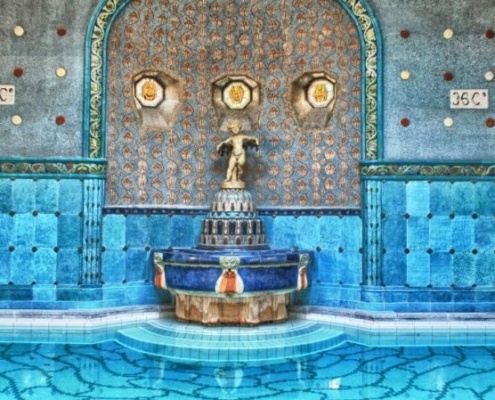
Budapest’s bathing culture is like a well-worn storybook with chapters dating back to ancient times. Picture the Romans stumbling upon the city’s natural hot springs and deciding, “Why not build some baths here?” Jump to the Ottoman Turks in the 16th century, leaving their mark with iconic baths like Rudas and Király. Gellért Baths, with its stunning Art Nouveau style, became a standout during this period. Despite challenging times through wars and communism, stalwarts like Széchenyi Baths held their ground.

Now, in the 21st century, Budapest’s bath culture is making a comeback. Old baths are getting a makeover, and new ones blend history with modern comforts. So, when you dip into these thermal waters, you’re not just unwinding – you’re immersing yourself in Budapest’s extraordinary past, where healing waters have been a tradition for centuries.


thermal baths in Budapest_Gellért

How to Properly Use the Thermal Baths in Budapest


To make the most of your thermal bath experience, follow this step-by-step guide:


  • 1. Shower: Begin your journey with a refreshing shower to cleanse your body.
  • 2. Relax in a Warm Pool: Ease into a warm pool to prepare your muscles for the therapeutic experience ahead.
  • 3. Cold Pool: Invigorate yourself in a cold pool, promoting circulation and vitality.
  • 4. Sauna: Indulge in the detoxifying benefits of a sauna session, followed by a cold shower to cool down.
  • 5. Steam Bath: Embrace the soothing steam bath for relaxation and skin rejuvenation.
  • 6. Cold Shower: Rejuvenate with another cold shower for a burst of energy.
  • 7. Pools with Different Water Temperatures: Explore pools with varying temperatures to find your perfect balance.
  • 8. Shower: Rinse off once more to cleanse and refresh your skin.
  • 9. Rest and Relax Wrapped Up in a Beach Towel: Find a comfortable spot to unwind, wrapped up in a cozy beach towel.


Additional Tips before you visit the thermal baths in Budapest

  1. Bring Flip Flops, Towel, and Swimming Cap: Essential items for a comfortable and hygienic experience.
  2. For a carefree and untarnished experience in our rejuvenating thermal baths, we recommend removing silver jewelry before entering, as the sulfur compounds in the water may cause discoloration. 


Take our daily Free Budapest Tours for a budget-friendly adventure beyond the ordinary and let Budapest’s thermal baths’ secrets unveil themselves.

Immerse yourself in the therapeutic world of Budapest’s thermal baths, where history, culture, and relaxation converge to create an unforgettable experience. Whether you’re a seasoned bather or a first-timer, these tips will guide you through a blissful journey of rejuvenation in the heart of Budapest.

5 Things You Must Know About Hungarian Wine

Step into the enchanting world of Hungarian wine, where time-honored traditions seamlessly intertwine with contemporary winemaking techniques. Hungary’s opulent viticultural history and diverse terroir render it a clandestine haven for wine enthusiasts. If you’re gearing up to immerse yourself in the rich wine culture of Hungary, here are five indispensable insights:

1. Unearthing Historical Roots

The Hungarian landscape, blessed with a climate and soil conducive to winemaking, has a history deeply rooted in Greek Celtic traditions, and Roman practices. Roughly a 1000 years later we, the Magyars arrived and added Eastern wisdom to the rest. Documented wine production flourished around 1000 in Pannonhalma, Szekszard, and the Buda area. The significance of wine in Catholic masses fueled economic interests for churches to promote viticulture in Benedictine orders. Before the 150 years of Turkish occupation, many varieties of Italian and French grapes were introduced. In the Turkish era, the Hungarians learned how to make red wines from the Serbs.

It was in the 16th century that Tokaj became known as the “wine of kings, king of wines”. This term comes from the Sun King Louis XIV. From 1882, phylloxera took a heavy toll on Hungary’s vineyards, destroying almost half of the country’s plantations. After the Peace of Trianon closed WWI, nearly two-thirds of the vineyards went beyond the borders, while more than half of the wine-consuming population remained here.

After WWII, due to economic and political decisions, wine production touched bottom economically and morally. As the system shifted in 1989, Hungary lost most of its eastern markets, and foreign investment was welcomed. Nowadays we produce roughly the same amount of wine as New Zealand, but we only send 20% of our wines for export, that is probably the main reason why you haven’t heard about the Hungarian Wines. You have to visit us to try our liquid treasures!


2. The Vital Elements: Weather, Soil, Crop Load, and Harvest Timing

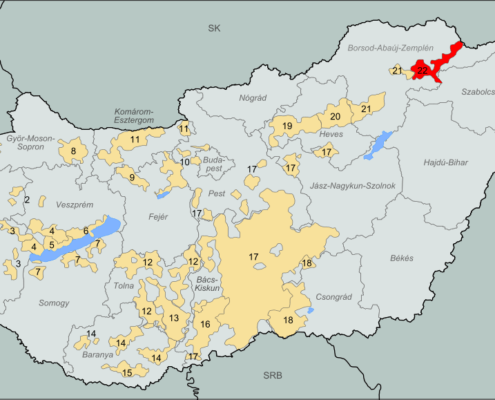
Hungary proudly boasts 22 wine districts, each offering a unique blend of weather conditions and soil types. From almost Mediterranean to continental climates, vineyards in flat areas feature sandy soil, while higher elevations boast a mix of rich forest soils, marl, and volcanic elements. Pay attention to the crop load, measured in kilograms per vine. It plays a pivotal role in the concentration and richness of flavors in the wine. Harvest timing, determined by factors like sugar content and acidity, is a critical phase in the winemaking journey. Because of our climate and soil, we produce mostly white wines.

3. Hungarian Wine Grapes and Their Stories

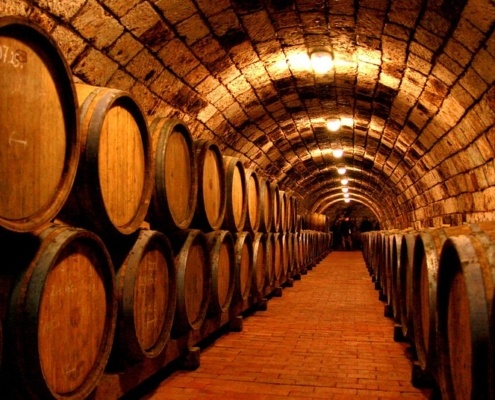
Hungarian vineyards are home to a variety of grape types, but three noble white grapes stand out: Furmint, Hárslevelű, and Juhfark. These indigenous varieties contribute to the distinctive flavors found in Hungarian wines. Furmint, famous for producing the sweet nectar known as Tokaji Aszú, is a legendary dessert wine. Hárslevelű is a late-ripening variety ideal for Tokaji wines. Juhfark, named for the shape of the grape’s clusters, produces a straw-yellow wine with a restrained bouquet. Finally, Irsai Olivér has a muscat aroma and gentle acids, aging fast and making it a good wine for conversations. Behind each grape variety, there is a personal story from the inventor or a historical urban legend. We are so proud of the tokaji aszú for example that we sing about it in our national anthem. The tokaji aszú is the most protected Hungarian wine. For example, you have to handpick the grapes for those. If it is not complicated enough, you have to age them at least 6 months in local oak barrels.  Hungary has more than 100 of its own grape varieties. That is probably the other big reason you haven’t heard about them yet. Wines called ‘Cserszegi Fűszeres’ offer an impossible challenge to read or remember to non-Hungarian speakers so that makes it very difficult to sell them on the international market.

4. Renowned Hungarian Red Grape Varieties

Cirka 70% of our wines are white, but that doesn’t mean that the reds have low quality, on the contrary, local winemakers are very specific about their red grape varieties, they only plant them in wine districts with volcanic soil, like Eger, Villány , Szekszárd or Badacsony. Of course, amongst many international varieties, we have our own as well.

The best examples are the Kadarka, a native Balkan wine, that found its way to Hungary in the 16th century, becoming a key component of Bikavér (Bull’s Blood), and the Kékfrankos, with its robust acids, adds character to Hungarian reds. Hungarian reds are usually mid-bodied wines with a more neutral taste to them, they are the perfect pair next to any dish with a bunch of paprika. If you go to a traditional Hungarian restaurant you can’t go wrong if you order a Kékfrankos.

5. Hungarian Wine as a souvenir. Which one to buy?

A bottle of local wine can be a great souvenir as well, especially because grocery stores are mandated to locally source at least 50% of their wine products. That means for the visitors that you can find Hungarian wines everywhere and from 5-7 € (2000 HUF) you can buy excellent quality bottles of wine.

For souvenirs, explore Hungarian whites crafted from indigenous grapes like Furmint and Hárslevelű, presenting thick textures, chewiness, and subtle aromatics. Irsai Oliver, a surviving Hungarian crossing, offers a crisped-up, gewürztraminer-like experience. Despite the Bull’s Blood image, Hungarian reds tend to be light yet lusciously velvety, with the best Bikavér hailing from Eger and Szekszárd.

Tokaji Wine: A Symphony of History and Flavor:

Probably the sweetest dessert wine you can find. Embark on a journey through Hungarian history with a sip of Tokaji wine, a region that once rivaled Bordeaux, Burgundy, and the Rhineland. Nestled in volcanic hills in the Northeast, Tokaj produces sweet, botrytized wines, with Aszú wines often called “liquid gold” for their exceptional quality.

Eger and Bull’s Blood: Legends in Every Sip:

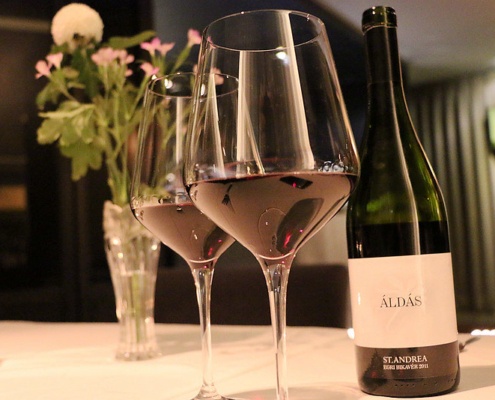
Eger, renowned for its robust reds, introduces Egri Bikavér, or Bull’s Blood, a blend featuring Kékfrankos, Kadarka, and local varieties. Legend has it that this wine’s name originated from a 16th-century battle, a tale your Free Budapest Walking Tour guide will delightfully share. Discover the essence of Hungarian wine – a delightful revelation for every wine enthusiast.


We recommend the following Hungarian winemakers, whose names you can find proudly displayed on the wine labels: Bock József, Gere Attila, Mészáros Pál, Áts Károly, Thummerer Vilmos, and Gál Tibor. Look for Hungarian wine at Bortársaság, ‘Borháló,’ Spar, and Tesco shops for the most reasonable price.

As you take our Free Budapest Walking Tours, your tour guide will speak about Hungarian wine. Most of us are big fans of the local wines so it can be a delightful discovery for every wine enthusiast.