Celebrating 20 Years of EU Membership of Hungary – Free events in Budapest for 1-5th of May

As Hungary commemorates two decades since its accession to the European Union, Budapest bursts with energy during the vibrant and eclectic Hello Europe Festival. This celebration not only pays tribute to Hungary’s journey as an EU member but also showcases the rich cultural tapestry of Europe. From May 1st to 5th, the city becomes a bustling hub of festivities, offering an array of events and activities for locals and visitors alike. Let’s check out all the noteworthy free events in Budapest for this weekend:

Embracing the Spirit of Europe

The Hello Europe Festival embodies the essence of European unity and diversity. It stands as a testament to the bonds forged among EU member states, celebrating the values of cooperation, peace, and cultural exchange. Against the backdrop of Budapest’s iconic landmarks, the festival brings together people from all walks of life to revel in Europe’s shared heritage and aspirations.

Exploring Budapest’s Cultural Landscape

Throughout the festival, Budapest transforms into a vibrant playground of arts, music, and community gatherings. Iconic locations such as the Liberty Bridge, Fővám Square, Bartók Béla Boulevard, and City Hall serve as stages for a diverse range of performances, exhibitions, and interactive installations. Whether it’s experiencing the buzz of street musicians and DJs, marveling at light installations, or immersing oneself in contemporary art, there’s something for everyone to enjoy.

Eu and Budapest - free events in Budapest

Budapest Hungary, Hungarian and European Union flags closeup

Our Favorite Free Events in Budapest from the Festival

Liberty Bridge:

The Liberty Bridge, also known as Szabadság híd, is one of Budapest’s iconic landmarks, connecting Buda and Pest across the Danube River. Its distinctive green color and intricate design make it a favorite spot for both locals and visitors to enjoy scenic walks and panoramic views of the city. One of the standout features of the Hello Europe Festival is the opening of Liberty Bridge to pedestrian traffic, creating a unique space for picnics, yoga sessions, and spontaneous gatherings. Grab your favorite blanket and your favorite companions, and head to the bridge!

Dates:

May 3, 2024: 6:00 PM – 10:00 PM

May 4, 2024: 10:00 AM – 10:00 PM

May 5, 2024: 10:00 AM – 10:00 PM

Grand Central Market area

Fővám Square, or Fővám tér, is a bustling hub in Budapest located along the Danube River. At its heart stands the Great Market Hall, a historic landmark renowned for its vibrant atmosphere and diverse array of food, produce, and souvenirs.

Building Projection on the Facade of the Great Market Hall at Fővám Square:

In addition to being breathtaking, the projection also showcases the cultural diversity of the European Union. Its main themes include peace, culture, environmental protection, mobility, the future, development, technology, and growth.

Dates:

May 4, 2024: 8:00 PM – 11:59 PM

May 5, 2024: 8:00 PM – 11:59 PM
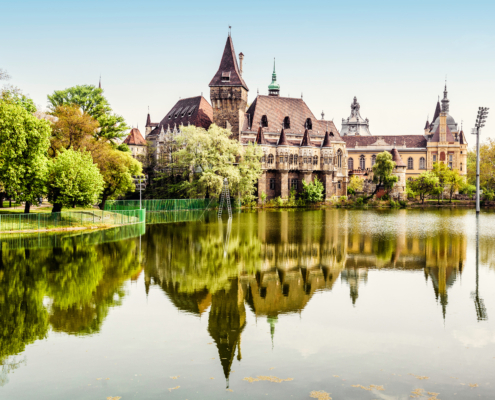
Vajdahunyad castle - free events in Budapest

Vajdahunyad castle view from lakeside. Budapest, Hungary

City Hall Park and City Hall Passage

This is the heart of downtown, located just a 3-minute walk from the Dohany Street Grand Synagogue. City Hall Park offers a vibrant mix of entertainment for all ages! Step into the courtyard of City Hall and be dazzled by a mesmerizing light installation courtesy of the Light Art Museum Budapest. But that’s not all! From family-friendly shows and whimsical fairy tale concerts to energetic dance performances and outdoor games, there’s something for everyone. Kids can explore the recycled playground, hop on the merry-go-round, or get creative at craft workshops. And for a touch of sparkle, don’t miss the face painting and glitter tattoos! Meanwhile, over at the City Hall Passage, get ready to groove to the beat as club and party vibes welcome you with open arms. For those craving a musical trip down memory lane, the “20 years, 20 hits” program promises to keep the nostalgia alive with a lineup of chart-topping classics. So whether you’re in the mood to dance or simply want to soak up the atmosphere, City Hall Park and City Hall Passage are the places to be!

Dates:

May 1, 2024: 7:00 PM – 10:00 PM – 20 years 20 hits concert

May 1- 5, 2024: various programs

Bartók Béla Boulevard

The boulevard starts at roughly the wonderful Hotel Gellert and Gellért Thermal Baths on the Buda end of the Liberty Bridge and at the foot of Gellért Hill. It is nice walking down this long wide street popping into a bar, café, or restaurant and just chilling out. The area is rich in diverse architecture both old and new and is a very popular destination. During the first weekend of May, the squares will be filled between the Buda end of the Liberty Bridge and Móricz Zsigmond Square with numerous cultural, musical, and light art programs. Well worth checking out.

Dates:

May 3, May 4

The Hello Europe Festival in Budapest is more than just a celebration—it’s a symbol of unity, diversity, and resilience. As Hungary reflects on its 20 years as an EU member, the festival reminds us of the shared values and aspirations that bind Europe together. Through art, music, and community, it offers a glimpse into the vibrant tapestry of European culture and serves as a beacon of hope for the years to come.


Join our daily Free Budapest Walk, to learn about Budapest’s main landscapes, the hidden treasures, and where to go on the first week of May to make the most of your stay in Budapest.
Travel Guide to Budapest – Exploring The City through its Superlatives

There are many ways to write a travel guide to Budapest. There are so many sights and beautiful buildings to see, but for first-time visitors usually the superlatives are important. It is the easiest way to cover many of the must-visit places and remembering the superlatives makes it easy to impress others, as sharing these facts might lead them to think you’re quite knowledgeable about Budapest. 


Budapest, the vibrant capital of Hungary, is not only known for its rich history, stunning architecture, and thermal baths but also for its impressive collection of superlatives. Let us help you with our travel guide to Budapest to discover the longest road, highest point, tallest building, and biggest church and synagogue that Budapest has to offer.


The Longest Touristy Road: Andrassy Avenue

This Avenue stretches approximately 2,5 km from the City Center ( Deák Ferenc tér, M1, M2, M3) to the City Park (Heroes’ Square M1)

Notable landmarks along the avenue are:

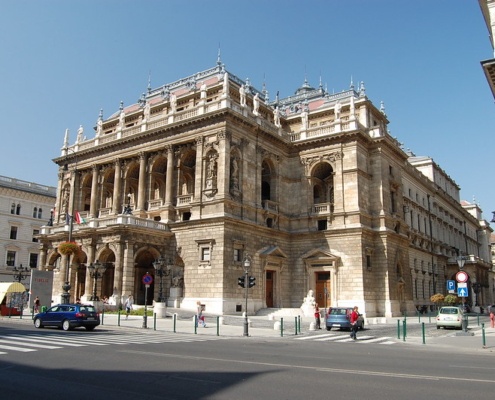
  1. Hungarian State Opera House: A stunning neo-Renaissance opera house known for its grand architecture and world-class performances.
  2. House of Terror Museum: A museum housed in the former headquarters of the Nazi and Communist regimes, offering insights into Hungary’s dark history.
  3. Franz Liszt Academy of Music: A prestigious music conservatory founded by composer Franz Liszt, featuring beautiful Art Nouveau architecture.
  4. Oktogon Square: A bustling square at the intersection of Andrassy Avenue and Király Street, known for its vibrant atmosphere and lively street scenes.
  5. Heroes’ Square (Hősök tere): A grand square featuring the iconic Millennium Monument and statues of prominent Hungarian leaders, located at the end of Andrassy Avenue.


The Longest Road: Üllői Street

With a length of 15 km, Üllői Street stretches straight from Kálvin Square to Liszt Ferenc Airport. It boasts the highest house number of 873 and was formerly known as the Red Army Road before the regime change. Among its main attractions are the units of Semmelweis University, Népliget, and various parks.

The Highest Hill of the Downtown is Gellért Hegy

Gellért Hill is one of Budapest’s most iconic landmarks, towering over the Danube River on the Buda side of the city. The hill rises 235 meters above the sea level. However, since the Danube valley in Budapest is approximately 100 meters above sea level, the hill’s relative height is only about 130 meters. Nevertheless, it is called a hill because it faces the Danube with steep cliffs, while hills are typically surrounded by slopes on all sides.

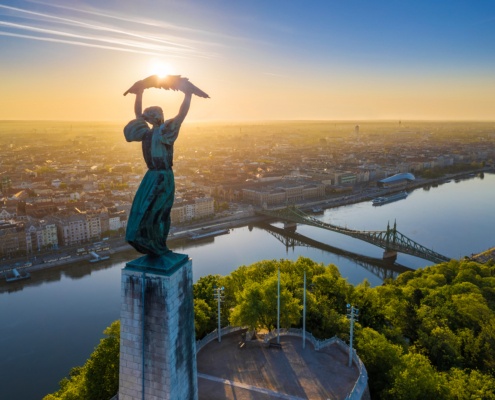
Named after Bishop Gellért who was thrown to his death from the hill, Gellért Hill offers breathtaking panoramic views of Budapest. At its summit stands the Citadella, a fortress built in the 19th century by the Habsburgs as part of their strategy to supervise formerly rebellious Hungary to prevent another uprising, while the Liberty Statue, symbolizes Hungary’s liberation from Nazi occupation. The hill is also home to the Gellért Hill Cave Church, a unique church built into the rockside. Gellért Hill is not only a popular tourist destination but also a beloved spot for locals, offering serene walking paths and tranquil green spaces.


The Highest Hill in Budapest is János Hill

The hill is standing at 529 meters above sea level. This iconic destination has been a favorite spot for excursions in the capital for centuries, with even Sisi, the wife of Franz Joseph, known to enjoy the area. You can reach the hilltop via the Chairlift (Zugliget Libegő) or by bus. Once there, prepare to be amazed by the breathtaking views of Budapest and the surrounding natural beauty. Plan for approximately 4 hours to fully enjoy the experience.

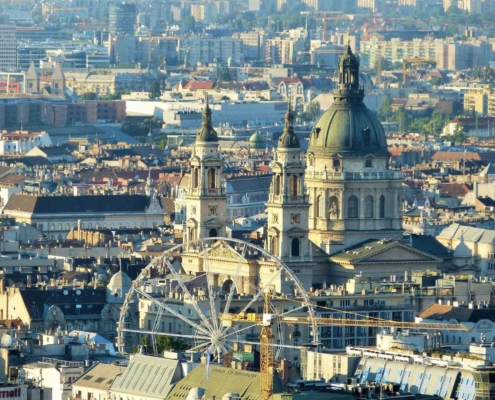
Photo of the city center of Pest with the Saint Stephen's Basilica and the Ferris Wheel in the foreground

The Biggest Church in Budapest is St. Stephen’s Basilica

St. Stephen’s Basilica is one of the most significant landmarks in Budapest and holds several notable distinctions. Its height of 96 meters, exactly the same height as the Parliament building. It is the largest church in the city with a capacity of 8000 people, with its impressive neoclassical facade and towering dome dominating the skyline.  Named after Hungary’s first king, St. Stephen, the basilica is a symbol of the nation’s religious and cultural heritage. Inside, visitors can admire exquisite architectural details, including intricate frescoes, marble columns, and ornate altars. The basilica also houses Hungary’s most sacred relic, the mummified right hand of St. Stephen, which is displayed in a reliquary. With its grandeur and historical significance, St. Stephen’s Basilica is a must-visit destination for tourists exploring Budapest’s superlatives. Join our daily Free Budapest Tours to learn more about St.Stephen’s Basilica.

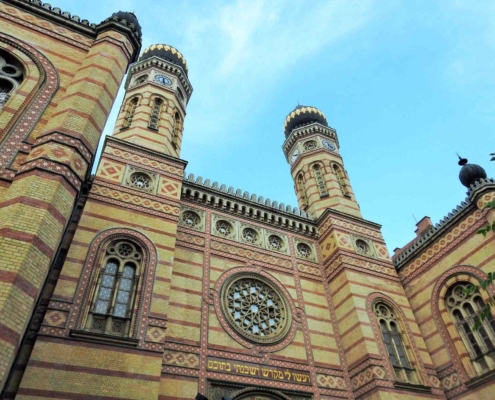
The façade and two towers of the Dohány street grand synagogue, the second biggest synagogue of the world

The Biggest Synagogue in Europe is the Dohany Street Grand Synagogue

In the heart of Budapest lies the Dohany Street Grand Synagogue, Europe’s largest synagogue and second largest in the world. When the architectural competition for this grand structure was announced in the mid-1800s, it ignited the creativity of the era’s most esteemed architects. Spanning an impressive 1,200 square meters, with towers soaring 44 meters high, the synagogue stands as a testament to both architectural brilliance and cultural significance. Inside, its vast interior accommodates nearly 3,000 worshipers, with 1,497 seats for men on the main floor and 1,472 for women in the galleries. As the temple of the Neolog Jewry, the synagogue serves as a spiritual and cultural center for the community. Take our daily Free Jewish District Tours for further in-depth information about the Hungarian Jewish history and main landscapes.


The Oldest Building in Buda Still in Use

The Red Hedgehog House ( Vörös Sün Ház in Hungarian) is the oldest continuously used building in Budapest, named after the inn that once operated within it. Its existing structure was erected around 1260, combining several early Gothic and medieval residences in the 18th century. For a long time, it served as the only inn in the Buda Castle District. Join our daily Free Buda Castle District Tours for more information about the medieval part of the city. 


The Oldest Building in Pest Still in Use 

The Parish Church of the  Assumption of the Blessed Virgin Mary church is located on Pest side of the white Elisabeth bridge (Március 15. tér). Its earliest parts date back to the Romanesque period. In its present state, it easily showcases various architectural styles, a Baroque church, but a Gothic sanctuary in the back. Saint Stephen the first Hungarian king and state founder ordered the construction of a church dedicated to the Virgin Mary over the ruins of the former Roman command building. Excavations in the early 2000s uncovered 11th-century graves in the area of the present sacristy. During that time, and for a long while after, burial was only permitted near or inside churches. 

The oldest bridge in Budapest is the Chain Bridge

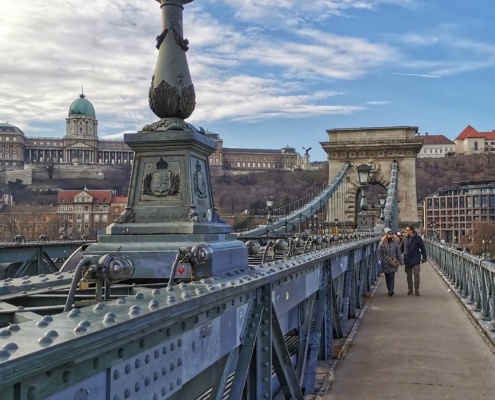
The oldest permanent bridge in the city is the Széchényi Chain Bridge, which was inaugurated in 1849. Additionally, it holds the distinction of being Budapest’s least congested bridge, as it is not connected to any major thoroughfare and does not allow cars to cross. Join our daily Free Budapest Tours to learn more about the bridge and the legend of its lions. 


Budapest’s Largest Residential Building 

Budapest’s largest residential building is located in Óbuda, at Flórián Square, more precisely in Szőlő Street. Known as the Faluház (Village House), this housing block contains 886 apartments, housing approximately 3000 people. The Faluház underwent energy efficiency renovations in 2009, including external insulation, replacement of windows, modernization of heating systems allowing for individualized metering, and installation of solar panels on the roof.

Budapest’s Narrowest Residential Building 

The Mandl House, situated along the Danube in the Tabán neighborhood of Buda side, boasts a façade measuring 6.2 meters on Várkert Rakpart and 5.5 meters on Döbrentei Street. Its narrow dimensions have earned it the distinction of being the city’s narrowest building. Constructed in a style reminiscent of Hanseatic cities like Amsterdam, the house was later transformed into a tenement building comprising 10 apartments, following a loft conversion. It’s recommended to view the Mandl House from the Pest side, along the Danube Promenade, to appreciate its unique architecture.

Budapest’s Shortest Streets

It’s widely known that the shortest street name in the capital is “Ó” (Old). This street, located behind the State Opera House near Andrassy Avenue, has a unique history. By 1885, Andrássy Avenue was completed, but Ó Street was not considered a particularly elegant place. Instead, it was known for its rather dubious brothels until 1927.

However, in terms of length, downtown Miatyánk Street holds this title. Its history traces back to the time when worshippers hurried to the Lutheran church at Deák Square, reciting the Lord’s Prayer as they passed through this street. Depending on how we define the starting and ending points of the street, we measured its length at approximately 45 meters. With slow-paced steps, we were able to traverse it in 40-45 seconds. In theory, this should allow enough time to recite the Lord’s Prayer (Miatyánk) in your language and Latin. Our daily free tours in Budapest meet within a minute’s walk from this street. 

Budapest First Metro Line

The Millennium Underground wasn’t just Budapest’s inaugural metro line that opened in 1896; it was the first of its kind across the entire European continent. While it can’t be credited as Europe’s very first, given London’s earlier underground system, ours was the world’s pioneer in operating on electric power. Its length was predetermined, serving the primary purpose of linking downtown Pest with City Park.

Budapest’s Longest Escalator

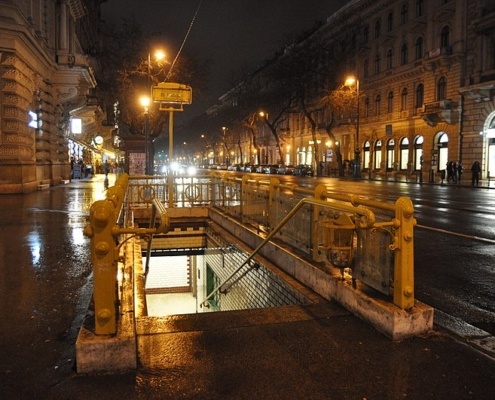
The deepest metro stations are those situated along the lines passing beneath the Danube. While Széll Kálmán tér may not be the deepest station, it boasts the city’s longest escalator. Picture the stations: at Batthyány tér, for instance, you ascend to the surface using two escalators. However, at Széll Kálmán tér, you ascend directly from the depths to the surface. This escalator descends to a depth of 38.6 meters, and the journey takes approximately two minutes.

Budapest’s Best Playgrounds at Gellért Hill Area

Budapest, the vibrant capital of Hungary, is renowned for its rich history, stunning architecture, and lively culture. Yet, tucked away from the bustling streets and amidst the iconic landmarks lies a treasure trove for families seeking outdoor adventures – the playgrounds nestled in the scenic Gellért Hill area. Offering breathtaking views and innovative play structures, these parks provide an unforgettable experience for both children and parents alike.

Gellért Hill isn’t just a sightseeing spot; it’s a haven for fun and relaxation. Ascend to the summit to marvel at the panoramic views, take a stroll amidst the verdant trees, or unwind with a delightful picnic on one of the shaded lawns. And did you know? There are not just one or two, but 3 playgrounds awaiting discovery on this picturesque hill!

Before embarking on your adventure, be sure to pack a cozy blanket from your Airbnb or hotel, along with some sandwiches and refreshing beverages, as amenities may be limited. Join us as we set out to explore Budapest’s coolest playgrounds and uncover the enchantment they hold.


Slide Park Playground ( Csúszdás játszótér in Hungarian)


This shady playground underwent a complete renovation in 2017. You can easily reach it from Gellért Square (M4 metro, Tram 49, 47, 18, 19, 41, Bus 7). Simply walk up from Gellért Cave Church; it is located just a 3-minute walk from the Cave Church, opposite the entrance to Gellért Thermal Baths on the hillside.

So, what can you expect here? You’ll find wavy, winding, and tube slides, as well as shorter and double slides for the little ones. The location has also been expanded with additional games such as a nest swing, spring rider, seesaw, climbing tunnel, a smaller sandbox equipped with a sun sail, and two sunken trampolines. Thanks to the terrace layout, at the starting point of the slides, you’ll also find a suspension bridge climbing frame and a mini lookout tower. Additionally, there are bike racks and picnic benches available.

Moreover, there is a drinking fountain on the playground, although the toilet is often unfortunately closed. If nature calls, you can head to Gellért Thermal Baths and find the free toilet behind the information point.

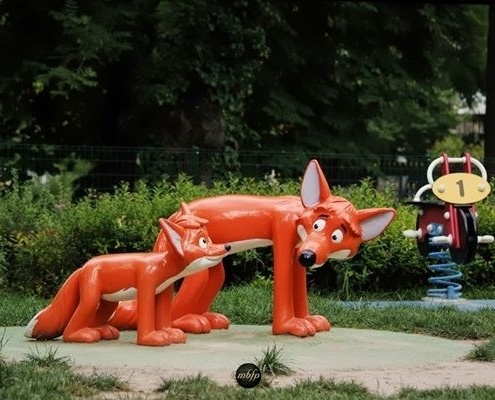
Vuk the Little fox playground ( Vuk-os játszótér in Hungarian)

This picturesque playground underwent a complete renovation recently. You can easily reach it from Móricz Zsigmond körtér by bus 27. Get off at Búsuló Juhász stop (Citadel), then walk a little further towards Bérc utca. You will find this playground right on the Szirtes and Bérc street corner.

The theme of this playground is based on our childhood cartoon called “Vuk the Little Fox,” which was created in 1981. It’s not your typical Hollywood children’s story, but it’s a beautiful tale with many great lessons for children. You can find the cartoon trailer in English on YouTube. Therefore, you’ll encounter the majority of the characters at this playground: Vuk the Little Fox, the drunken geese, the frog, the dog, etc. 

So what to expect here: 

There are climbing slides, swings, spring riders, and a sandbox. The park hides many elements that are considered innovative compared to a traditional playground. Several plastic hide-and-seek elements have been placed, some connecting the top of a small hill with its base, while others form larger tunnel systems leading to a cozy central nook. Climbing up the little hill is just as enjoyable for the little ones as crawling underneath it. Safety was, of course, a priority, hence the green rubber mat covering. Shading has been installed over the sandbox, allowing children to use it even on the hottest summer days. The wooden playhouse is every child’s favorite. For the older preschool age group, a castle equipped with climbing ropes and a climbing wall has been placed. The playground has a drinking fountain and a toilet.


Local knowledge: there is a premium supermarket just outside the playground with a big selection of ice cream, coffee sandwiches, and beer..(but please note: drinking alcoholic beverages and smoking cigarettes are strictly forbidden in any playground.)

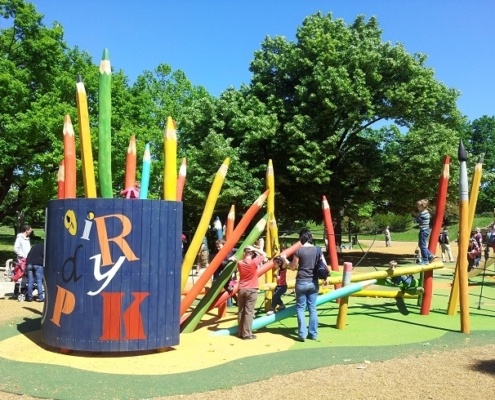
Pen Playground (Ceruzás Játszótér in Hungarian)

This cool playground is relatively new; however, it requires further renovation for some of the play poles. You can easily reach it from Móricz Zsigmond körtér by taking bus 27. Get off at the Búsuló Juhász stop (Citadel), then walk a little further up towards the Citadel. The road leading here is closed to traffic, up to the top of Gellért Hill. If you want to reach here from Slide Park Playground, it’s just a 10-minute uphill walk in a beautiful environment with a view of the Citadel.

The theme of the playground is the many colorful pencils forming the climbing frame. For example, the squirrel wheel is called a pencil sharpener. Unfortunately, some parts of the playground are under renovation at the moment (April 2024), but you can still enjoy nature, walking paths, and views of the Citadel. You’ll also find fun games, such as the sunken trampoline, an interesting solution not seen elsewhere. The area around the games is covered with a thick rubber mat, which is quite soft.

The playground has a drinking fountain, but not a toilet. The nearest paid toilet can be found at the upper parking lot of the Citadel.


Local tip: There is a premium supermarket just a 1-minute walk from the bus stop towards Szirtes Street with a big selection of ice cream, coffee, sandwiches, and beer. (But please note: drinking alcoholic beverages and smoking cigarettes are strictly forbidden in any playground.)


In conclusion, Budapest’s coolest playgrounds at the Gellért Hill area offer an unparalleled experience for families seeking outdoor adventures. From breathtaking views to innovative play structures, these playgrounds are not just for children but for the children in all of us. And what makes them even more special? They were put to the test by none other than the senior free tour guides who have naughty kids themselves. So you can trust that these playgrounds are not only fun but also safe and exciting for the whole family.

Whether you’re ascending to the top of Gellért Hill for the stunning panoramic views, enjoying a leisurely stroll among the trees, or picnicking on one of the shaded lawns, make sure to add a visit to these playgrounds to your itinerary. With their unique themes, such as the colorful pencils at Pen Playground or the characters from “Vuk the Little Fox” at Vuk-os Playground, there’s something for everyone to enjoy.

So pack a blanket, grab some snacks, and embark on an adventure to discover the magic of Budapest’s coolest playgrounds at the Gellért Hill area. 

Your inner child will thank you!

For more practical tips from locals, visit our walking tours running every day!

Exploring the Melodic Magic of Franz Liszt in Budapest

Hungary has gifted the world with an array of musical geniuses, but few have left a mark as indelible as Franz Liszt. Despite being Hungarian by birth, Liszt’s first language was German, and he only learned Hungarian later in life. Nevertheless, he was intensely proud of his Hungarian heritage. Renowned as one of the greatest pianists of all time, Liszt’s compositions revolutionized piano technique. His Hungarian Rhapsodies and monumental piano sonatas are celebrated for their virtuosity and emotional depth. Perhaps his most famous piece, Hungarian Rhapsody No. 2, from a set of 19 Hungarian-themed rhapsodies, has even been immortalized in various cartoons, including Looney Tunes (performed by Bugs Bunny).


So, where can one discover memorials to Franz Liszt in Budapest?


Franz Liszt in Budapest Airport

Since 2011, the airport has been named after the maestro in commemoration of the 200th anniversary of Liszt Ferenc’s birth. The statue of Ferenc Liszt stands in front of Terminal 2A on a high pedestal. It depicts Liszt Ferenc sitting on his suitcase, reminiscent of his extensive European concert tours. The accompanying Kolodko artwork features a paper airplane folded from a sheet of music, symbolizing the eternity of music.

Franz Liszt in Budapest - Opera

Hungarian Opera House

The Hungarian State Opera House, with its approximately 1300 seats, is a stunning sight both inside and out. The building on Andrássy Avenue shines in domestic neo-Renaissance splendor, though rich baroque elements can also be found in its lavish decorations. The statues of legendary composers such as Mozart, Beethoven, Tchaikovsky, Verdi, and Franz Liszt adorn the exterior, while inside, visitors are enchanted by the noble marble flooring of the foyer, the four colossal marble statues in the main staircase, the red-carpeted grand staircase, the gilded boxes, and the monumental dome fresco by Károly Lotz. Whichever way you look, you’re surrounded by elegant grandeur here, fitting for the esteemed venue hosting illustrious performances.

Liszt’s legacy is prominently displayed in the opera house, with a statue of the composer adorning one of the two large statues at the front of the building. Positioned on the right side of the main facade, the statue pays homage to Ferenc 

Liszt’s influence on Hungarian music.

Franz Liszt in Budapest - Franz Liszt Museum

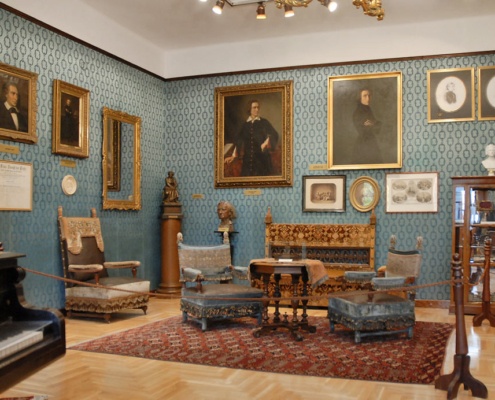
Liszt Ferenc Museum and Research Center (Museum of Franz Liszt in Budapest)

Nestled within the historic Old Academy of Music building at Vörösmarty utca 35 in Budapest (H-1064), the Liszt Ferenc Memorial Museum and Research Centre has been a beacon for music enthusiasts since its opening in September 1986. Once serving as the second site of the prestigious Academy of Music from late 1875 to mid-1907, this venerable edifice has witnessed the evolution of Hungarian musical education.

Following the grand inauguration of a new palace at Liszt Ferenc tér on May 12, 1907, the Vörösmarty utca building underwent a transformation, embracing a myriad of roles over the years. From a music school echoing with the melodies of budding talents to a cozy coffee shop where artists found solace in caffeine-fueled creativity, and even as a gathering place for political and social associations, the building’s walls reverberated with the echoes of Budapest’s vibrant cultural scene.

Today, despite its modest size, the Liszt Ferenc Memorial Museum and Research Centre stands as a testament to Liszt’s enduring legacy. Step inside, and you’ll discover a treasure trove of insights into Liszt’s life, inner circle, and personal possessions. Delve deeper, and you may even request to experience the very room where Liszt’s masterpieces were once brought to life in concert. Informative information boards adorn the stairway leading to the museum on the first floor, guiding visitors on a journey through Liszt’s remarkable musical odyssey.


Liszt Ferenc Academy of Music

The academy’s main facade features an unusually large seated statue of Liszt, dressed in clerical attire. This positioning is interpreted as a linking element between the two layers of meaning, reinforcing Liszt’s image as the earthly representative of the god of music. It’s a versatile institution that serves as an educational establishment, an international music conservatory, and a concert venue all in one.

They offer guaranteed tours for individual visitors in  English. The tours include a 50-minute guided tour followed by a mini-concert performed by a student of the music academy.


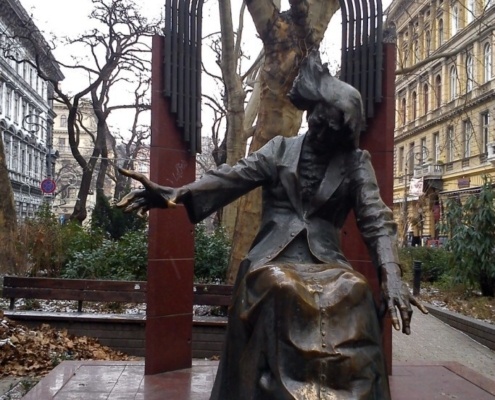
Liszt Ferenc Statue at Liszt Ferenc Square

Adjacent to the Liszt Ferenc Academy of Music lies a small square where visitors can discover another statue of Franz Liszt. Take a moment to admire the powerful fingers that once graced the piano keys. Liszt’s intense performances often resulted in broken piano strings, a testament to his remarkable skill and the limitations of pianos in his era.


Additionally, while you’re in Budapest, don’t miss the opportunity to tantalize your taste buds with Liszt’s favorite dishes. Indulge in the sumptuous flavors of mushroom-stuffed chicken and turkey breast wrapped in almond crust and crowned with grated cheese. You can savor these culinary delights at some of the city’s high-end restaurants, where exquisite cuisine meets Budapest’s rich cultural heritage. As you explore Liszt’s musical legacy and indulge in Budapest’s culinary delights, remember that more adventures await just around the corner.


And while Liszt’s presence is undeniable, Budapest’s musical tapestry is rich with the threads of other Hungarian composers like Zoltán Kodály and Béla Bartók. In the near future, stay tuned to discover more about these musical luminaries and their traces in Budapest. From Kodály’s folk-inspired melodies to Bartók’s innovative compositions, each composer has left an indelible mark on Hungary’s cultural landscape. 


Stay tuned! More melodic magic awaits.

Join our daily Free Budapest Tours and immerse yourself in the world of Hungarian musicians, as well as other cultural, historical, and architectural wonders.