Budapest on a budget in 2026: Your Honest Guide to Spend Less and See More

Budapest has a reputation as one of Europe’s best-value city breaks. That reputation is mostly still deserved — but it needs a few honest caveats in 2026, because the picture is more nuanced than it was a few years ago. This guide shows how to experience Budapest on a budget without missing out. We show you the real numbers, the traps to avoid, and the local knowledge that makes the difference between a trip that stretches your budget and one that quietly drains it. 


First, the honest context: prices have risen significantly

If you visited Budapest five years ago and are returning now, you will notice the difference immediately. Hungary has experienced some of the highest inflation in the EU since 2021 — cumulative price rises of over 50% across all goods, with food at times rising far faster than that. Prices in Budapest today are roughly half again what they were in 2019. This is not a reason not to come — Budapest still offers exceptional value by Western European standards — but it is worth knowing before you arrive with outdated expectations. Even with rising prices, Budapest on a budget is still possible with the right choices.

On the currency side: Hungary uses the forint, not the euro. As of March 2026, you get around 387 forints to the euro. The rate may shift around the April election, in either direction. The practical advice: don’t exchange large amounts all at once, check the rate before you travel, and always pay in forints rather than euros when a merchant offers both.

Here are what things actually cost right now, in euros.


What things actually cost: real prices in March 2026

Coffee

A flat white at a specialty coffee shop averages around €3.30. That is genuinely cheap by Western European standards — the same coffee costs double in Vienna or Amsterdam. An espresso runs around €1.50. Budapest has a thriving independent coffee scene, and you will not struggle to find excellent coffee at these prices throughout the city.

goulash-soup - reasons to visit Budapest - Budapest on a budget

Food

Eating locally is key to doing Budapest on a budget. The single best-value eating decision you can make in Budapest is the napi menü — the daily lunch special offered by most local restaurants, typically two courses for around €6. It is available until around 2-3 pm. It is how locals eat, and the quality is often excellent. The same restaurant will charge you significantly more for an equivalent dinner in the evening.

Street food is similarly good value — lángos, deep-fried flatbread with sour cream and cheese, costs around €5, and a full gyros platter with fries and a drink runs around €10. These are the most authentic and most affordable eating experiences in the city and the ones your guides will point you toward on a walking tour.

A sit-down dinner at a mid-range local restaurant runs around €10–15 per person for a main course, rising to €25–30 per dish at higher-end establishments. No longer cheap by Budapest’s own historical standards, but still well below equivalent restaurants in Germany, Austria, or the UK. One important note: most sit-down restaurants in Budapest automatically add a 12.5–15% service charge to the bill. Check before you add a tip on top — in many cases, the service charge is already included.
Budapest on a budget

Drinks

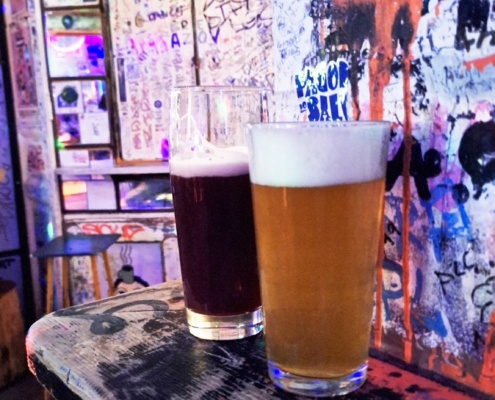
A pint of local beer in a bar runs €2–3. A glass of house wine costs roughly the same. Hungarian wine is where the real value lies — the quality is far higher than you would expect at that price, and the country’s wine regions, particularly Eger and Tokaj, produce bottles that would cost multiples of the Budapest price in a London wine shop. Avoid ordering drinks at the tourist-facing bars directly on the main party strip in District VII — prices there are significantly higher for an identical product.

Accommodation

Important update for 2026 worth knowing before you book. Short-term rentals, including Airbnb, are now banned in District VI, the Party District, as of 1 January 2026.  Hotels and guesthouses are unaffected, but check your booking platform carefully if you were planning to stay in that area. 
Budapest on a budget

Thermal baths

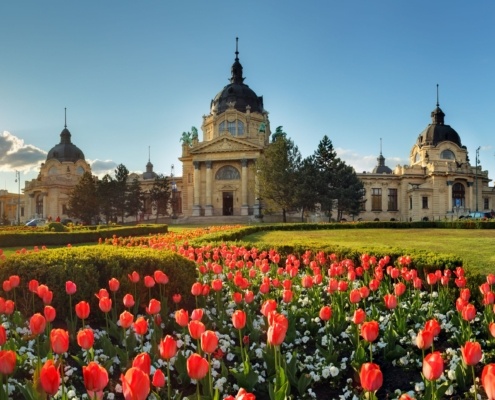
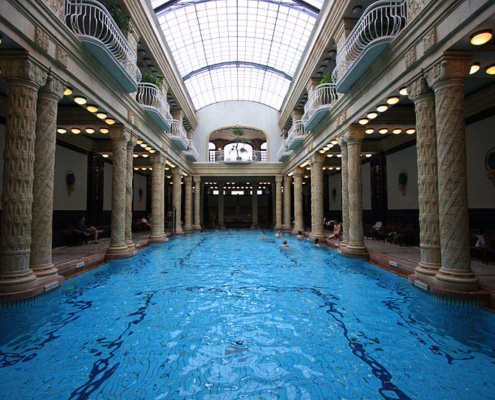
Prices have risen more noticeably here than anywhere else. A peak-time day pass at Széchenyi Thermal Baths — the largest and most famous — now costs around €41. That is still cheaper than a spa day in most Western European cities, but it is no longer the cheap afternoon out it once was. For better value, Lukács or Rudas are the local recommendations — same thermal water, significantly lower entry price. The famous Gellért Thermal Baths are closed for renovation until 2028. If Gellért was on your list, plan for Rudas, Széchenyi, or Lukács instead. Lukács in particular offers strong value — less famous, less crowded, less expensive, and used primarily by local residents rather than tourists.

Public transport

Budapest’s public transport remains one of the city’s clearest bargains. A single metro, tram, or bus ticket costs ~ €1.30 when bought via the BudapestGO app or at a station kiosk — avoid buying on board trams where a surcharge applies. A 24-hour travel card covering all lines costs around €7.20. If you are making more than five journeys in a day, the day card saves money immediately. The network is extensive and reliable — there is almost no journey in central Budapest that actually requires a taxi. Kids up to the age of 6 and seniors + 65 travel free ( with a valid photo ID). We even created a little cheat sheet with our further tips for Budapest’s public transportation.
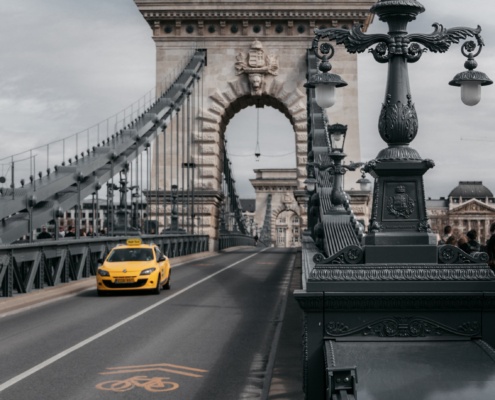
taxis in Budapest 2025 - Budapest on a budget

Getting around by taxi: what you need to know

This section deserves more space than most budget guides give it, because the taxi situation in Budapest is more complicated than in most European cities — and getting it wrong is one of the fastest ways to overpay.

Here is the key distinction. All licensed taxis in Budapest are legally required to follow state-set fares. But not all drivers on the street are licensed company drivers. Some operate as independent freelancers — független szolgáltatók — and these are the ones that target tourists. Their cars look like regular taxis and are painted yellow, but carry only a plain rectangular “Taxi” sign with no company logo. They have been known to use rigged meters, take deliberate detours, and, in some cases, use intimidation to extract money from passengers. You will find them waiting outside Keleti station and near the ruin bars late at night — exactly where tired or disoriented tourists are most vulnerable.

The rule is simple: never hail a taxi from the street. Always book through an app.

We have a dedicated guide to Budapest taxis on our website,  which covers this in full. Your walking tour guide is also happy to help you order a reliable car at the end of any tour.
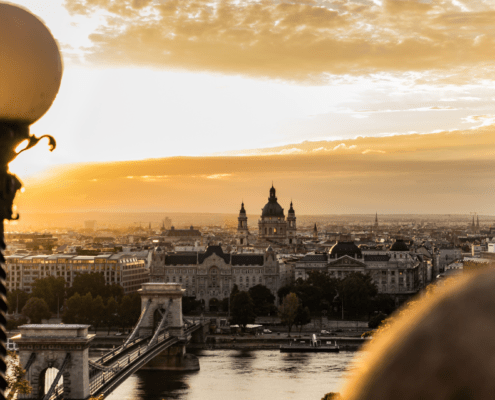
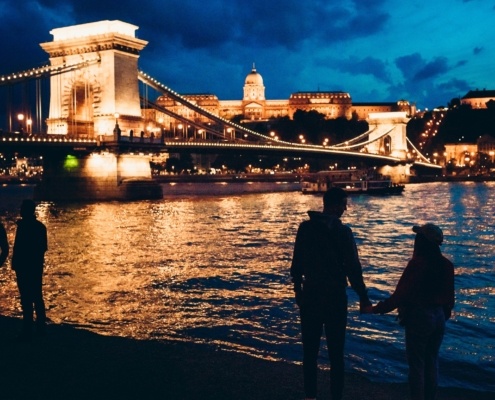
Budget Valentine’s Day Budapest - Budapest Couples Experiences - Budapest on a budget

The free Budapest: what costs nothing

Many of the best Budapest on a budget experiences are completely free. Budapest’s free offerings are genuinely extraordinary — not just parks and viewpoints, but some of the finest urban experiences in Central Europe.

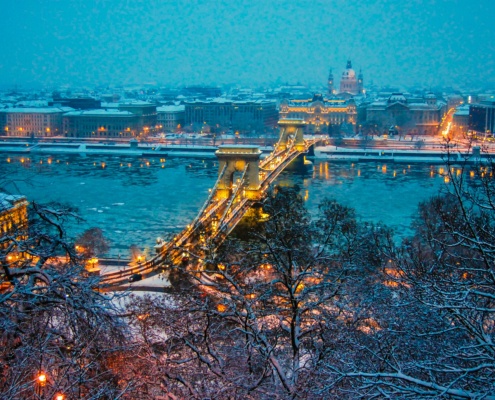
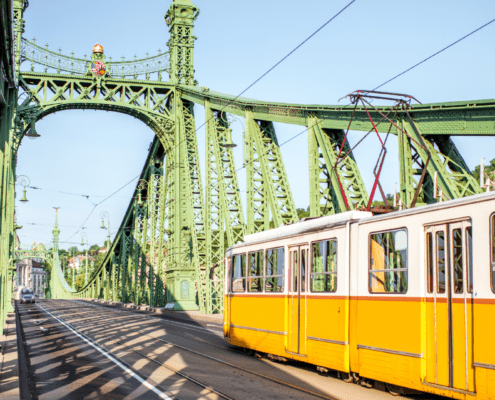
Walking the Danube banks. The two riverbanks, together with the bridges connecting them, are a UNESCO World Heritage Site. The walk from the Great Market Hall across the Liberty Bridge, up through Gellért Hill, and back down to the Chain Bridge costs nothing and takes about two hours. The view over the Parliament and the river from the top of Gellért Hill at dusk is one of the best city views in Europe.

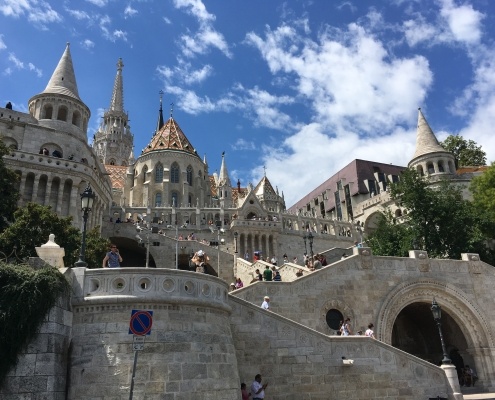
Fisherman’s Bastion. The lower terrace is free all day. The upper towers charge entry during the day but are free after 9 pm in summer — and the nighttime view is, if anything, better than the daytime one.

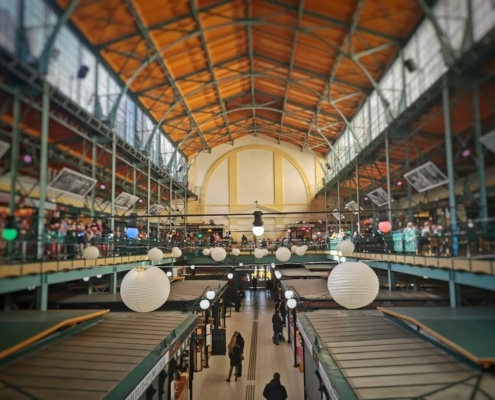
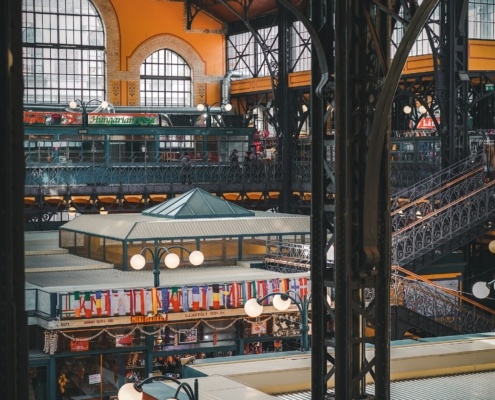
The Great Market Hall. Free to enter. The ground floor is where locals shop for produce, meat, and paprika — go in the morning for the best atmosphere and freshest produce. The upper floor is more tourist-oriented and more expensive.

Heroes’ Square and City Park. Free to visit. 

Free walking tours. The most useful free thing you can do on your first day in Budapest. You pay what you feel the experience was worth at the end — no upfront cost, no obligation. Our guides are local residents who cover the city’s history, architecture, and daily life in around two hours, and will personally point you to every good-value recommendation in this guide. Join us any morning at 10.30 am at the Budapest Eye Ferris Wheel, next to the fountain.

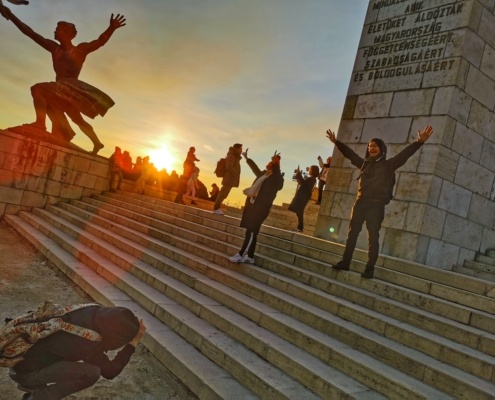
Budapest budget travel 2025 - Budapest on a budget

Five things locals know that tourists often miss

  1. Always pay in forints, never euros. Some tourist-area restaurants and shops accept euros, but the rate they use is almost always unfavorable. Pay in forints wherever possible.
  2. Avoid Euronet ATMs. The yellow Euronet machines in tourist areas charge significant hidden fees — up to €12 per transaction. Use bank-affiliated ATMs — OTP, Erste, or Raiffeisen are the most common — and always select “decline conversion” when offered the option to pay in your home currency. Dynamic currency conversion is always a worse deal for you.
  3. Use a Wise or Revolut. These money apps give you the interbank exchange rate with minimal fees — significantly better than exchanging cash at bureau de change counters, and safer than carrying large amounts of forints.
  4. Eat your main meal at lunch, not dinner. The napi menü is only available until around 2-3 pm. The same restaurants charge significantly more in the evening for equivalent food. This single habit can cut your daily food spending almost in half.
  5. Drink tap water. Budapest’s tap water is safe, clean, and free. Carry a refillable bottle and use the public drinking fountains — ivókút — dotted throughout the city rather than buying bottled water at tourist kiosks.


A note on tipping

Tipping culture in Budapest is stronger than in most of Western Europe and worth knowing about in advance. Tipping is genuinely embedded in Hungarian culture — 10–15% is standard in restaurants where a service charge is not already included. The local custom is to hand the tip directly to the waiter when paying, not to leave it on the table.  Small round-ups are appreciated in taxis and cafés. Do not tip if a service charge is already printed on the bill — check first.


An honest summary

What Budapest still offers — genuinely, and at a level few European capitals can match — is extraordinary value in the things that matter most: coffee culture, wine, street food, public transport, and the simple experience of walking in a beautiful city with more history per square meter than almost anywhere else on the continent.

Come with realistic expectations. Prices are higher than they were. The city is worth it anyway.

With the right habits, Budapest on a budget is easier than most travelers expect. Eat where locals eat, walk more than you taxi, use Bolt or Főtaxi when you do need a car, and skip the Euronet machines. You will leave having spent less than you expected and seen more than you planned.

Our free walking tours run daily and are the best starting point for all of this. Join us any morning at 10.30 am at the Budapest Eye Ferris Wheel, next to the fountain. Pay what you feel at the end.

All prices correct as of March 2026. Exchange rate used: €1 = 387 HUF.
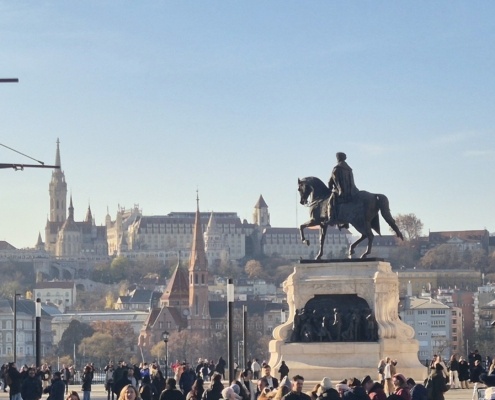
Is Budapest Safe to Visit in 2026? What Travelers Should Know Before Visiting Budapest

Quick Answer: Is Budapest safe to visit?


Yes — Budapest is generally safe for visitors. However, travelers should be aware of political events, public demonstrations, and evolving laws that may affect certain groups. Staying informed helps you plan your visit with confidence.

Every week, travelers contact us with the same questions before booking a Budapest walking tour. The most common one is simple: Is Budapest safe to visit?
Others ask about politics, daily life, and what they will actually experience on the streets.

We are a Budapest walking tour company. Our guides are local residents. We are not a political organization, and we do not take political positions. What we can do is share what international sources are reporting and what our guests are asking — so you can make an informed decision about your visit.

Here are the questions we hear most often, and the most up-to-date answers we can give.

Is Budapest safe at night for tourists?

Yes, Budapest is generally safe at night, especially in central districts like Districts V, VI, and VII, where most visitors stay. Streets are well-lit, public transport runs late or all night on key lines, and there is usually plenty of foot traffic.

From a statistical point of view, Budapest is considered one of the safer European capitals. The city has a crime index of around 33–34, which is classified as a low crime level, and violent crime is rare compared to many Western European cities.
Hungary is also classified as a Level 1 travel destination by the U.S. State Department, meaning visitors are advised to exercise only normal precautions.

That said, like in any major city, it’s important to stay aware of your surroundings — particularly in busy nightlife areas such as the Jewish Quarter, where pickpocketing or minor scams can occasionally happen.
For travelers asking: Is Budapest safe to visit? Nighttime safety is usually not a concern if you follow basic precautions like keeping an eye on your belongings.

december in budapest - is Budapest safe to visit

Is Budapest safe for general visitors?

According to the U.S. State Department, Hungary’s tourism industry is generally well-regulated, and rules are enforced. Budapest is a well-traveled city with a well-established infrastructure for international visitors.

The State Department advises visitors to avoid public demonstrations and areas around political rallies, as these can be unpredictable. Travelers should be aware that there may be occasional public political activity, especially around elections or national events. With a national election scheduled for April 12th, 2026, it is worth being aware that there may be more public political activity than usual during the spring season.

I’ve been reading about Hungary in the news. Should I still visit Budapest?

Budapest is the capital city of Hungary, with its own elected city government. Many visitors are surprised to learn that the city administration and the national government are run by different political parties, and that relations between the Budapest city hall and the national government have at times been publicly difficult.

Whether this affects your visit is something only you can decide. For travelers wondering: Is Budapest safe to visit? It is important to understand that Budapest remains a functioning, open European capital with millions of visitors each year.

Are there protests or demonstrations in Budapest?

Yes, demonstrations do take place from time to time, particularly around national holidays (like March 15 or October 23) or during election periods. Most protests are peaceful and organized, but they can lead to temporary road closures or changes in public transport routes in central areas such as around Parliament or major squares.
If you’re wondering, is Budapest safe to visit? The simple advice is to avoid large gatherings and follow local news or transport updates if you’re in the city during major events. Outside of these moments, daily life continues normally.

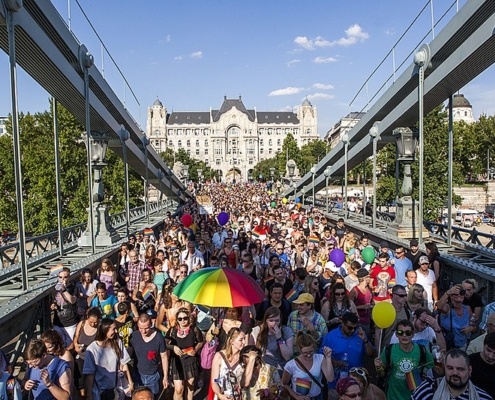
things to do in Budapest in June - the Pride - is Budapest safe to visit

What is the situation for LGBTQ+ travelers?

This is the question we receive most often, and it deserves a careful answer.

According to the U.S. State Department’s official Hungary travel advisory, there are no legal restrictions on same-sex sexual relations in Hungary. However, the legal landscape around public events has changed significantly.

In April 2025, Hungarian lawmakers passed a constitutional amendment restricting LGBT+ public events, following a March 2025 law that banned Pride protests specifically. The law also enabled authorities to use facial recognition tools to identify people attending LGBT+ events.

At the same time, Budapest’s annual Pride event — one of the largest in Central Europe — did take place in June 2025, attended by large numbers of local residents and international visitors.

Budapest Pride is scheduled annually in June. If you are planning to attend or simply wish to be aware of the legal context, we recommend checking your country’s official travel advisory. This is especially relevant when considering: Is Budapest safe to visit from a personal perspective?

Will my visit support a government I disagree with politically?

This is a question some of our guests ask us honestly, and we respect it.

We are a small, locally owned business. Our guides are Budapest residents whose livelihoods depend on visitors choosing to come and walk this city with them. We are not affiliated with any government body, political party, or state tourism agency.

How your spending flows through any economy is a complex question that each traveler has to answer for themselves.We can only tell you what we are: a group of local tour guides who love this city and want to share it with the world.

Budapest couples experiences - is Budapest safe to visit

What will I actually see and experience on the streets of Budapest?

A city that is very much alive.

Budapest has a well-established café culture, thermal baths, an independent arts scene, internationally recognized architecture, and a warmth toward visitors that has characterized it for generations.

For many visitors who initially worry: Is Budapest safe to visit, the experience on the ground often feels very different from what they expected — a lively, welcoming, and culturally rich European capital.

That is what our guides show you every day.

Practical information for your visit

Recommended reading before you travel:
Check your own government’s official travel advisory for Hungary (UK Foreign Office, U.S. State Department, EU).

If you are visiting during major political events or national holidays, be aware that there may be demonstrations or gatherings in central Budapest. The Hungarian parliamentary election is scheduled for 12nd of April 2026. If you are visiting around that time, be aware that there may be demonstrations or political gatherings in central Budapest.

Currency: Hungary uses the Hungarian forint, not the euro. Budapest currently offers strong value for visitors from the eurozone and beyond.

Our tours are free to join — you pay what you feel the experience was worth at the end. All our guides are Budapest residents. 

Final Thoughts

For most travelers asking: Is Budapest safe to visit? The answer is yes — with awareness and realistic expectations.

Every city has a surface and a depth. Budapest’s surface is extraordinary enough — the Parliament at dusk, the thermal baths, the market halls, the bridges. But its depth is what stays with visitors long after they leave.

We are Budapestians. We grew up here, we live here, and we know this city the way only locals do. When you walk with us, you get both layers.

We’d love to show you around.

Hidden Gems in Budapest: 10 Places Beyond the Tourist Trail (2026 Guide)

Updated March 2026

Budapest is famous for headline attractions like the Parliament, Fisherman’s Bastion, and the Chain Bridge. But the city’s real character often appears when you walk a few streets beyond the postcard viewpoints. Hidden courtyards, quiet promenades, Art Nouveau neighborhoods, local market halls, and underground caves reveal a more authentic side of Budapest — the one locals experience every day. In this guide, we share 10 hidden gems in Budapest that are perfect for travelers who want to explore the city on foot and go beyond the usual tourist trail. Whether you are visiting for a weekend or building a longer itinerary, these places offer a more personal, local, and memorable side of the Hungarian capital. And if you want more than directions — if you want local stories, context, and neighborhood insight — many of these places connect naturally with our TripToBudapest.hu – Free Budapest walking tours and private routes.

Trip with Friends in Budapest - hidden gems in Budapest

Why Explore Hidden Gems in Budapest on Foot?

Budapest is one of Europe’s best walking cities.  Exploring hidden gems in Budapest on foot allows you to connect different neighborhoods and discover places that are often missed in typical travel itineraries. Many of its most rewarding places are not major landmarks but side streets, residential districts, hidden passages, and local viewpoints that only make sense when explored slowly. Walking helps you notice the details that bus tours and fast itineraries miss: old staircases, secret courtyards, small galleries, quiet parks, Ottoman-era bath architecture, and the rhythm of real neighborhood life. For visitors looking for non-touristy things to do in Budapest, a walking-focused itinerary is one of the best ways to experience the city.

hidden gems in Budapest - Music Academy

10 Hidden Gems in Budapest You Should Not Miss


  1. Wekerletelep Garden City

One of the most unusual hidden places in Budapest, Wekerletelep feels completely different from the historic city centre. Built in the early 20th century as a planned garden suburb, it is known for folk-inspired architecture, leafy streets, and a calm residential atmosphere. It is far from the usual tourist routes, which is exactly why it stands out.

Why locals love it

Unique architectural style, unlike central Budapest
Quiet squares and community feeling
Local cafés, markets, and everyday neighborhood life
Best time to visit: Late morning or early afternoon. 

Why it’s a hidden gem: Wekerletelep shows a side of Budapest that most first-time visitors never see — peaceful, local, and architecturally distinctive.


  1. Újlipótváros and Szent István Park

If you want to see how many locals actually live, walk, and spend their afternoons, head to Újlipótváros in District XIII. This elegant neighborhood is known for Art Deco and Bauhaus-influenced buildings, independent bakeries, and a relaxed café culture. Szent István Park, right by the Danube, is one of the area’s most loved green spaces.

Why locals love it

Authentic residential atmosphere
Excellent cafés and bakeries on Pozsonyi út
Danube views without the heavy tourist traffic
Best for: Brunch, coffee, sunset walks, and a quieter local experience north of the Parliament.

hidden gems in Budapest

  1. Castle District Backstreets

Most visitors stop at Fisherman’s Bastion, take the view, and leave. But the real magic of the Castle District often begins just beyond the main terrace.

Walk along:

Táncsics Mihály utca
Úri utca
Fortuna utca
Tóth Árpád sétány
These streets offer hidden courtyards, old townhouses, medieval character, and one of the most peaceful panoramic promenades in Budapest.

Best time to visit: Early morning or sunset.

Local tip: Tóth Árpád sétány is especially beautiful when the trees are in leaf and the crowds are still low. Book our daily Free Buda Castle Distric Tours.


  1. Veli Bej Thermal Bath

Budapest is famous for thermal baths, but many travelers only hear about the largest and busiest ones. Veli Bej Bath is a more peaceful alternative with a calmer atmosphere and a strong historical feel. Originally built during the Ottoman period, it combines restored Turkish bath architecture with modern facilities.

Why choose Veli Bej

Less crowded than major bath complexes
Beautiful dome and atmospheric interior
Better for a quiet, relaxing experience


For visitors searching for hidden thermal baths in Budapest, this is one of the best options.

hidden gems in Budapest

  1. Jewish Quarter Street Art Alleys

The Jewish Quarter is often associated with ruin bars and nightlife, but during the day it becomes one of Budapest’s most interesting open-air galleries. Murals tucked into side streets reflect local history, urban identity, memory, and modern culture. Because street art changes over time, the neighborhood always feels alive.

Why it matters

A different way to understand the district
Great for photography during daylight hours
Easy to combine with cafés, synagogues, and evening plans
Best time to visit: Daytime, especially late morning or afternoon.

Book Your Free Jewish Quarter Walking Tour.

hidden gems in Budapest

  1. Local Market Halls Beyond the Great Market Hall

The Great Market Hall is well known, but smaller market halls often provide a more authentic Budapest experience.

These neighborhood markets are where locals actually shop for produce, meat, bread, pastries, and Hungarian pantry staples. They are practical, social, and much less staged than the main tourist market. Rákóczi Square Market Hall (District VIII), Lehel Market Hall (District XIII), or on the Buda side, close to the Castle District, the Fény utcai Market (District II).

Why visit smaller market halls?

Better local atmosphere
More everyday life, fewer tour groups
Good for affordable snacks and traditional ingredients


If you are looking for authentic food experiences in Budapest, local markets are a strong place to start.


  1. Buda Underground Caves

Many visitors are surprised to learn that Budapest sits above an extensive cave system, especially beneath the Buda side of the city.

Two of the best-known options are:

Pál-völgyi Cave

Szemlő-hegy Cave


These caves offer a different view of Budapest — geological rather than architectural — and they are especially appealing in warmer months because of their stable temperatures.

Why they stand out

Unexpected natural side of the city
Good year-round activity
Easy to pair with a broader Buda itinerary


For travelers interested in unusual things to do in Budapest, the cave system is one of the city’s most underrated experiences.


  1. Palace Quarter in District VIII

The Palace Quarter is one of the most elegant but overlooked parts of Pest.

Historic palaces, university buildings, renovated public spaces, and quieter streets make it feel refined without being overly polished. It offers the atmosphere of central Budapest without the intensity of the busiest tourist areas.

Highlights include

The Hungarian National Museum
Small galleries and cafés
Architectural details throughout the side streets


This area is ideal for visitors who want to walk through a historic neighborhood at a slower pace.

Winter Activities Budapest 2025 - hidden gems in Budapest

Source: https://www.flickr.com/photos/juzoli/8471240513/

  1. Local Danube Sunset Spots

The main Danube promenade is beautiful, but there are quieter places where locals prefer to sit and watch the light change over the river.

Popular alternatives include:

Benches near Rákóczi Bridge

The Buda riverside below the universities

Peaceful areas north of Margaret Bridge


These places feel less curated and more lived-in. Bring a drink, sit by the water, and let the city come to you.

Best time: Arrive about 30 to 45 minutes before sunset.

Art Nouveau in Budapest - hidden gems in Budapest

  1. Hidden Courtyards of Pest (Andrássy Avenue & Side Streets)

Some of Budapest’s most beautiful spaces are completely invisible from the street. Behind historic façades across central Pest, you can often find hidden inner courtyards, passageways, and staircases that most visitors simply walk past.

Many of these buildings were designed in the late 19th and early 20th centuries, when apartment houses were built around elegant interior courtyards. Today they reveal a quieter and more intimate side of the city.

What you might discover

Spiral staircases and decorative iron railings
Art Nouveau and historic architectural details
Quiet cafés, galleries, or small design shops
Unexpected gardens or peaceful residential courtyards


Courtyards near Andrássy Avenue

Some of the most interesting hidden courtyards can be found just off Andrássy Avenue, Budapest’s grand historic boulevard connecting the city centre with Heroes’ Square. Look into the entrance gates along the smaller streets branching from the avenue, especially:

Nagymező utca – a lively cultural street with theatres and hidden courtyards
Hajós utca – known for restaurants, galleries, and beautiful historic buildings
Dessewffy utca – quieter residential architecture with elegant staircases
Lendvay utca – a leafy street near Heroes’ Square with impressive villas and hidden gardens

Many of these courtyards are open during daytime hours when the entrance gates are unlocked. For visitors searching for secret places in Budapest, hidden courtyards are among the most rewarding discoveries.


Budapest’s real charm often reveals itself beyond the main sights, in the quieter streets and local neighborhoods. Exploring these hidden gems in Budapest gives you a deeper, more personal connection to the city. Slow down, wander a little, and you’ll discover a side of Budapest most visitors never see.

Budapest Public Transport Tips Cheat Sheet (2026) – TripToBudapest.hu

Quick reference for visitors using the metro, trams, and buses in Budapest. These Budapest public transport tips help travelers move around the city easily and avoid common mistakes.

Save this guide or keep it on your phone while exploring the city. These simple Budapest public transport tips cover tickets, airport transport, scenic tram routes, and night buses.

Quick Tip – Best ticket for most tourists

24 hour travel card for unlimited metro, tram and bus rides.

A single ticket is valid for one ride in one direction on a single vehicle. On the metro, you may transfer between metro lines within the system as long as you do not exit the station area.

Passengers aged 65 and over can travel free on all Budapest public transport if they carry a valid ID or passport.

Student Monthly Budapest Pass is available for university students with a valid Hungarian, EU/EEA/Swiss university student ID, or ISIC card.

Airport to city centre: 100E Airport Express bus to Deák Ferenc tér (~45 min).

Scenic tram ride: Tram 2 along the Danube for views of Parliament and Buda Castle.

24 hour transport line: Tram 4/6 runs day and night along the Grand Boulevard.

Historic metro line: Metro M1 under Andrássy Avenue to Heroes’ Square and City Park.

Ticket validation: Validate paper tickets before travel or activate mobile tickets in BudapestGO.

Avoid fines: Always validate your ticket and keep it until the end of the journey.

Main transport hub: Deák Ferenc tér – intersection of M1, M2, M3 metro lines.

Buda Castle access: Metro M2 to Széll Kálmán tér, then Bus 16.

Night transport: Night buses replace metro lines after midnight; tram 6 runs all night.

These Budapest public transport tips make it easier for visitors to navigate the city confidently.

Extra Local Tips

Stand on the right side of escalators in metro stations.

Let passengers exit trams and the metro before boarding.

Keep your ticket ready – inspectors check regularly.

Use the BudapestGO app for route planning and digital tickets. For more local tips, join our walking tours!

Budapest Must See Attractions: 9 Experiences You Shouldn’t Miss (2026)

Budapest is one of Europe’s most beautiful and walkable capitals, where imperial architecture, thermal baths, river views, and lively neighborhoods sit close together. If you only have a few days in the Hungarian capital, focusing on the Budapest must see attractions will help you capture the real essence of the city.

This guide highlights the most important Budapest must see attractions for first-time visitors, combining famous landmarks with meaningful historical sites and local perspectives. Each stop includes tips on why it matters, when to visit, and how to connect it into a smooth walking itinerary so you can explore the most memorable Budapest must see attractions without rushing.

The following list brings together the Budapest must see attractions that every visitor should experience at least once.

Parlament -one day itinerary in Budapest

1. Hungarian Parliament, Liberty Square & the Danube Promenade

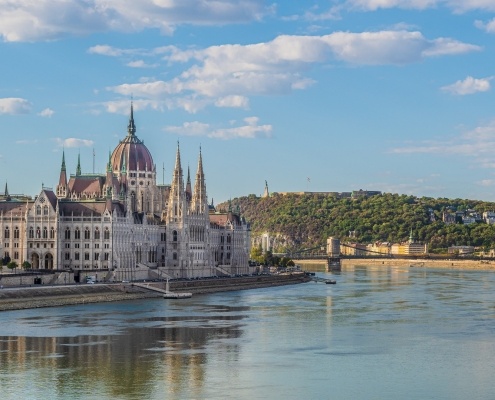
The Hungarian Parliament Building is the architectural symbol of Budapest and one of the most spectacular parliament buildings in Europe. Its neo-Gothic design dominates the riverfront and represents the political and historical heart of Hungary. Just a short walk away lies Liberty Square, a fascinating place where beautiful Art Nouveau and historic buildings stand alongside monuments reflecting Hungary’s complex 20th-century history.

Nearby along the river you’ll also find the moving Shoes on the Danube Bank, one of the city’s most powerful memorials.

Why is this area essential for visitors?

Combines architecture, history, and memorials in one compact area
Shows multiple layers of Hungarian history — imperial, wartime, and Cold War
Offers classic views along the Danube Promenade


Highlights to explore

Hungarian Parliament exterior and guided tours
Art Nouveau and historic buildings around Liberty Square
Cold War-era monuments and political memorials
The Shoes on the Danube Holocaust Memorial


The best way to experience it

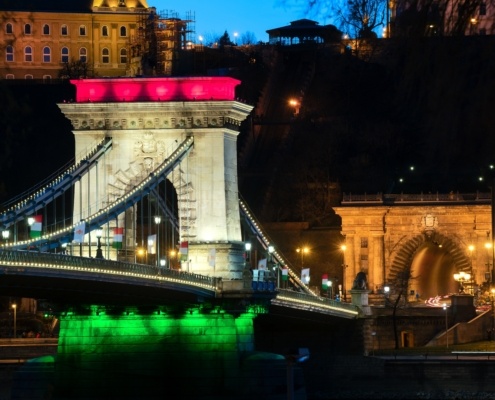
Walk from the Széchenyi Chain Bridge toward Parliament along the Danube promenade, then turn inland to explore Liberty Square.

Local tip: Visit at sunset and stay until nightfall. Parliament illuminated over the Danube is one of the most beautiful night scenes in Europe. Book our daily Free Budapest Walking Tours.

Budapest must see attractions

2. Buda Castle District, Fisherman’s Bastion & Matthias Church

The Buda Castle District is a hilltop neighborhood filled with cobblestone streets, medieval buildings, museums, and some of the most famous viewpoints in the city. Here you’ll find the iconic Fisherman’s Bastion and the beautifully decorated Matthias Church, two landmarks that define Budapest’s skyline.

Why it’s a must-do

The best panoramic views of the Danube and Parliament
A historic area where medieval, Ottoman, and Habsburg influences meet
One of the most atmospheric walking districts in Budapest


Best way to explore

Take the Bus 16 up to the hill, then explore the district slowly on foot.

After visiting the main viewpoints, wander along quieter streets like Tóth Árpád sétány, which offers beautiful views with fewer crowds.

Best times to visit

Early morning for peaceful photos
Late afternoon or blue hour for evening views


Local tip: Some terrace sections of Fisherman’s Bastion are free, so you can enjoy excellent views without purchasing a ticket. Join our daily Free Buda Castle District Tours.

Budapest Easter events 2026 - Budapest travel March April

3. Széchenyi Thermal Bath (or Another Historic Bath)

Budapest sits on natural hot springs, and visiting a thermal bath is one of the most unique experiences in the city. The most famous bath complex is Széchenyi Thermal Bath, located in City Park and known for its outdoor pools surrounded by Neo-Baroque architecture.

Why it’s a must-do

Thermal bathing is part of everyday Hungarian culture
A relaxing break between sightseeing activities


The best way to experience it

Book your tickets in advance, especially during the high season when popular attractions can sell out quickly.

Visit early morning or late evening for fewer crowds


Other historic baths worth visiting include Rudas Baths, Lukács Baths, and Veli Bej.

4. St. Stephen’s Basilica & Rooftop View

The monumental St. Stephen’s Basilica is the largest church in Budapest and one of the city’s most important landmarks. Visitors can climb or take an elevator to the dome viewing platform for a 360-degree panorama of Budapest.

Why visit

Beautiful architecture and interior decoration
One of the best rooftop views in the city
Local tip: Check if there is an evening organ concert during your visit.

Franz Liszt in Budapest - Opera

5. Andrássy Avenue, Opera House & Heroes’ Square

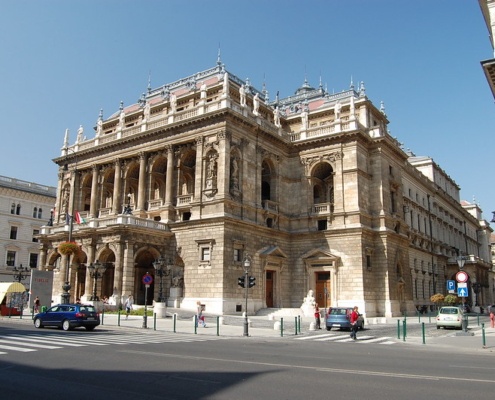
The elegant Andrássy Avenue connects the city centre with Heroes’ Square. Along the way you’ll see the stunning Hungarian State Opera House, historic mansions, cafés, and cultural institutions.

Why visitors love it

Shows Budapest’s 19th-century golden age architecture
Beautiful, elegant boulevard for walking


Tip: If you prefer not to walk the full distance, take the historic Budapest Metro Line M1, Europe’s second-oldest metro line.

Chain Bridge - in St Patricks day - Budapest in March

Photo by Russell Skidmore

6. Danube River: Chain Bridge & Evening Cruise

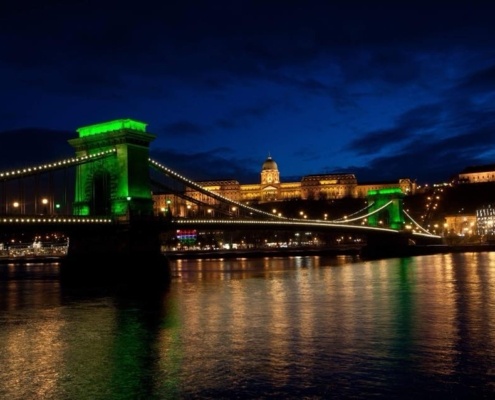
The Danube River divides Budapest into Buda and Pest and creates the city’s iconic skyline. Walking across the Széchenyi Chain Bridge and taking a river cruise are two unforgettable ways to experience the city.

Best plan

Walk across the bridge around sunset, then take an evening Danube cruise after dark when Budapest’s skyline is illuminated. Most cruise departure piers are located on the Pest side of the river between the Elisabeth Bridge and the Chain Bridge, making it easy to combine the walk with a cruise.

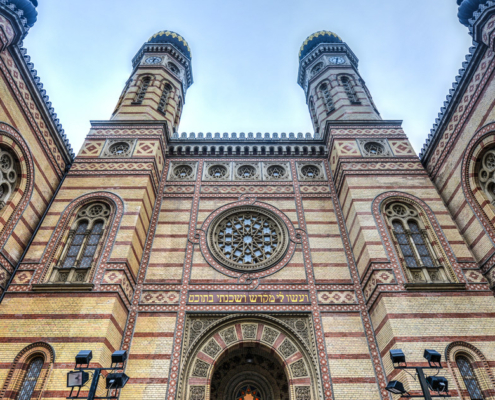
The main entrance of the Dohány street Synagogue which has a Moorish style that features a mixture of Byzantine, Romantic and Gothic elements as well

7. Jewish Quarter & Ruin Bars

The vibrant Budapest Jewish Quarter combines historic synagogues, street art, cafés, and nightlife. The most famous ruin bar is Szimpla Kert, located inside a decorated courtyard.  Arrive early in the evening, grab a drink, and explore the different rooms and courtyards — locals usually move from bar to bar rather than staying in one place all night. Most ruin bars in Budapest are free to enter, so you can easily walk in and experience their unique atmosphere. However, as in any busy nightlife district, keep an eye on your belongings, watch your drink, and be cautious when interacting with strangers.

Why visit

Unique mix of history and modern culture
Lively nightlife scene


8. Great Market Hall & Hungarian Food

The historic Great Market Hall (Nagyvásárcsarnok) is one of the best places to experience Hungarian food culture. Located near the Danube and Liberty Bridge, this beautiful 19th-century market combines local ingredients, traditional dishes, and everyday Budapest life under one roof. If you want some local help recommending the best things to try, you can join our Highlights of Budapest Tour or our Street Food tour.

What to try at the market

Visitors should try some classic Hungarian specialties such as:

Goulash (gulyás) – Hungary’s famous paprika beef soup
Lángos – fried flatbread topped with sour cream and cheese
Hungarian sausages (kolbász)
Paprika products – Hungary’s most famous spice
Pálinka – traditional Hungarian fruit brandy
Rétes (Hungarian strudel with cabbage and puppy seed) – a classic dessert
Many food stalls upstairs offer quick meals, making it a good stop for lunch while sightseeing.

What to buy as souvenirs

The market is also a great place to buy authentic Hungarian food souvenirs:

paprika spice packets
salami and sausages
Hungarian honey
Tokaj wine
handmade crafts and embroidered textiles


Best time to visit

Visit earlier in the day (before 11:00) to avoid large tour groups and experience the market when locals are still shopping.

Local tip

After visiting the market, take a short walk across Liberty Bridge toward the Buda side or follow the Danube promenade for beautiful river views.

Trip with Friends in Budapest

9. Gellért Hill – Citadel Viewpoint

The panoramic views from Gellért Hill offer one of the best perspectives of Budapest. Rising above the Danube on the Buda side of the city, the hill provides sweeping views of the Parliament, Buda Castle, the bridges of the Danube, and the entire Pest skyline. At the top stands the historic Citadel, which has recently undergone a major restoration and is expected to reopen in spring 2026, making the viewpoint even more attractive for visitors.

Why it’s worth visiting

One of the best panoramic viewpoints in Budapest
Wide views of both Buda and Pest across the Danube
One of the city’s most popular sunset spots


The best way to visit

The hill can be reached by walking from Gellért Square or Elizabeth Bridge. The climb includes paths and staircases, but there are several viewpoints along the way if you prefer a shorter walk. Wear comfortable shoes and bring water, especially in summer.

Nearby attractions worth combining

Several interesting sights are located around the hill, making it easy to turn the visit into a half-day exploration:

Rudas Thermal Baths – a historic Ottoman-era bathhouse with rooftop pools overlooking the Danube


Garden of Philosophers – a quiet park with statues of great thinkers such as Jesus, Buddha and Confucius
Gellért Hill Cave Church – a unique chapel carved into the rock face of the hill
Liberty Statue – the famous monument at the top of the hill symbolizing Hungary’s freedom
Gellért Baths – a beautiful Art Nouveau thermal bath located at the base of the hill


Local tip

Start your walk in the late afternoon, reach the viewpoint around sunset, and finish the evening relaxing in Rudas Baths, where the rooftop pool offers one of the most memorable night views in Budapest.


FAQ: Budapest Must-See Attractions

What are the must see attractions in Budapest for first-time visitors?
The most famous Budapest must see attractions include the Hungarian Parliament, the Buda Castle District, Fisherman’s Bastion, St. Stephen’s Basilica, the Danube riverfront, Széchenyi Thermal Bath, the Jewish Quarter, the Great Market Hall, and the panoramic viewpoints of Gellért Hill.

How many days do you need to see the main attractions in Budapest?
Most travelers need about 2–3 days to visit the main Budapest must-see attractions. This allows time to explore the Parliament area, the Buda Castle District, relax in a thermal bath, walk along the Danube, and discover neighborhoods like the Jewish Quarter.

Is Budapest a walkable city for tourists?
Yes. Budapest is one of Europe’s most walkable capitals. Many of the most popular Budapest must see attractions are located close to each other in the central districts, making it easy to explore the city on foot.

Are the Budapest thermal baths worth visiting?
Yes. Budapest’s thermal baths are one of the city’s most unique cultural traditions and one of the most memorable experiences for visitors. Historic baths like Széchenyi, Rudas, and Lukács allow travelers to relax in natural hot spring water between sightseeing activities.

Discover Budapest Must See Attractions With a Local Guide

Budapest becomes far more interesting when you hear the stories behind the buildings, streets, and monuments. At TripToBudapest.hu, our free walking tours connect the major landmarks with hidden corners and local history.

Join one of our daily free tours to experience the city beyond the guidebooks and discover the real stories behind Budapest’s streets.


Budapest Travel March April 2026: Opening Hours &Travel Tips

Planning Budapest travel March April 2026? This practical guide helps you understand what to expect when visiting the Hungarian capital in early spring. From thermal bath opening hours and museum schedules to public holidays and election-day travel conditions, knowing the details in advance makes your trip smoother.

This Budapest travel March April guide covers the most important information travelers need — including transport updates, restaurant hours, and how national events like the March 15 holiday and the April 12 election may affect sightseeing. Budapest remains safe and welcoming, and spring is one of the most enjoyable times to explore the city with fewer crowds and comfortable walking weather.

Whether you are visiting for the first time or returning to see more, good planning makes Budapest travel March April easier and more enjoyable.

Budapest travel March April

Is Budapest Open During March 15?

Yes — Budapest is open on March 15, but it is a national holiday.

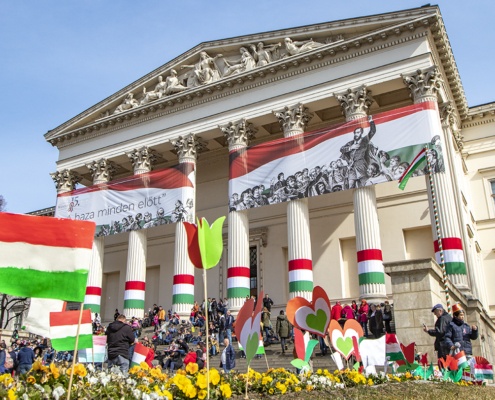
March 15 commemorates the 1848 Revolution and is one of Hungary’s most important public holidays.

What travelers should expect on March 15:

  • Large public gatherings in the city center
  • Temporary road closures
  • Modified public transport routes
  • Crowds around Parliament, Andrássy Avenue, and Heroes’ Square

Most restaurants, cafés, and thermal baths remain open, but some museums may close or operate on reduced hours.

Travel tip: Plan indoor attractions or morning activities to avoid afternoon crowds. Avoid driving in central districts (V, VI, VII, VIII, IX).


What Happens in Budapest on April 12, 2026?

April 12 is Hungary’s national election day.

For tourists, this usually means:

  • Polling stations open throughout the city
  • Possible gatherings near Parliament or major squares
  • Slightly busier public transport in the morning and evening

There are typically no tourist restrictions, and attractions remain open as usual.

Budapest functions normally during elections, but allow extra travel time if visiting central districts.


Budapest Thermal Bath Opening Hours (2026)

Budapest is famous for its thermal baths. Below are typical opening hours (always check official websites before visiting):

  • Széchenyi Thermal Bath: Daily 7:00 – 20:00 ( weekend: 8:00-20:00)
  • Rudas Thermal Bath: Daily 6:00 – 20:00
  • Lukács Thermal Bath: Daily 7:00-19:00

Important: High Season Ticket Prices

Please note that thermal bath ticket prices are higher during peak periods, including:

  • March 14–15 (National Holiday weekend)
  • April 3–5 (Easter high season period)

On these dates, weekend or holiday pricing applies, and tickets can sell out faster than usual.

Thermal bath tip:
Arrive early (before 9:00 am) for fewer crowds. Booking tickets online in advance is strongly recommended during high season.

Family travel tip: Budapest’s historic thermal baths are not suitable for young children. Families with children under 14 should check for designated family-friendly pools before planning their visit.

March 15th in Budapest

Budapest Museum Opening Hours

Most museums in Budapest follow this schedule:

  • Tuesday–Sunday: 10:00 – 18:00
  • Closed on Mondays

Popular museums include:

  • Hungarian National Museum (open from 14:00–18:00 on March 15)
  • Museum of Fine Arts
  • House of Terror Museum
  • Budapest History Museum

Always verify on the official website before visiting.

Restaurant Opening Hours in Budapest

Typical restaurant hours:

  • Lunch: 12:00 – 15:00
  • Dinner: 18:00 – 22:00 or 23:00
  • Cafés: 8:00 – 18:00

In tourist areas like the Jewish Quarter, Buda Castle District, and along the Danube Promenade, many places stay open continuously.

Reservations are recommended on weekends and national holidays like March 15.

Will Political Events Affect My Trip to Budapest?

Budapest is generally very safe for travelers, even during political events.

However, during:

  • March 15 national celebrations
  • Election day (April 12)

You may experience:

  • Temporary road closures
  • Public transport route changes
  • Large gatherings in central squares

Avoid driving in the city center on these dates. Use the metro system instead — it is the fastest and most reliable option.

Budapest travel tips 2026

Public Transport Tips for Visitors

Budapest public transport operates on:

  • Sunday/holiday schedule on March 15
  • Normal Sunday schedule on April 12

Best metro lines for tourists:

  • M1 (Historic Millennium Underground)
  • M2 (connects Buda and Pest)
  • M3 (north–south line)

Download the BudapestGO (BKK) app for real-time updates. Reliable public transport makes Budapest travel March April easy even during holidays and public events.


Is Budapest Safe to Visit in 2026?

Yes. Budapest remains one of Europe’s safest capital cities for visitors.

Basic travel advice:

  • Be aware of large crowds
  • Keep valuables secure — especially at Grand Central Market, Váci Street, St. Stephen’s Basilica area, and the Jewish District at night (pickpockets are rare, but if they operate, they are in busy tourist zones)
  • Allow extra time during public events

Most travelers experience no disruptions and enjoy the vibrant street atmosphere during national celebrations.

Explore Budapest With Us

At Trip to Budapest – Free Walking Tours, we help you experience the city beyond the headlines.

Whether you visit during a quiet weekday or a historic national celebration, our local guides provide context, history, and insider tips to make your trip unforgettable.

Join one of our daily free walking tours and discover:

Budapest is always worth visiting, and Budapest travel March April offers a great balance of lively events and relaxed sightseeing.