Tag Archive for: 2026

Budapest October 23: 70th Anniversary Guide, What’s Open & Events

Every year on October 23, Budapest comes to a standstill. Flags with a hollow circle cut cleanly from their center flap along grand boulevards, candles flicker on street corners, and the nation stops to honor the thirteen days in 1956 when Hungarian citizens shook the foundations of the Soviet empire.

If you are visiting Budapest on or around October 23, here is what happened, why the date carries such emotion, and how to navigate the city as a traveler.

Budapest October 23: What Travelers Need to Know

Holiday Status

Official national holiday commemorating the 1956 Revolution and the 1989 Republic Day.

Shops & Malls

Supermarkets, banks, and major retail chains are generally closed for the national holiday.

Dining & Bars

Most restaurants, cafés, bakeries, and bars in the central districts remain open, particularly in Districts V, VI and VII.

Public Transit

Public transport operates on a Sunday/holiday schedule, with possible road closures around Parliament during official ceremonies.

Free Access

Some state-run museums and special attractions may offer free admission as part of the national holiday programme. Check the official schedule before visiting.

Atmosphere

Expect official morning ceremonies, family programmes, concerts, historical events and special evening activities around the city.
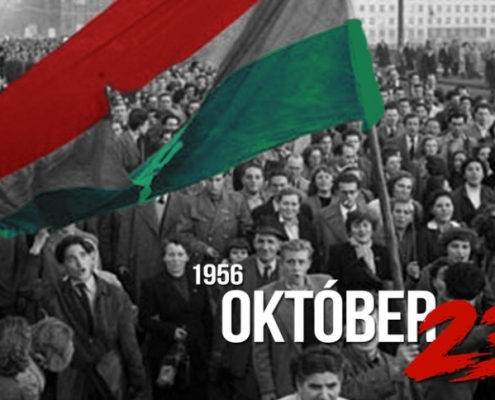
Budapest October 23 - The 23rd of October is a national holiday in Hungary commemorating the beginning of the 1956 revolution against the Communist regime

The 1956 Revolution: The 60-Second History

By 1956, Hungarians had endured a decade of Stalinist terror under Mátyás Rákosi and the ÁVH secret police. The spark ignited on the afternoon of October 23, when university students held a peaceful solidarity march demanding free elections, basic human rights, and the withdrawal of Soviet troops.

By nightfall, 200,000 citizens had flooded the streets:

  • The Toppled Tyrant: Protesters cut the Stalin monument down at City Park (Városliget), dragging only his hollow bronze boots through the boulevards.
  • The Flag with the Hole: Marchers cut the Soviet communist coat of arms out of the Hungarian tricolor, inventing the enduring symbol of Hungarian freedom.
  • The First Shots: When crowds gathered outside the Hungarian Radio building on Bródy Sándor utca to broadcast their demands, the ÁVH fired into the unarmed crowd. Peaceful protest turned into armed rebellion overnight.

For twelve days, factory workers, teenagers (“the kids of Pest”), and defecting soldiers fought Soviet armor with hunting rifles and Molotov cocktails. A reform government led by Imre Nagy announced Hungary’s withdrawal from the Warsaw Pact and declared national neutrality.

Operation Whirlwind: On November 4, 1956, Moscow launched a brutal counter-assault with over 1,000 tanks and 60,000 troops. Resistance was crushed street by street in working-class bastions like Corvin köz and Csepel.

  • The human cost: Around 3,000 Hungarians died, 20,000 were wounded, 22,000 were imprisoned, and Imre Nagy was executed in secret in 1958.
  • The Exodus: Roughly 200,000 Hungarians (nearly 2% of the country) fled across the border into Austria, permanently scattering families across the globe.

Budapest October 23

October 23 Anniversary: Key Sights & Schedule

For visitors spending Budapest October 23 in the city, the official commemorations offer a rare opportunity to experience Hungarian history as part of everyday public life.The city hosts public ceremonies retracing the historic events of 1956:

  • October 22 (Eve), ~16:30 – The Historic Torchlight March: The commemorations open the evening before October 23. Around 16:30, thousands carry flaming torches along the Buda embankments from the Technical University (Műegyetem) directly north to Bem József tér, retracing the original 1956 student route. Anyone can watch or join along the river.
  • 07:30 – Flag-Raising at Kossuth Lajos tér: Military honors and the raising of the national flag outside the Hungarian Parliament.
  • 10:00 to 18:00 – Free Entry to the House of Terror Museum (Andrássy út 60): Free admission all day to the former ÁVH headquarters. Visitors line the exterior “Wall of Heroes” with hundreds of memorial candles.
  • 15:00 to 20:00 – Parliament Free Open Day: Walk through the Grand Staircase, Dome Hall, and view the Hungarian Holy Crown without admission fees (arrive early to avoid long queues).
Budapest October 23

6 Sites in Budapest Where You Can Still Touch 1956 History

  1. In Memoriam 1956 Memorial & Underground Exhibition (Kossuth Lajos tér): While the Ministry of Agriculture’s exterior bullet-scarred facade across from Parliament is currently behind scaffolding, head underground on the south side of Kossuth Square. A sunken memorial tunnel leads to the In Memoriam 1956 exhibition, built directly beneath the site of the tragic “Bloody Thursday” massacre of October 25, 1956. Entry is completely free, offering an evocative, multimedia look at the events through archival footage, survivor accounts, and artifacts recovered from the square.
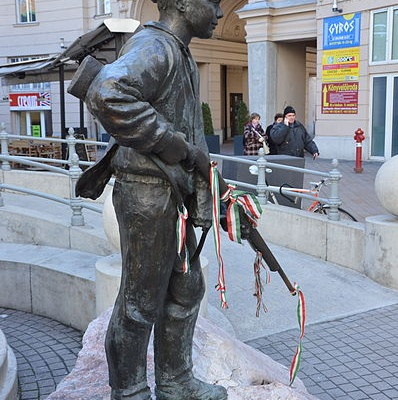
  2. Corvin köz & the Pest Boy Statue: This alleyway curved around the Corvin Cinema was the stronghold where young street fighters held off Soviet tanks for over a week. A bronze statue of an armed teenage insurgent stands guard today.
  3. House of Terror (Terror Háza): The basement labyrinth served as the real detention and torture cells of the communist ÁVH secret police.
  4. The Relocated Imre Nagy Statue (Jászai Mari tér): The moving bronze monument depicts the martyr prime minister standing on a bridge, looking toward the Danube.
  5. The István Bibó Memorial (Kossuth tér): Honoring the lone cabinet minister who refused to flee the Parliament building as Soviet tanks surrounded it on November 4, typing out a defiant proclamation to the world.
  6. Memento Park: On Budapest’s southwestern edge, explore where the gigantic statues of Lenin, Marx, and the replica of Stalin’s empty boots now rest in ideological retirement.
Budapest October 23

Frequently Asked Questions

Are shops and restaurants open in Budapest on October 23?

Supermarkets, banks, and major retailers are closed for the national holiday. However, most restaurants, cafés, independent bakeries, and ruin bars in the city center remain open.

Are the thermal baths open on October 23?

Yes. Széchenyi, Rudas, and Lukács Baths remain open on October 23, operating on weekend/holiday schedules and pricing.

Can tourists watch the October 23 commemorations?

Yes, all outdoor ceremonies, including the flag-raising at Kossuth Lajos tér and the evening torchlight procession across the river, are completely open and free to the public.


Connect the Past with the Present on Foot

You can walk past these historic facades every day without realising which walls were chipped by artillery shells or which alleyways hid teenage resistance fighters. Whether you are interested in history or simply exploring the city, Budapest October 23 gives you a different perspective on places you might otherwise pass without knowing their story.

Join our guides on the daily Trip to Budapest Free Walking Tours. We bring the dramatic story of 1956 to life right where it happened—connecting the bullet scars on Pest’s grand facades with the living spirit of modern Budapest.
Budapest Autumn Colors: A Local Guide to the Best Fall Foliage Spots

A Local’s Guide to Budapest’s Autumn Colors: Margaret Island, City Park & Gellért Hill

While summer brings festival buzz and winter delivers fairytale Christmas markets, autumn gives Budapest a quiet, golden makeover. Between early October and mid-November, the Hungarian capital trades its humid heat for crisp air, copper-toned hillsides, and tree-lined avenues glowing under the low Central European sun.

 If you’re looking for the best Budapest autumn colors, these are the places we’d recommend exploring first — from peaceful island paths to panoramic hillsides and historic castle streets.


Quick Guide: Budapest Fall Foliage at a Glance

Location Best For Peak Foliage Window Top Photo Tip
City Park (Városliget) Fairytale architecture & golden canopy walks Mid to late October Frame Vajdahunyad Castle through turning oak and willow boughs (lake is drained after Sept 13 for ice-rink prep)
Margaret Island (Margitsziget) Canopy walks & Japanese Garden Mid-October to early November Red maples in the Japanese Garden and the London plane tree central promenade
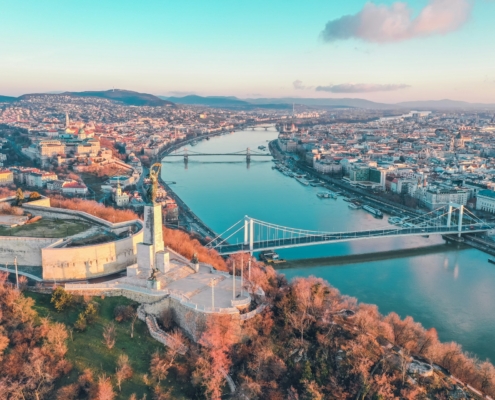
Gellért Hill Panoramic views over the Danube Late October to early November Forested mid-slope trails framing Liberty Bridge (and the open Citadella plaza at the peak)
Buda Castle (Tóth Árpád Sétány) Romantic ramparts & pastel villas Mid to late October Double row of ornamental sour cherry trees turned copper and amber against the city walls

The best Budapest autumn colors usually appear from mid-October to early November, with each of these locations offering a slightly different way to experience the season.


active travel in budapest - city park - Budapest Couples Experiences - Opera - patrycja-mancewicz-mDkrebpYQPQ-Budapest autumn colors

1.  City Park(Városliget): Fairytale Castles & Amber Canopies

City Park is Budapest’s grand urban playground, and in autumn, it looks straight out of a storybook.

The absolute highlight here is Vajdahunyad Castle, an eclectic fortress built in 1896 that blends Romanesque, Gothic, Renaissance, and Baroque architectural styles. In October, the surrounding ancient willow, plane, and oak trees turn deep reds, golds, and burnt orange.

  • Where to walk: Wander through the atmospheric inner courtyards of Vajdahunyad Castle and along the tree-lined promenades flanking the castle perimeter. Continue past the castle toward the sweeping green roof garden of the Museum of Ethnography for elevated views across the vibrant park canopy.
  • Important lake notice: Boating season ends and the lake closes around mid-September (usually by September 13). The basin is drained early so crews can begin the weeks-long transition to prepare the concrete base for the winter ice rink (Városligeti Műjégpálya). If you visit during peak foliage in October, expect a dry lake bed—so focus your camera upward to frame the Gothic spires and turrets through the turning autumn leaves instead.
  • Local tip: Pair your autumn stroll with an afternoon soak in the outdoor thermal pools of Széchenyi Baths, located right at the edge of the park. Soaking in 38°C (100°F) mineral water surrounded by steam and yellow leaves is a classic Budapest experience.

balint-miko-sL0wA0jjDsI-unsplash - Budapest autumn colors

2. Margaret Island (Margitsziget): Golden Alleys & Quiet Gardens

Margaret Island is one of our favorite places to experience Budapest autumn colors without the noise and traffic of the city centre. Floating peacefully in the middle of the Danube between Buda and Pest, Margaret Island is completely car-free—making it the cleanest, quietest place in central Budapest to experience the change of seasons.

The island’s grand central promenade is flanked by massive, hundred-year-old plane trees that drop carpets of crisp golden leaves across the paths.

  • The Japanese Garden: Head to the northern tip of the island to explore the Japanese Garden. The weeping willows, wooden footbridges, lotus ponds, and Japanese maples turn fiery shades of crimson in late October.
  • Franciscan Church Ruins: Tucked among horse-chestnut trees near the center of the island, these 13th-century Gothic stone arches framed by autumn branches create moody, atmospheric photo compositions.
  • How to explore: Rent a 4-wheel pedal car (bringóhintó) or a bike at the southern entrance near Margaret Bridge to cruise underneath the autumn canopy.

best time to visit Budapest - patrycja-mancewicz-mDkrebpYQPQ-Budapest autumn colors

3. Gellért Hill: Forested Trails & Panoramic River Vistas


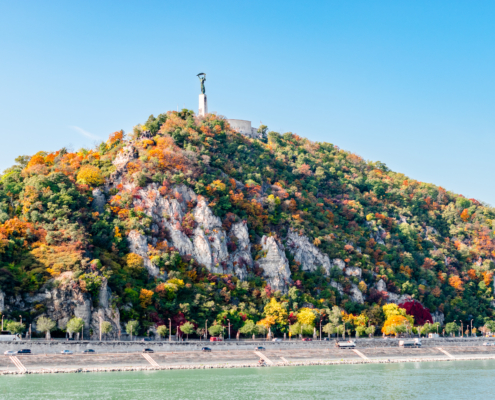
Rising sharply on the Buda riverbank, Gellért Hill gives you sweeping views over the Danube and the bridges—framed by densely wooded slopes.

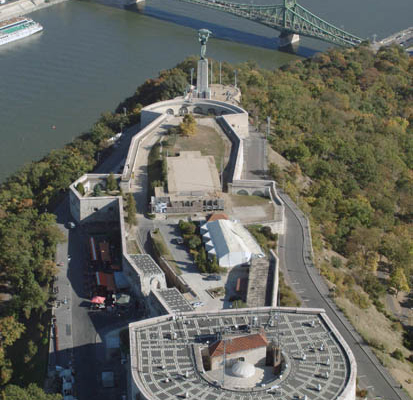
The long-term reconstruction of the Citadella fortress and hilltop park is complete, so you can walk right up to the Liberty Statue for wide 360-degree views (even if locals often complain over a drink about the heavy, modern concrete design).

However, the true magic for autumn foliage lies on the way up through the zig-zagging footpaths along the northeastern slope:

  • The Philosopher’s Garden (Filozófusok Kertje): A quiet plateau on the northern side of Gellért Hill featuring bronze statues and peaceful benches under sweeping chestnut trees, overlooking Buda Castle and the river below.
  • Liberty Bridge Viewpoint: Midway up the paved trail from the foot of Liberty Bridge, clearings in the amber foliage offer dramatic, direct angles of the green iron bridge connecting Buda to Pest.
  • Best time to visit: Late afternoon. The low golden hour sun strikes the Pest bank directly across the river, highlighting the Parliament building while the hillside trees glow in warm copper hues. Late October is also when the Budapest autumn colors around Gellért Hill are at their most impressive, particularly in the late afternoon when the low sunlight hits the trees and the river below.

balint-miko-sL0wA0jjDsI-unsplash - Budapest autumn colors

4. Hidden Gem: Tóth Árpád Sétány in the Castle District

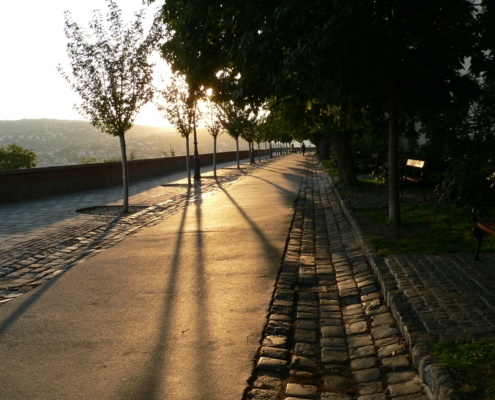
Famous in spring for its canopy of pink blossoms, the Tóth Árpád Sétány promenade running along the western ramparts of Buda Castle is equally breathtaking in autumn. For a quieter take on Budapest autumn colors, Tóth Árpád Sétány is hard to beat, combining colorful trees, historic buildings, and wide views over the Buda Hills.

The double row of ornamental sour cherry trees turns shades of copper, amber, and deep burnt orange in late October. As you stroll past historic pastel-painted villas and old gas lamps, you look out across the Buda Hills as the entire residential valley shifts into autumn colors. It is just a short 5-minute walk from Fisherman’s Bastion and Matthias Church.


When Do Budapest Autumn Colors Peak?

  • Early October: Trees remain mostly green, with hints of yellow beginning along the higher ridges of the Buda Hills. Mild, sunny walking weather.
  • Mid-October to Late October (Peak): The prime two-week window. Margaret Island, City Park, and Castle Hill turn rich shades of amber, bronze, and red. Ideal conditions for photography.
  • Early to Mid-November: Leaves begin dropping quickly, carpeting cobblestones and parks with crisp foliage. Days turn brisk (10°C to 12°C / 50°F to 54°F), and morning mist over the Danube adds a moody, romantic feel.

Frequently Asked Questions

When is peak autumn foliage in Budapest?

Peak autumn foliage in Budapest occurs between mid-October and early November. Late October is the prime window when trees turn vibrant gold, amber, and deep orange across Margaret Island, City Park, and the Buda Hills.

Where are the best spots to see fall colors in Budapest?

The best locations include Margaret Island for quiet London plane tree canopy walks, City Park around Vajdahunyad Castle for golden canopy walks, the forested footpaths of Gellért Hill overlooking Liberty Bridge, and Tóth Árpád Sétány in the Castle District.

Is Budapest pretty in autumn?

Yes, Budapest is exceptionally scenic in autumn. Crisp air, low golden afternoon light, and turning deciduous trees frame the city’s grand architecture along the Danube without the suffocating summer heat or crowds.

Is the Citadella on Gellért Hill open to visit?

Yes, the restored Citadella fortress and its surrounding hilltop park are open, offering wide 360-degree views of the Danube and Pest, though the most scenic autumn foliage is found along the winding forested trails leading up the slope.


Experience Budapest’s Golden Season on Foot

Autumn is our guides’ favorite time of the year to explore. The cobblestone streets are quieter, the midday heat is gone, and the city’s architectural secrets look stunning under golden skies.

Join us on our daily Trip to Budapest Free Walking Tours. Let our passionate local guides show you Buda Castle’s ramparts, Pest’s grand boulevards, and the hidden courtyards of the historic Jewish District.

Budapest for Solo Travelers: Safety, Social Spots & The Ultimate Guide to Exploring Alone


Budapest for solo travelers offers the perfect balance of independent sightseeing, social experiences, and the freedom to explore at your own pace it is definitely one of the most rewarding European capitals to take on by yourself. It is walkable, architecturally stunning, remarkably safe, and full of social spaces where striking up a conversation feels effortless.

Whether you want to spend days wandering through quiet art museums or you are looking to connect with other travelers over a craft beer, here is your essential guide to navigating Budapest alone.


Budapest for Solo Travelers taxis in Budapest 2025 - Budapest on a budget

Solo Safety Reality Check

Budapest consistently ranks among the safest capitals in Europe for solo travelers, including solo female explorers. Violent crime is rare, and central districts remain lively and well-lit into the early morning hours. However, basic urban street smarts apply:

  • The “Friendly Locals” Bar Scam: If friendly strangers approach you on tourist-heavy streets (like Váci utca) and invite you to join them at a specific club or bar, politely decline. These places often hit solo travelers with exorbitant drink bills enforced by aggressive bouncers.
  • Taxis: Never hail an unmetered, freelance cab off the street at night. Download and use the Bolt app, or have your accommodation call a reputable company like Főtaxi.
  • Pickpockets: Keep your bag zipped and in front of you in crowded transit hubs—specifically along Tram 4/6, the historic Metro Line 1, and busy stations like Blaha Lujza tér.

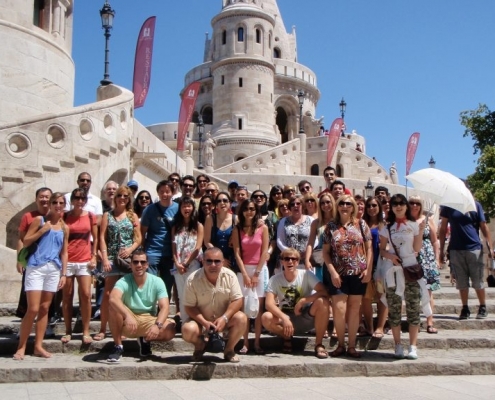
Budapest for Solo TravelersA lovely group in front of the Fisherman's Bastion at the end of a General Budapest Free Tour

The Free Walking Tour: Your Day-One Social Hack

The biggest hurdle in solo travel is the first 24 hours: getting oriented without staring at your phone screen the entire day, and finding people to explore with. A free walking tour is one of the easiest ways to experience Budapest for solo travelers, especially during the first day when you’re still getting your bearings.

A free walking tour is the ultimate solo travel shortcut:

  • Built-In Travel Companions: A 2-hour tour provides an easy, low-pressure setting to meet other solo travelers and backpackers from around the world without the awkwardness of hostel common rooms.
  • The “Lunch Buddy” Routine: Tours typically finish right around lunchtime in vibrant, central locations. It is the easiest opportunity to turn to the person next to you and ask, “Are you grabbing lunch nearby?”
  • Insider Solo Advice: Use your local guide. Ask them where to eat solo without feeling out of place, which ruin bars have the best vibe that evening, and what areas to avoid after midnight.

Hungarian National Gallery Franz Liszt in Budapest - Franz Liszt Museum

Solo Culture: The Best Art Exhibitions & Galleries to Explore Alone

Visiting an art gallery alone is one of the quiet luxuries of solo travel. You are entirely free to linger in front of a single canvas for twenty minutes, skip what doesn’t interest you, and soak in the atmosphere uninterrupted.

  • Museum of Fine Arts (Szépművészeti Múzeum): Anchoring Heroes’ Square, this neoclassical palace houses an exceptional collection of European masters (El Greco, Goya, Bruegel), Italian Renaissance pieces, and classical antiquities. The vaulted, restored Romanesque Hall alone is worth the ticket. Its quiet, cavernous galleries make it effortless to lose yourself in art for half a day.
  • Hungarian National Gallery (Magyar Nemzeti Galéria): Perched inside the Royal Palace on Buda Castle Hill, this gallery covers Hungarian art from the Middle Ages to the 20th century. Solo visitors get a double payoff: world-class works by Mihály Munkácsy and Tivadar Csontváry Kosztka inside, paired with quiet, uncrowded balcony panoramas of the Danube and Pest outside.
  • Mai Manó Ház (The House of Hungarian Photography): Tucked along Nagymező utca (Budapest’s theatre street), this 19th-century Neo-Renaissance studio house belonged to imperial court photographer Manó Mai. It now hosts intimate international photography exhibitions. Its ornate sunlight studio, wooden spiral staircase, and speciality bookshop make it an ideal, unhurried solo retreat.
  • Ludwig Museum (Contemporary Art): Situated inside the modern Müpa building on the southern Danube bank, the Ludwig focuses on Central and Eastern European post-war and contemporary art. It is rarely overwhelmed by tourist groups, giving you room to engage with thought-provoking installations in a serene setting.

Solo Tip: Most state-owned museums in Budapest are closed on Mondays, so plan your gallery days between Tuesday and Sunday.


Budapest for Solo Travelers

Solo-Friendly Dining & “Third Places”

One of the advantages of Budapest for solo travelers is the city’s relaxed café culture and abundance of casual places where eating alone feels completely natural. Eating out alone does not have to mean fast food or sitting awkwardly in a formal dining room:

  • Street Food Courts: Places like Karaván on Kazinczy Street or the Time Out Market feature  benches where grabbing a burger, a goulash, vegan wrap, or traditional lángos is informal and communal.
  • Historic Grand Cafés: Budapest’s coffeehouse culture was built for people who want to sit alone with a book or journal for two hours. Head to Centrál Kávéház or Café Gerbeaud for classic marble-table elegance, or find speciality coffee at Madal Cafe.
  • Daytime Ruin Bars: Venues like Szimpla Kert can be overwhelming at midnight on a Saturday, but during the daytime (especially during the Sunday farmers’ market), they function as open, creative community spaces perfect for exploring alone with a camera or a notebook.

Getting Around Budapest for Solo Travelers

  • Get the BudapestGO App: Public transit in Budapest is clean, cheap, and reliable. Download the official BudapestGO app to buy single tickets, 24-hour passes, or digital airport transfers directly on your phone.
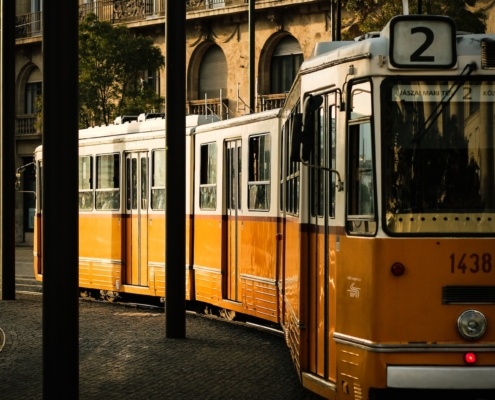
  • Ride Tram 2 for Views: Skip the overpriced hop-on hop-off buses. Tram 2 runs along the Pest embankment directly between Margaret Bridge and the National Theatre, offering views of Buda Castle, the Chain Bridge, and Parliament for the price of a standard transit ticket.

Frequently Asked Questions

Is Budapest safe to walk around at night alone?

Yes. Central districts (Districts V, VI, and VII) have lively pedestrian traffic, well-lit boulevards, and regular public transit running late into the night. Stick to main avenues when walking late, and use the Bolt app rather than unmetered street taxis.

Is it easy to meet people in Budapest as a solo traveler?

Very easy. Between social hostels, community ruin bar events, and daily free walking tours, the city attracts a steady stream of independent international travelers year-round.

Are thermal baths comfortable for solo visitors?

Absolutely. Bathhouses like Széchenyi, Rudas, and Lukács are places of personal relaxation where people read, soak, and unwind individually. Going alone means you can move through steam rooms, saunas, and hot pools entirely at your own pace.


Traveling Solo? Start Your Budapest Trip With Us

Don’t spend your first morning wandering aimlessly with your head buried in a map.

Join our daily Trip to Budapest Free Walking Tours—it is the easiest, safest, and most social way to get oriented, uncover hidden street stories from a passionate local guide, and connect with fellow solo travelers from around the world.

Visiting Budapest in September: Weather, Crowds & Tips

If you caught our guide to the Best Time to Visit Budapest, you know we rank shoulder season right at the top. Visiting Budapest in September offers a very different experience from the peak summer months. While July and August bring festival energy, they also bring punishing 35°C (95°F) heatwaves and crowded pavements.

September is the sweet spot. The peak summer rush drops off, the scorching tarmac cools down, and the city settles into long, golden afternoons perfect for exploring on foot.


Key Takeaways: September at a Glance

Metric September Average What It Means for You
Daytime Highs 22°C – 24°C (72°F – 75°F) Ideal walking conditions; no suffocating mid-day heat
Nighttime Lows 12°C – 14°C (54°F – 57°F) Crisp evenings; light jacket or sweater required
Rainfall ~40 mm across 6 days One of the driest, most predictable months of the year
Crowd Levels Moderate (Shoulder season) Shorter attraction queues, easier viewpoints
Vibe Golden hour light, harvest wine festivals, outdoor terraces Authentic city feel as locals return from summer break

visiting Budapest in September how many days in Budapest

Is Budapest Weather Good in September?

Yes, September offers some of the most reliable and comfortable weather of the entire year in Budapest.

The city escapes the heat traps of mid-summer, when the concrete along Pest radiates warmth well into the night. Instead, you get comfortable, sun-drenched afternoons averaging 22°C to 24°C and crisp, breezy evenings dipping to around 12°C.

With only about 6 days of scattered, light precipitation, rain rarely disrupts travel plans. You will enjoy roughly 12 hours of daylight—giving you plenty of time to climb Castle Hill, cross the Chain Bridge, and sit out at an open-air terrace without breaking a sweat.

What to pack:

  • Comfortable walking shoes broken in for historic cobblestones.
  • Breathable layers (T-shirts, light cotton, or linen) for daytime sunshine.
  • A denim jacket, light cardigan, or trench coat for night strolls along the Danube.

visiting Budapet in September Trip with Friends in Budapest - hidden gems in Budapest - Budapest Citadel

How Busy Is Budapest in September?

One of the biggest advantages of visiting Budapest in September is that the city generally feels less intense than during the busiest summer weeks. September sees a sharp drop in mass tour groups and peak European holiday traffic once the school year resumes.

  • Attractions & Sightseeing: Major landmarks like the Hungarian Parliament Building, St. Stephen’s Basilica, and Fisherman’s Bastion are noticeably calmer. While advance booking is still wise for interior Parliament visits, you will not have to jostle through wall-to-wall crowds at Castle District viewpoints.
  • Thermal Baths: Summer sees outdoor recreational lidos (like Palatinus Strand on Margaret Island) packed with families. In September, the city’s historic thermal baths—such as Széchenyi, Rudas, and Lukács—return to a tranquil, restorative pace. (Note: Gellért Thermal Bath is currently closed for major renovation.) Because Hungarian public health regulations do not permit children under 14 into medicinal thermal waters, these pools stay quiet and adult-focused year-round. Soaking in an outdoor 38°C (100°F) mineral pool feels infinitely better in crisp 18°C air than under the blazing August sun.
  • Ruin Bars & Dining: The Jewish Quarter’s nightlife remains energetic, but getting a table at outdoor courtyards and open-air bistros on Kazinczy, Dob, and Ráday streets no longer requires weeks of planning.

Visiting Budapest in September Liberty Bridge daniel-olah-TbU9iOkSzcs-unsplash

3 Reasons September Beats Summer and Winter

  1. Walking is actually enjoyable

    Budapest is best discovered on foot. Climbing up the stairs from the Danube embankment to Fisherman’s Bastion or hiking the forested paths of Gellért Hill in 35°C August heat is exhausting. In September, pleasant temperatures turn our 2.5-hour walking tours through historic Pest and Castle Hill into an effortless stroll.

  2. Harvest season and the Budapest Wine Festival

    September marks the start of the Hungarian grape harvest. Early in the month, the terraces of Buda Castle host the Budavári Borfesztivál (Budapest Wine Festival), where top vintners from Tokaj, Villány, and Eger pour tastings against panoramic views of the Danube and Parliament.

  3. The iconic “golden hour” light

    Photographers love September in Central Europe. The lower angle of the early autumn sun casts an amber glow across the Neo-Gothic spires of Parliament and illuminates the bridges crossing the Danube, making evening walks along the Pest Promenade unforgettable.


Frequently Asked Questions about Visiting Budapest in September

Can you still do outdoor activities in Budapest in September?

Yes. Danube evening cruises, open-air walking tours, Margaret Island cycling, and courtyard ruin bars (such as Szimpla Kert) remain vibrant and fully operational throughout the month.

Which thermal baths are open in September, and can kids visit?

Most historic baths—including Széchenyi, Rudas, and Lukács—are open daily year-round. Gellért Thermal Bath is currently closed for a comprehensive renovation. By Hungarian regulations, children under 14 are not permitted in medicinal thermal pools due to high temperatures and mineral concentrations. Families traveling with younger children should head to the recreational swimming and adventure pools at Palatinus Strand on Margaret Island.

How does September compare to October?

September is warmer, drier, and retains full outdoor terrace culture. By mid-October, daylight hours shrink noticeably, morning temperatures routinely drop into single digits Celsius, and rain becomes more frequent.


Discover the City on Foot This Autumn

If you’re visiting Budapest in September, exploring the city on foot is one of the best ways to make the most of the cooler weather and softer autumn light. You can uncover Budapest’s layered history, architectural details, and hidden courtyards effortlessly alongside an experienced local guide.

Join us on our daily Trip to Budapest Free Walking Tours—we will share the hidden corners of the Jewish Quarter, the grand boulevards of Pest, and the royal stories of Buda Castle in the finest walking weather of the year.


Danube Promenade Budapest: The Best Riverside Walk in the City

The Direct Answer

The best place to walk along the Danube in Budapest is the Pest riverside promenade (Jane Haining rakpart), running along the lower quay roughly between Margaret Bridge and Elisabeth Bridge.

As of 2026, this scenic stretch is closed to cars every weekend (from Friday evening through early Monday morning) and on weekday evenings as well, from 6:30 PM until 5 AM. During these car-free hours, the road transforms into a beautiful, pedestrian-only promenade filled with walkers, cyclists, rollerbladers, and pop-up events, all set against the breathtaking backdrop of Castle Hill, the Chain Bridge, and the illuminated Parliament.

For visitors looking for a simple Danube promenade Budapest experience, this is one of the easiest ways to see some of the city’s most famous landmarks in a single walk.

This community-driven initiative runs under the name RAKPART. During the peak summer stretch (typically from late July into mid-August), the lower quay remains completely car-free with activities running every single day, making it the ultimate destination for hot summer nights in the capital.

The Danube promenade Budapest experience is about much more than sightseeing. On warm evenings, locals come here to walk, cycle, meet friends, listen to music, eat, drink, and enjoy the river views without the usual traffic.

Car-Free Schedule at a Glance

Time Period Status Notes
Weekends (Fri evening – Mon morning) Car-Free (All Day) Runs weekly from May through late autumn.
Weekday Evenings Car-Free (6:30 PM – 5 AM) 2026 weekday evening extension.
Late July – Mid-August Car-Free (24/7) Peak summer program window with daily events and activities.
Weekday Daytime (outside above hours) Open to Car Traffic Normal road operations during business hours.

Note: Car-free hours and seasonal programming can change slightly. Check current official information before your visit.

Danube Promenade Budapest Walking Route

If you’re looking for a simple Danube promenade Budapest itinerary, this north-to-south route takes you past some of the city’s most famous landmarks without requiring a ticket or complicated transport connections.

1. Start at Margaret Bridge

Begin your journey at the northernmost point of the promenade, near the Pest foot of Margaret Bridge. Starting here lets you enjoy a quieter, more relaxed stretch of the riverbank before the lively crowds gather as you head further south.

Starting your Danube promenade Budapest walk here also means you can see the Parliament gradually appear as you head south.

2. The Parliament & Shoes on the Danube Bank

As you head south, you will pass directly beneath the majestic Hungarian Parliament building—one of the world’s most spectacular architectural backdrops. Just a short walk past the Parliament, you will find the Shoes on the Danube Bank. This moving memorial of 60 pairs of iron shoes honours the Jewish residents of Budapest who were tragically killed on the riverbank during World War II. It is a peaceful, sobering spot that deserves a moment of quiet reflection.

3. Chain Bridge & the Viaducts

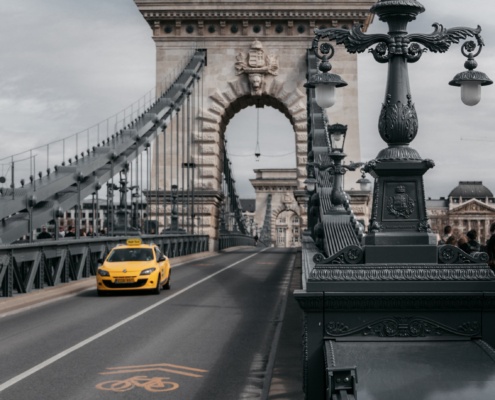
Approaching the historic Chain Bridge, the promenade winds under the stone tram line viaducts. This is the beating heart of the RAKPART initiative, where community programming clusters. You’ll find workshops, art installations, and live acoustic or DJ sets running from afternoon into the warm summer night. It has a beautiful, local neighbourhood-gathering feel rather than a commercial tourist trap.

This central section is arguably the most spectacular part of the Danube promenade Budapest experience, especially around sunset when the bridges and Buda Castle begin to light up.

4. End at Elisabeth Bridge

The walk naturally wraps up near the Elisabeth Bridge (Irányi utca). From here, you are steps away from the downtown core of Pest. While the immediate bridge area is a busy tourist hub, we recommend walking just a block or two inland to find cosy local restaurants and authentic wine bars with genuine character.

Danube Promenade Budapest: What’s Happening in 2026

The 2026 RAKPART season features an expansive calendar of completely free, drop-in activities, primarily focused around the Chain Bridge viaducts.

  • Riverside Yoga: Regular drop-in morning or sunset flow sessions right next to the water.
  • Acoustic & DJ Sets: Intimate musical sessions spanning from chill electronic sets to live acoustic performances.
  • Community Workshops: Hands-on arts, crafts, and sustainability workshops.
  • Board Games & Recreation: Free board game corners, pop-up sports events, and open-air play areas.

August 20 on the Danube Promenade: What to Expect

If you’re visiting Budapest on August 20, the Danube Promenade becomes one of the best places to experience Hungary’s biggest national holiday.

August 20 is St. Stephen’s Day, Hungary’s national holiday, and the Danube is at the centre of the celebrations. Several major events take place along the river, making the Danube promenade Budapest area especially busy throughout the day.

The Air Show Over the Danube

The day begins with the spectacular Légi parádé (Air Parade). On August 20, military aircraft and helicopters fly along the Danube between Chain Bridge and Margaret Bridge. The official programme lists the air parade from 9:00 AM to 9:45 AM, and it can be watched from both the Pest and Buda riverbanks.

If you’re looking for a good reason to start your Danube promenade Budapest walk early on August 20, this is it. The river provides an unusually open viewing area, while the bridges and Parliament create an unmistakable Budapest backdrop.

The Evening Fireworks, Lights & Drone Show

The biggest event comes in the evening. The official “Tűz és Fények játéka” (The Play of Fire and Lights) takes place on August 20 from 9:00 PM to 9:30 PM along the Pest and Buda embankments.

The show combines fireworks with large-scale light projections, laser and light effects, and a major drone performance. The visual programme also includes projections on the Hungarian Parliament and the Chain Bridge pylons.

If you want to watch the fireworks from the river, arrive early. The most central parts of the Danube promenade Budapest area become extremely busy, and finding a good viewing position at the last minute can be difficult.

More August 20 Events Around the City

The national holiday is much bigger than the evening fireworks. The official 2026 programme also includes events at the Kossuth Square, St. Stephen’s Basilica, Várkert Bazár, Vörösmarty Square, City Park, Margaret Island and other locations around Budapest.

For visitors who want to make a full day of it, the Danube promenade Budapest area works particularly well as a starting point: you can combine the river, Parliament, the air parade and the evening celebrations with the city’s other August 20 programmes.

Local Tip for August 20

Don’t leave your journey to the river until the last minute. August 20 brings major road closures and public transport changes throughout central Budapest, particularly around the bridges and riverbanks.

If you’re heading to the Danube for the evening celebrations, allow extra time and check the latest BKK travel information before setting off. During the busiest periods, the metro network is generally a better option than relying on trams and buses crossing the river.

Food, Drinks, and Riverside BBQ

One of the most unique aspects of Budapest’s pedestrian quay is the relaxed, park-like community culture.  Barbecuing is highly popular here, and it is entirely normal to see locals bring their own small grills to set up a riverside picnic as the sun goes down.

If you would rather travel light, you have excellent options:

  • Buy on-site: Grab a drink or a snack at the Viadukt Bar—the primary gastro and cultural hub of the promenade located near the Chain Bridge.
  • Bring your own: You are completely welcome to bring your own food and drinks from nearby grocery stores or bakeries to enjoy on the public benches and steps.

Danube Promenade Budapest Views & Danube Cruises

Even if you do not participate in the workshops or yoga, the walk itself is visually unmatched. Facing the water, Buda Castle and the Fisherman’s Bastion tower directly over you on the opposite bank, while the Parliament sits gracefully to your north. Catching a sunset here, or watching the city bridges illuminate at dusk, is a quintessential Budapest experience.

If the spectacular land views inspire you to get out on the water, dozens of Danube river cruises depart from docks directly along this promenade. Whether you prefer a simple daytime sightseeing cruise, a romantic sunset sailing, or an evening dinner cruise, you can easily buy tickets online or right at the dockside ticket booths.

For many visitors, the combination of a riverside walk and a short Danube cruise is one of the easiest ways to experience Budapest from several different perspectives in a single afternoon.

Frequently Asked Questions

Q: Where can I walk along the Danube in Budapest?

A: The Pest riverside promenade along Jane Haining rakpart (the lower quay between Margaret Bridge and Elisabeth Bridge) is the premier pedestrian-friendly walking route in the city.

Q: What are the car-free hours on the Pest riverside?

A: Weekends are car-free all day from Friday evening until Monday morning. Weekday evenings are car-free from 6:30 PM to 5 AM. In the peak summer window from late July to mid-August, the road stays closed to car traffic 24/7.

Q: What happens on the Danube on August 20?

A: August 20 features a military air parade over the Danube in the morning, followed by the large-scale “Tűz és Fények játéka” fireworks, light, laser and drone show in the evening. The main events take place between Chain Bridge and Margaret Bridge and along the Pest and Buda embankments.

Q: Can I bring my own food or barbecue to the Danube promenade?

A: Yes! Setting up your own small grill, bringing food, or opening a bottle of wine along the riverbank steps is a widely enjoyed local tradition during the warm summer months.

Q: Is it free to walk the promenade?

A: Absolutely. Accessing the promenade, walking the quay, and participating in the city’s RAKPART pop-up programs such as yoga, DJ sets and craft workshops is entirely free of charge.

Want to Explore Budapest with a Local?

If you’d rather discover Budapest with someone who knows the city beyond the main sights, join one of our free walking tours. Our local guides will help you understand the city’s history, neighbourhoods and everyday life before you continue exploring on your own.


Car-free hours and event programming are managed by the municipality’s RAKPART initiative and may shift slightly due to weather or seasonal scheduling. August 20 events and transport arrangements can also change. Always check current official city and BKK information before your visit.

Is the Budapest Citadel Open in 2026? Full Gellért Hill Guide

The Direct Answer

Yes — the Budapest Citadel on Gellért Hill is open in 2026, following a major restoration that closed the site for four years. It officially reopened to the public in spring 2026 and has been transformed into a gorgeous 6,000-square-meter public park with walking paths, manicured gardens, and panoramic viewing terraces set inside a larger 20,000-square-meter green area.

The park itself, the new walkways along the old fortress walls, and the plaza around the fully restored Liberty Statue are completely free to visit, with no tickets or bookings required. The only paid element is the “Bastion of Liberty” exhibition—a multi-level museum inside the western tower that includes access to the Roof Garden 360 viewpoint. This section requires a timed-entry ticket, priced at approximately 4,900 HUF for adults.

Budapest Citadel: What’s Free and What’s Ticketed

Area Access What to Expect
Public Park (Inner Courtyard) FREE Walkways, planted gardens with lavender and roses, and seating areas.
Fortress Wall Walkway & Bastions FREE Spectacular panoramic views over the Danube, Parliament, and Buda Castle.
Liberty Statue Plaza FREE The iconic 14-meter monument, now fully restored and accessible up close.
Bastion of Liberty Exhibition Ticketed (~4,900 HUF) Interactive museum inside the western tower. Timed-entry booking is recommended.
Roof Garden 360 & Terraces Ticketed Exclusive rooftop views, only accessible via the paid exhibition ticket.

Trip with Friends in Budapest - hidden gems in Budapest - Budapest Citadel

The New Park & Free Viewpoints

The massive renovation has completely reimagined the old military fortress. Where the Citadel previously had only a single entrance that bottlenecked crowd flow, it can now be accessed from three separate directions. The old, closed-off fortress walls have been breached to make the complex more accessible, open, and friendly.

Even without buying a museum ticket, the Budapest Citadel offers some of the best panoramic views in the Hungarian capital. Walking along the restored fortress perimeter pathways gives you sweeping views in nearly every direction. On a clear day, you can view the entire sweep of the Danube, Buda Castle, Margaret Island, and the Pest skyline.

Time Tip: Budget around 30 to 45 minutes if you are only visiting the free park areas. This is plenty of time to stroll the loop, view the Liberty Statue up close, and enjoy a rest on one of the new benches.

How to Get There in the Summer Heat

Gellért Hill is notoriously steep, and climbing it on foot in the middle of a hot July afternoon is not for everyone.Reaching the Budapest Citadel is much easier than many visitors expect, especially if you use public transport instead of walking uphill. If you want to arrive looking fresh, you have two main routes:

🚌 The Easy Option: Bus 27

Reaching the Budapest Citadel is much easier than many visitors expect, especially if you use public transport instead of walking uphill. Head to Móricz Zsigmond körtér (a major transit hub on the Buda side, easily reached via Metro line M4 or Trams 6, 19, 41, 47, 49, and 56). Board Bus 27 and ride it up the hill to the Búsuló Juhász (Citadella) stop. From there, it is a flat, scenic 6-minute stroll to the main fortress gate. Need help using Bus 27, the metro, or Budapest’s tram network? Read our complete Budapest Public Transport Guide before your visit.

🥾 The Scenic Walk: Szent Gellért tér Climb

If you prefer a scenic hike, start at the Buda foot of the Liberty Bridge (Szent Gellért tér). Winding, paved pathways lead up the hill. Along the way, you can stop to explore the unique Gellért Hill Cave Church built into the rock face—a perfect, cool sanctuary to catch some shade. The climb takes roughly 20 to 30 minutes at a casual pace.

New Facilities at the Budapest Citadel

Unlike the old days, when the hilltop lacked basic infrastructure, the newly renovated Citadel is fully equipped to make your visit comfortable:

  • Modern Public Toilets: Clean, permanent restroom facilities are now available on site.
  • Hilltop Café: Sip a cold drink or coffee with a panoramic view of the capital.
  • Food & Treats: Ice cream parlors and fresh chimney cake (kürtőskalács) stalls are open to help beat the heat.
  • Universal Accessibility: Modern elevators and barrier-free pathways now serve different levels of the Round Bastion, making the summit fully accessible for strollers and wheelchair users.

Frequently Asked Questions

Q: Can you visit the Citadel in Budapest in 2026?

A: Yes! Following a major multi-year restoration, the Citadel officially reopened in spring 2026. The new public park, viewing terraces, and walking paths are open daily.

Q: Is the Citadel free to visit?

A: The outdoor public park, fortress-wall walkway, and Liberty Statue viewpoint are 100% free with no tickets required. Only the indoor “Bastion of Liberty” museum exhibition and its top roof deck require a paid ticket (around 4,900 HUF).

Q: How do I get to the Citadel without a brutal climb?

A: Take Bus 27 from Móricz Zsigmond körtér directly to the Búsuló Juhász (Citadella) stop. This is a quick 9-minute ride, leaving you with only a flat, 6-minute walk to the entrance gates.

Q: Is the Citadel worth visiting if I don’t buy the exhibition ticket?

A: Absolutely. The free park alone provides sweeping panoramas of the Danube, Buda Castle, and the Parliament, and lets you view the fully restored Liberty Statue up close.


Information reflects current statuses following the spring 2026 reopening. Bus schedules and exhibition tickets are subject to change; always check bkk.hu and citadella.hu before planning your trip.

Budapest 24-Hour Travel Card: Is It Worth It? (2026)

The Direct Answer

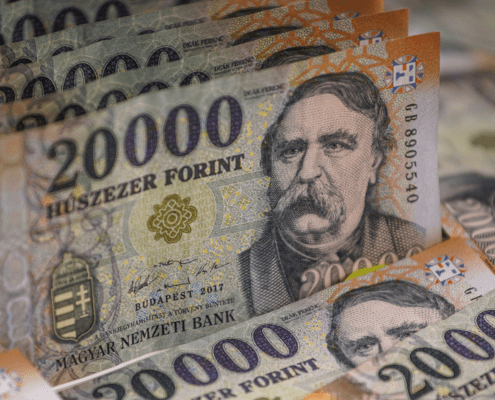
Yes — the Budapest 24-hour travel card is worth it if you take more than five rides in a single day. At 2,750 HUF, the day pass covers unlimited travel on every metro, tram, and bus in the city. A single ticket costs 500 HUF (or 700 HUF if bought on board from the driver), and each single ticket has to be validated individually — miss that step and you risk a steep on-the-spot fine. The day pass needs no validation after purchase: you activate it once, and every ride after that is automatic.

For a sightseeing-heavy day — hopping between the Castle District, the riverbank, and a thermal bath — it almost always works out cheaper and far less stressful than buying tickets one at a time. If you’re only taking two or three rides total (say, from your hotel to the city center and back), single tickets will save you a bit of money. The day pass earns its price the moment you cross five rides.

visiting budapest now forint

Ticket Prices at a Glance (2026 Fares)

Ticket Type Price (HUF) Best For Validation Required?
Single Ticket 500 HUF Single, direct trips Yes — must validate onboard
Single Ticket (from driver) 700 HUF Emergency / last resort Yes — must validate onboard
24-Hour Day Pass 2,750 HUF Sightseeing, active travel days No — automatic use

New to Budapest’s public transport system? If you’re not sure how tickets, validation, metro lines, or the BudapestGO app work, read our complete Budapest Transport Guide before choosing your ticket. It covers everything first-time visitors need to know about getting around the city with confidence.

Quick math: For most tourists, the Budapest 24-hour travel card becomes the cheaper option after just a handful of rides. Once you take your 6th single-ride trip in a day (6 × 500 HUF = 3,000 HUF), you’ve already spent more than the day pass. Anyone doing a full day of sightseeing — museum in the morning, lunch across town, castle in the afternoon, dinner by the river — will hit that number without even trying.

The Scenic Route Hack: A Free Alternative to Paid River Cruises

To be clear upfront: the day pass does not work on MAHART or any commercial Danube cruise — those are separate paid boats with their own tickets, and this pass has nothing to do with them.

One of the biggest advantages of the Budapest 24-hour travel card is that it covers Budapest’s famous scenic tram routes at no extra cost. What it does get you, at no extra cost, is access to two tram lines that run right along the riverbank and offer a similar, spectacular view from land:

  • Tram #2 (Pest side): Runs along the Pest riverbank, giving you postcard views of the Buda Castle, Parliament, and Chain Bridge — all from a regular, air-conditioned city tram. No ticket line, no tour guide script, and it runs constantly throughout the day.
  • Trams #19 and #41 (Buda side): Trace the Buda riverbank, offering the mirror-image view back across to Pest, including the Parliament building lit up if you ride in the evening.

Ride in one direction, hop off for photos, catch the next tram — since both lines are already covered by your pass, there’s zero extra cost. It is a fantastic option to see the skyline and the bridges comfortably on a hot summer day.

How to Buy the 24-Hour Travel Card

Option 1: The BudapestGO App (Recommended)

  1. Download BudapestGO from the App Store or Google Play before you arrive.
  2. Create an account and link a payment card.
  3. Select the 24-hour travelcard and complete your purchase.
  4. Activate it right when you are ready to start using it — the 24-hour clock starts from your chosen start time, not from the moment of purchase.
  5. When boarding (or entering the metro stations), simply scan the QR code or tap the “Boarding” button in the app, and show your animated ticket screen to inspectors if requested.

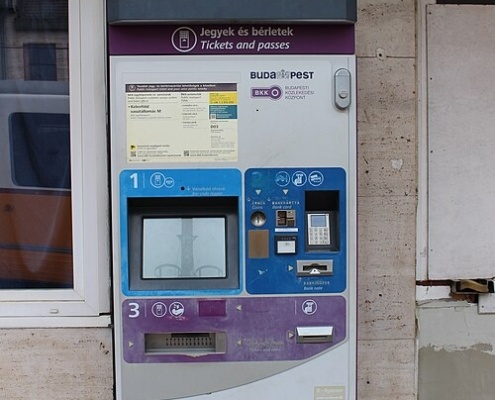
Option 2: Purple Ticket Vending Machines (TVMs)

  1. Look for the purple ticket machines at metro entrances, major stops, and the airport.
  2. Select English, then choose the 24-hour travelcard.
  3. Pay by credit card or cash (they accept both).
  4. Keep the physical ticket on you at all times during your trips. Do not fold or bend it, as damaged tickets can be rejected by inspectors.

Frequently Asked Questions

Q: How much does public transport cost in Budapest?

A: A single ticket is 500 HUF (700 HUF from the driver), and the unlimited 24-hour day pass is 2,750 HUF. Most visitors doing more than five rides a day come out ahead with the day pass.

Q: Do I need to validate the 24-hour travel card?

A: No. Unlike single tickets, the day pass is activated once at your chosen start time and then works automatically for every ride within the 24-hour window. No punching or physical scanning is required at each boarding, though you still need to present it during active ticket inspections.

Q: Can I use the day pass on trams, buses, and the metro?

A: Yes — the 24-hour travelcard covers essentially all standard BKK public transport within Budapest, including the metro, trams, trolleybuses, and standard city buses.

Q: Is the day pass the same as the Budapest Card?

A: No, and they serve different purposes. The 24-hour travelcard is purely for public transport and costs 2,750 HUF. The Budapest Card is a much pricier tourist package (starting at over 17,990 HUF or €53 for 24 hours) that bundles free public transport with museum entries, guided tours, and thermal bath discounts. If you want to explore freely without a set itinerary, the plain transit day pass is usually the simpler, cheaper choice.


If you’re planning a full day of sightseeing, the Budapest 24-hour travel card is one of the best-value purchases you can make during your trip. Prices reflect current BKK (Budapest Transport Centre) fares. Always double-check current pricing on the official bkk.hu website before your trip.

Budapest Summer Nightlife: Best Ruin Bars & Outdoor Gardens for Hot July Evenings

What is the best Budapest summer nightlife experience? The Direct Answer

The best outdoor ruin bars and summer gardens in Budapest are Szimpla Kert, Kőleves Kert, and Pontoon.

Szimpla Kert is the classic, eccentric ruin courtyard and the original of the genre. Kőleves Kert is a relaxed, leafy garden space in the Jewish District that remains open every summer season from late April through early October. Pontoon is an open-air deck right on the Danube at the foot of the Chain Bridge, running seasonally from spring to autumn.

For concerts and open-air clubbing, Akvárium (in the city center) and Dürer Kert (now relocated to the Buda riverbank) offer some of the best summer live events in the city.

Quick Nightlife Comparison

Venue Vibe Best For
Szimpla Kert Busy, visual marvel, iconic ruin-bar maze First-timers, the “must-see” experience
Kőleves Kert Artistic, relaxed, leafy courtyard A calmer evening with locals and students
Pontoon Sunset drinks and dancing on the water Danube views, DJ sets, golden-hour cocktails
Akvárium Central, high-energy club and concert venue Live music, bigger nights out
Dürer Kert Buda riverbank garden and concert space Gig-goers looking to get outside the city center

The Legend: Szimpla Kert

No guide to Budapest summer nightlife would be complete without experiencing the city’s original ruin bar at least once. Located on Kazinczy utca, Szimpla Kert is where the entire ruin-bar phenomenon was born. Even today, it remains the most visually overwhelming and fascinating space in the city. Expect a labyrinth of rooms filled with mismatched retro furniture, eclectic hanging art, layered graffiti, and even an old Trabant car converted into a garden table.

It is a mandatory stop for any first night out in Budapest. However, it is exceptionally popular. On weekends after midnight, you can expect long queues at the door and a packed crowd inside.

Local Tip: If you want to explore the rooms, take photos, and actually chat without the crushing crowds, visit on a weeknight (like Tuesday or Wednesday) or arrive earlier in the evening before 9 PM. Want to experience Szimpla with a little more context? Our Jewish District walking tour ends here, after exploring the neighborhood’s history, street art, and hidden courtyards.

The Local Chill Spot: Kőleves Kert

Tucked away right next to the Kőleves restaurant on Kazinczy utca, Kőleves Kert is the ultimate laid-back antidote to the neighborhood’s wilder party spots. This is a true open-air ruin garden featuring colorful iron chairs, soft string lights, gravel underfoot, and cozy hammocks strung up beneath shady mulberry trees.

Because the garden operates seasonally (typically opening in late April and running through early October), it is perfectly primed for those warm summer nights. You’ll find a highly relaxed, bohemian crowd of local students, artists, and clued-in travelers. It is the perfect garden oasis for a long, cold drink after a day of sightseeing.

The River Vibe: Pontoon

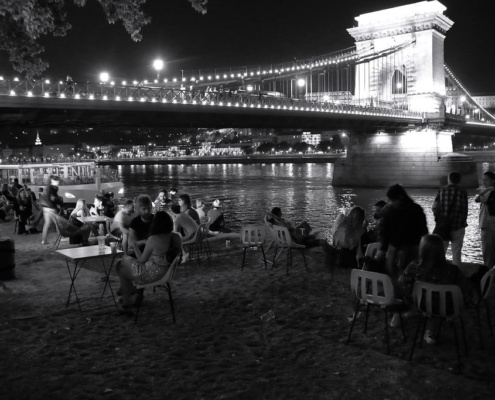
During the warmer months, Budapest summer nightlife naturally shifts toward the Danube, making Pontoon one of the city’s most popular evening destinations. At Pontoon, the location is the entire attraction. Sitting right on the Pest-side riverbank at the foot of the historic Chain Bridge, this open-air summer hangout lets you sit steps away from the flowing Danube. Mismatched lounge chairs, cold local beers, and warm fairy lights create a mini-festival feel every evening.

As the sun sets, Buda Castle and the Fisherman’s Bastion light up directly across the water, providing one of the most magical backdrops in Europe. With live acoustic performances, local DJ sets, and an incredibly international, open-minded crowd, Pontoon is the ultimate summer sunset spot in Budapest.

More Budapest Summer Nightlife Recommendations

One of the best things about Budapest summer nightlife is that every venue offers a completely different atmosphere, from quiet gardens to lively concert spaces.

  • Fellini Római Kultúrbisztró: Located further north along the gravel beaches of Római-part, Fellini is a legendary riverside spot. It’s less of a nightclub and more of a relaxed, bohemian beach bistro[cite: 2]. Grab a deck chair, order a cold Belgian draft beer, and listen to acoustic live music directly at the water’s edge[cite: 2].
  • Kiosk (Március 15. tér): A stylish, modern restaurant and bar right by the Pest end of the Elisabeth Bridge[cite: 2]. Their massive outdoor summer terrace offers beautiful panoramic river views, making it a great, upscale spot for a pre-drink before heading into the Jewish Quarter.
  • Csendes: An artistic, highly quirky ruin-style cafe and bar located next to Károlyi-kert in District V (near Astoria). It is a quieter, much more bohemian alternative to the busy bars of Kazinczy utca, transitioning seamlessly from a cozy daytime coffee house to a moody evening hangout.

⚠️ Note for 2026 Travelers:

Akvárium has had some uncertainty around its 2026 schedule, including a planned short closure for renovations at some point over the year. It’s highly recommended to check their official events calendar before building a night around it, especially later in the summer.

Frequently Asked Questions

Q: What are the best outdoor ruin bars in Budapest?

A: Szimpla Kert is the original, visually stunning, and most iconic ruin bar in the city. Kőleves Kert offers a much calmer, leafy, and local alternative in the same neighborhood, while Pontoon gives you a fantastic open-air party atmosphere directly on the Danube riverbank.

Q: Is Kőleves Kert still open?

A: Yes! It operates seasonally, typically opening in late April and running through early October, meaning it is fully open and active throughout the hot summer months.

Q: Where can I find a riverside bar in Budapest?

A: Pontoon, located at the Pest-side foot of the Chain Bridge, is the main downtown open-air riverside bar. For a more laid-back, retro vibe, check out Fellini Római Kultúrbisztró on the gravel banks of Római-part.

Q: Are these bars free to enter?

A: Yes, nearly all major ruin bars and summer gardens (including Szimpla Kert, Kőleves Kert, and Pontoon) are entirely free to enter on weekdays and earlier in the evening. Larger club and concert venues (like Dürer Kert or Akvárium) may charge an entry cover for specific live gigs or late-night weekend club events.


Whether you prefer relaxed riverside drinks or energetic ruin bars, Budapest summer nightlife has something for every type of traveler. Opening hours, seasonal dates, and program schedules are subject to change. Always verify current event listings on the official social media channels of each venue before finalizing your plans.

Budapest River Beaches: Escape the Crowds at Római-part & Kopaszi-gát

The Direct Answer

The best Budapest river beaches are Római-part in north Buda and Kopaszi-gát in south Buda. If you want to escape the busy city center during the summer, both offer a peaceful riverside retreat with a completely different atmosphere. Head to Római Beach (Római-part) in north Buda for a retro, gravel-and-sand riverbank lined with local food stalls, or Kopaszi-gát in south Buda for a modern, grassy peninsula with manicured lawns and family-friendly cafés.

Both offer a peaceful, leafy waterfront escape from the summer heat and are easily reached by public transit. Budapest’s official free river beach, Római-parti Plázs, runs its supervised summer season from June 19 to August 23, open daily from 10:00 to 19:00, with water quality checked continuously throughout.

Római part - best beaches in Budapest

Római-part: The Retro Vibe

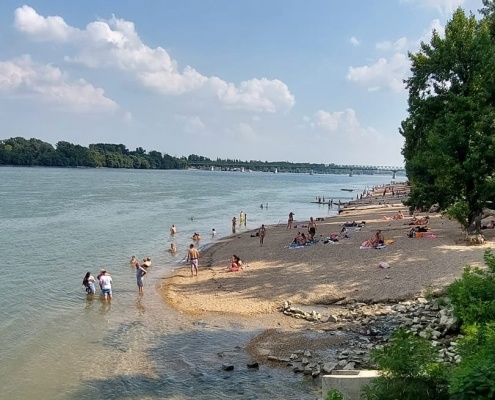
Among Budapest river beaches, Római-part is the most authentic local experience. It has the feel of a vintage beach town that just happens to be inside Budapest — a long stretch of riverbank dotted with old-school kiosks, deck chairs, and a crowd that skews local rather than tourist. The classic move here is wonderfully simple: order hekk (fried fish, usually catfish or hake, served with a slice of bread), grab a cold Hungarian beer, and claim a colorful deck chair right at the water’s edge. Not much more planning is required.

The city-run free beach section, Római-parti Plázs, is supervised and water-tested throughout the season. It includes fantastic free amenities such as drinking water, sun loungers, changing rooms, shower facilities, and free bike storage — exceptionally useful if you are arriving by bike, which is one of the most popular ways to reach the area.

Beyond the official sandy beach stretch, the wider Római-part area stays lively with riverside bars and bistros (the legendary Fellini Római Kultúrbisztró among them) that keep the retro, unhurried atmosphere going well past the daytime beach hours.

How to Get There: Take the HÉV suburban railway (H5 line) from central Buda (Batthyány tér or Margit híd, budai hídfő) toward Szentendre and get off at the Római fürdő stop, followed by a short walk or a connecting bus line to the riverbank.

Kopaszi-gát: The Modern Escape

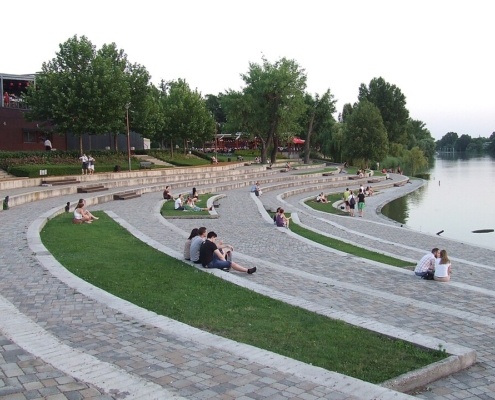
Kopaszi-gát (Kopaszi Dam), located at the southern tip of Buda where the Danube meets Lágymányosi Bay, is the polished, modern counterpart to Római-part’s rough-around-the-edges charm. Instead of gravel beaches and rustic kiosks, you get manicured, English-style lawns, landscaped walking paths, and a clean lineup of modern cafés and restaurants with glass fronts looking out over the peaceful water. It is part of the wider BudaPart development, giving it a tidy, contemporary, and cohesive feel.

It is a fantastic pick for families — the grassy peninsula features modern playgrounds for kids, wide paved paths that are highly stroller-friendly, and a calm, low-traffic environment perfect for a summer picnic or a slow, sunny afternoon.

🐾 Important Note for Pet Owners:

Kopaszi-gát maintains a strict no-dog policy inside the park boundaries, so it is not the spot if you are traveling with a pet. Római-part, with its open gravel banks and pet-friendly venues, is the far better option.

How to Get There: Convenient tram lines (like Tram 1) and bus lines connect directly to the BudaPart / Kopaszi-gát area from central Buda. It is also an easy, scenic walk or cycle from the Rákóczi Bridge area.

Which One Should You Pick?

👉 Choose Római-part if: You want an actual swim in the Danube, a classic fried-fish lunch at a beach bench, a laid-back local atmosphere, or you are traveling with a dog.

👉 Choose Kopaszi-gát if: You want manicured lawns, a stroller-friendly stroll, clean public playgrounds, and a modern, polished café with water views.

Both Budapest river beaches offer completely different experiences, so if you have time, we recommend visiting them on separate days. Because they sit on opposite ends of Buda’s riverbank, we recommend pairing each one with other nearby sights rather than trying to visit both in a single afternoon.

Frequently Asked Questions

Q: What are the best river beaches in Budapest?

A: Római-part in north Buda and Kopaszi-gát in south Buda are the two main riverfront escapes. Római-part is retro and beach-like, while Kopaszi-gát is clean, manicured, and modern.

Q: Is swimming allowed at Római-part?

A: Yes, but only within the designated, supervised boundaries of the official Római-parti Plázs section during its active summer season (running mid-June through late August), which continuously monitors water quality.

Q: Is Kopaszi-gát good for families?

A: Absolutely. It is highly popular for families due to its modern playgrounds, flat paved paths perfect for strollers, and a safe, car-free green peninsula. Note that dogs are not allowed in the park.

Q: How do I get to Római-part or Kopaszi-gát without a car?

A: Római-part is easily reached via the H5 HÉV suburban train line from central Buda. Kopaszi-gát is served by several convenient tram and bus lines and is walkable from the Rákóczi Bridge area.


If you’re looking for more hidden local places beyond the city centre, join one of our Budapest walking tours. Our local guides share the stories, neighborhoods and recommendations that most visitors never discover on their own. Beach opening dates and water-quality clearances for the free beach section are determined annually by local authorities. Always double-check current postings on obuda.hu and bkk.hu before your trip.

Budapest Baths with Kids: Age Rules & Best Family Options

Planning to visit Budapest’s famous thermal baths with children? Here’s the most important thing to know first: most of Budapest’s historic thermal baths do not allow children under 14 to enter at all.

This guide gives you a clear, up-to-date answer on where kids are allowed—and where they are not.

Are children allowed in Budapest thermal baths?

In most cases, no.

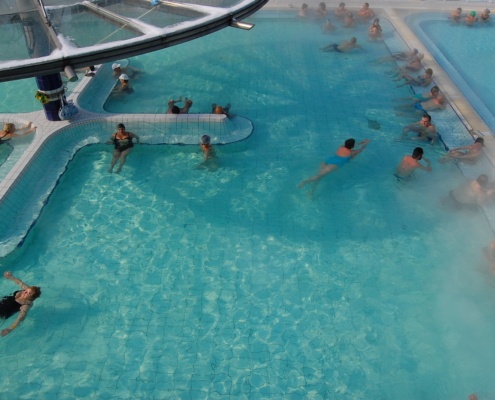
Budapest’s main historic baths — including Széchenyi, Rudas, and Lukács — are strictly restricted to guests aged 14 and above. Children under 14 are not allowed to enter these facilities.

These baths are classified as medicinal spas, with water temperatures between 28°C and 40°C, which is why age restrictions are enforced.

Which Budapest baths allow children?

If you’re visiting Budapest with kids, these are your best options:

budapest with toddlers Palatinus - Budapest baths with kids

Palatinus Baths (Palatinus Strand) — best for families

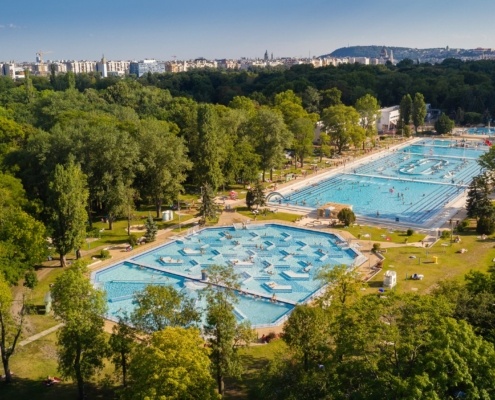
The top choice for families visiting Budapest. For most families, Budapest baths with kids usually means choosing Palatinus over the city’s historic medicinal spas. Located on Margaret Island, Palatinus is a large outdoor complex with wave pools, slides, thermal pools, and plenty of space.

It’s not a classic historic bath, but it’s the most child-friendly option in the city—and very popular with locals.

Open: late May to mid-September
Getting there: Bus 26 from Nyugati Railway Station

Budapest baths with kids

Dagály Thermal Bath — modern and less crowded

A newer bath complex near Árpád Bridge with swimming pools, outdoor areas, and thermal sections. It’s more relaxed than Palatinus and suitable for families, especially with older children.

Check current age rules before visiting, as access to thermal pools may vary.

Budapest baths with kids

Aquaworld Budapest — best indoor and outdoor option

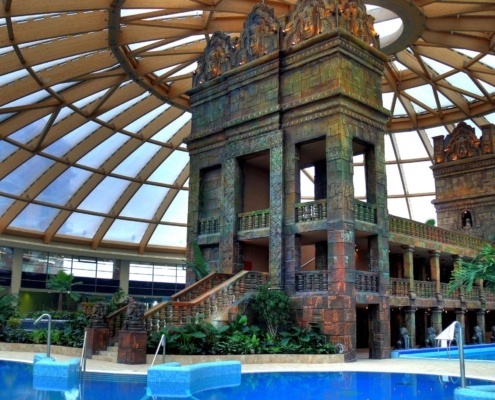
A large indoor and outdoor water park with slides, wave pools, and dedicated kids’ zones. Open year-round and ideal if you want a guaranteed family-friendly experience. If weather is unpredictable, Aquaworld is one of the safest choices for Budapest baths with kids thanks to its indoor attractions.

Which Budapest baths do NOT allow children?

The following baths are strictly 14+:

  • Széchenyi Baths
  • Rudas Baths
  • Lukács Baths

Children under 14 are not allowed to enter any of these facilities.

Important updates (2026)

Gellért Baths are currently closed for renovation and are expected to reopen around 2028.

Király Baths have been closed for several years and are not currently open.

Tips for visiting Budapest baths with kids

Arrive early in summer, especially at Palatinus, as it gets crowded quickly
Bring towels, water, and snacks to save money
Water shoes are useful for younger children
Check wave pool schedules at the entrance

Budapest’s bath culture is one of the city’s highlights—but with children, choosing the right location makes all the difference.

If you’d like to learn more about Budapest’s history, culture, and everyday life beyond the baths, feel free to join one of our daily free walking tours. It’s a great way to understand the city on a deeper level while exploring its most iconic sights.