Budapest on a budget in 2026: Your Honest Guide to Spend Less and See More
Budapest has a reputation as one of Europe’s best-value city breaks. That reputation is mostly still deserved — but it needs a few honest caveats in 2026, because the picture is more nuanced than it was a few years ago. This guide shows how to experience Budapest on a budget without missing out. We show you the real numbers, the traps to avoid, and the local knowledge that makes the difference between a trip that stretches your budget and one that quietly drains it.
First, the honest context: prices have risen significantly
If you visited Budapest five years ago and are returning now, you will notice the difference immediately. Hungary has experienced some of the highest inflation in the EU since 2021 — cumulative price rises of over 50% across all goods, with food at times rising far faster than that. Prices in Budapest today are roughly half again what they were in 2019. This is not a reason not to come — Budapest still offers exceptional value by Western European standards — but it is worth knowing before you arrive with outdated expectations. Even with rising prices, Budapest on a budget is still possible with the right choices.
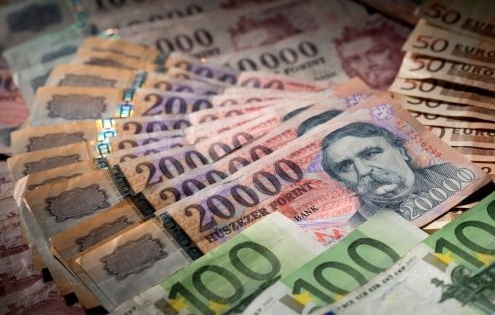
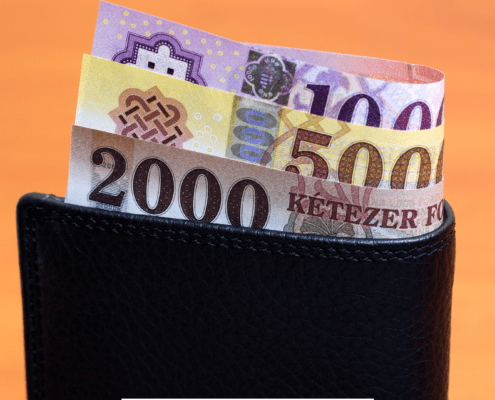
On the currency side: Hungary uses the forint, not the euro. As of March 2026, you get around 387 forints to the euro. The rate may shift around the April election, in either direction. The practical advice: don’t exchange large amounts all at once, check the rate before you travel, and always pay in forints rather than euros when a merchant offers both.
Here are what things actually cost right now, in euros.
What things actually cost: real prices in March 2026
Coffee
A flat white at a specialty coffee shop averages around €3.30. That is genuinely cheap by Western European standards — the same coffee costs double in Vienna or Amsterdam. An espresso runs around €1.50. Budapest has a thriving independent coffee scene, and you will not struggle to find excellent coffee at these prices throughout the city.
Food
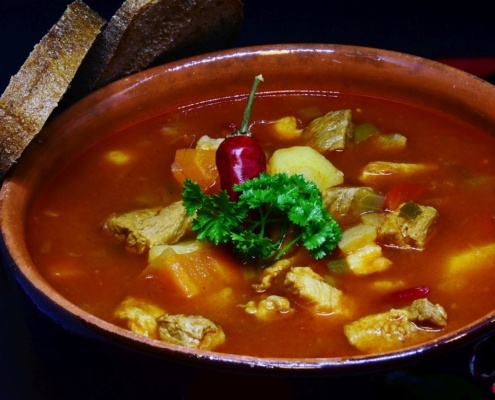
Eating locally is key to doing Budapest on a budget. The single best-value eating decision you can make in Budapest is the napi menü — the daily lunch special offered by most local restaurants, typically two courses for around €6. It is available until around 2-3 pm. It is how locals eat, and the quality is often excellent. The same restaurant will charge you significantly more for an equivalent dinner in the evening.
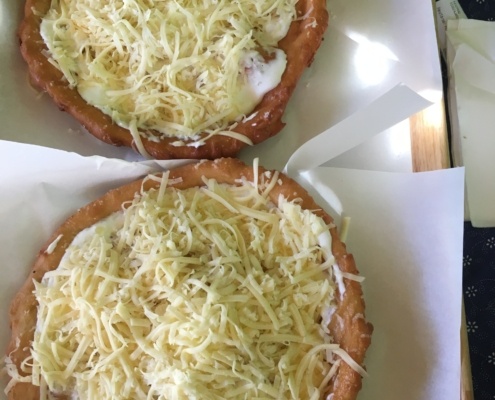
Street food is similarly good value — lángos, deep-fried flatbread with sour cream and cheese, costs around €5, and a full gyros platter with fries and a drink runs around €10. These are the most authentic and most affordable eating experiences in the city and the ones your guides will point you toward on a walking tour.
A sit-down dinner at a mid-range local restaurant runs around €10–15 per person for a main course, rising to €25–30 per dish at higher-end establishments. No longer cheap by Budapest’s own historical standards, but still well below equivalent restaurants in Germany, Austria, or the UK. One important note: most sit-down restaurants in Budapest automatically add a 12.5–15% service charge to the bill. Check before you add a tip on top — in many cases, the service charge is already included.
Drinks
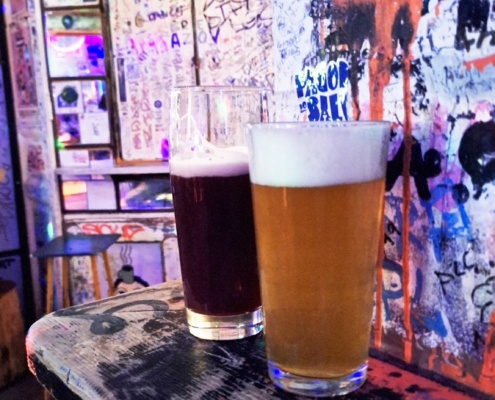
A pint of local beer in a bar runs €2–3. A glass of house wine costs roughly the same. Hungarian wine is where the real value lies — the quality is far higher than you would expect at that price, and the country’s wine regions, particularly Eger and Tokaj, produce bottles that would cost multiples of the Budapest price in a London wine shop. Avoid ordering drinks at the tourist-facing bars directly on the main party strip in District VII — prices there are significantly higher for an identical product.
Accommodation
Important update for 2026 worth knowing before you book. Short-term rentals, including Airbnb, are now banned in District VI, the Party District, as of 1 January 2026. Hotels and guesthouses are unaffected, but check your booking platform carefully if you were planning to stay in that area.
Thermal baths
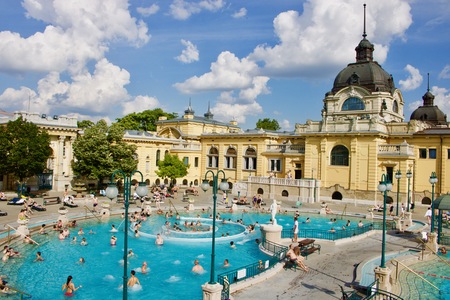
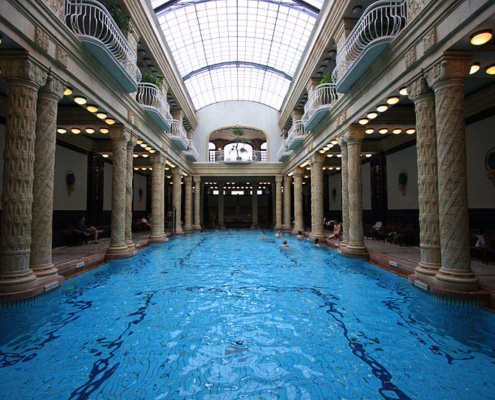
Prices have risen more noticeably here than anywhere else. A peak-time day pass at Széchenyi Thermal Baths — the largest and most famous — now costs around €41. That is still cheaper than a spa day in most Western European cities, but it is no longer the cheap afternoon out it once was. For better value, Lukács or Rudas are the local recommendations — same thermal water, significantly lower entry price. The famous Gellért Thermal Baths are closed for renovation until 2028. If Gellért was on your list, plan for Rudas, Széchenyi, or Lukács instead. Lukács in particular offers strong value — less famous, less crowded, less expensive, and used primarily by local residents rather than tourists.
Public transport
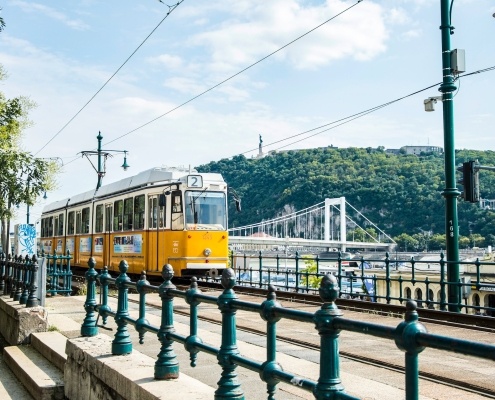
Budapest’s public transport remains one of the city’s clearest bargains. A single metro, tram, or bus ticket costs ~ €1.30 when bought via the BudapestGO app or at a station kiosk — avoid buying on board trams where a surcharge applies. A 24-hour travel card covering all lines costs around €7.20. If you are making more than five journeys in a day, the day card saves money immediately. The network is extensive and reliable — there is almost no journey in central Budapest that actually requires a taxi. Kids up to the age of 6 and seniors + 65 travel free ( with a valid photo ID). We even created a little cheat sheet with our further tips for Budapest’s public transportation.
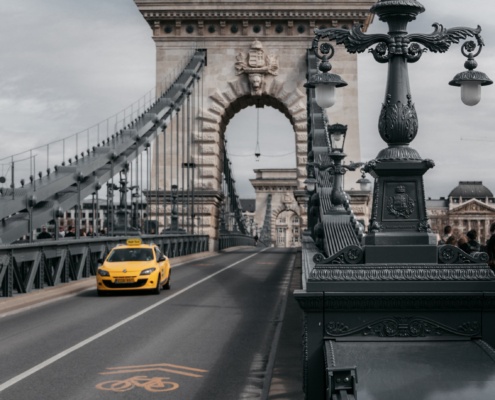
Getting around by taxi: what you need to know
This section deserves more space than most budget guides give it, because the taxi situation in Budapest is more complicated than in most European cities — and getting it wrong is one of the fastest ways to overpay.
Here is the key distinction. All licensed taxis in Budapest are legally required to follow state-set fares. But not all drivers on the street are licensed company drivers. Some operate as independent freelancers — független szolgáltatók — and these are the ones that target tourists. Their cars look like regular taxis and are painted yellow, but carry only a plain rectangular “Taxi” sign with no company logo. They have been known to use rigged meters, take deliberate detours, and, in some cases, use intimidation to extract money from passengers. You will find them waiting outside Keleti station and near the ruin bars late at night — exactly where tired or disoriented tourists are most vulnerable.
The rule is simple: never hail a taxi from the street. Always book through an app.
We have a dedicated guide to Budapest taxis on our website, which covers this in full. Your walking tour guide is also happy to help you order a reliable car at the end of any tour.

The free Budapest: what costs nothing
Many of the best Budapest on a budget experiences are completely free. Budapest’s free offerings are genuinely extraordinary — not just parks and viewpoints, but some of the finest urban experiences in Central Europe.
Walking the Danube banks. The two riverbanks, together with the bridges connecting them, are a UNESCO World Heritage Site. The walk from the Great Market Hall across the Liberty Bridge, up through Gellért Hill, and back down to the Chain Bridge costs nothing and takes about two hours. The view over the Parliament and the river from the top of Gellért Hill at dusk is one of the best city views in Europe.
Fisherman’s Bastion. The lower terrace is free all day. The upper towers charge entry during the day but are free after 9 pm in summer — and the nighttime view is, if anything, better than the daytime one.
The Great Market Hall. Free to enter. The ground floor is where locals shop for produce, meat, and paprika — go in the morning for the best atmosphere and freshest produce. The upper floor is more tourist-oriented and more expensive.
Heroes’ Square and City Park. Free to visit.
Free walking tours. The most useful free thing you can do on your first day in Budapest. You pay what you feel the experience was worth at the end — no upfront cost, no obligation. Our guides are local residents who cover the city’s history, architecture, and daily life in around two hours, and will personally point you to every good-value recommendation in this guide. Join us any morning at 10.30 am at the Budapest Eye Ferris Wheel, next to the fountain.
Five things locals know that tourists often miss
- Always pay in forints, never euros. Some tourist-area restaurants and shops accept euros, but the rate they use is almost always unfavorable. Pay in forints wherever possible.
- Avoid Euronet ATMs. The yellow Euronet machines in tourist areas charge significant hidden fees — up to €12 per transaction. Use bank-affiliated ATMs — OTP, Erste, or Raiffeisen are the most common — and always select “decline conversion” when offered the option to pay in your home currency. Dynamic currency conversion is always a worse deal for you.
- Use a Wise or Revolut. These money apps give you the interbank exchange rate with minimal fees — significantly better than exchanging cash at bureau de change counters, and safer than carrying large amounts of forints.
- Eat your main meal at lunch, not dinner. The napi menü is only available until around 2-3 pm. The same restaurants charge significantly more in the evening for equivalent food. This single habit can cut your daily food spending almost in half.
- Drink tap water. Budapest’s tap water is safe, clean, and free. Carry a refillable bottle and use the public drinking fountains — ivókút — dotted throughout the city rather than buying bottled water at tourist kiosks.
A note on tipping
Tipping culture in Budapest is stronger than in most of Western Europe and worth knowing about in advance. Tipping is genuinely embedded in Hungarian culture — 10–15% is standard in restaurants where a service charge is not already included. The local custom is to hand the tip directly to the waiter when paying, not to leave it on the table. Small round-ups are appreciated in taxis and cafés. Do not tip if a service charge is already printed on the bill — check first.
An honest summary
What Budapest still offers — genuinely, and at a level few European capitals can match — is extraordinary value in the things that matter most: coffee culture, wine, street food, public transport, and the simple experience of walking in a beautiful city with more history per square meter than almost anywhere else on the continent.
Come with realistic expectations. Prices are higher than they were. The city is worth it anyway.
With the right habits, Budapest on a budget is easier than most travelers expect. Eat where locals eat, walk more than you taxi, use Bolt or Főtaxi when you do need a car, and skip the Euronet machines. You will leave having spent less than you expected and seen more than you planned.
Our free walking tours run daily and are the best starting point for all of this. Join us any morning at 10.30 am at the Budapest Eye Ferris Wheel, next to the fountain. Pay what you feel at the end.
All prices correct as of March 2026. Exchange rate used: €1 = 387 HUF.