Budapest Scams to Avoid: Honest Safety Guide from Local Guides
Budapest is a very safe city for tourists; it consistently ranks among the safer destinations in Central Europe. — but like any major European capital, there are a few tourist scams and situations worth knowing about before you arrive.
Most Budapest scams to avoid are easy to recognise once you know what to look for and understand how they work. The good news is that violent crime against visitors is rare, the city centre is generally safe even late at night, and most travellers experience no problems at all during their stay. You can walk along the Danube at midnight, take the metro alone, and eat at a street food stall without much concern.
Here’s the honest, practical version from local guides who walk these streets every day — including the most common Budapest scams to avoid, the areas worth understanding, and the simple mistakes that catch first-time visitors off guard.
The Most Common Budapest Scams to Avoid
1. The Friendly Bar Invitation
This remains one of the best-known Budapest scams to avoid, especially around nightlife areas. A friendly local (sometimes an attractive one) strikes up a conversation and suggests you join them at a “great bar nearby.” You go, have a drink, and receive a bill for hundreds of euros. The bar, the new friend, and often the staff are all in on it.
How to avoid it: If a stranger you just met is unusually eager to take you to a specific bar, decline. Go to places you chose yourself.
2. Taxi Overcharging
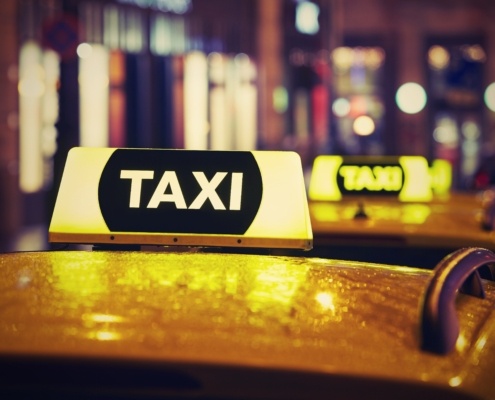
Unlicensed taxis near tourist areas — especially around the airport, train stations, and ruin bars — have been known to charge wildly inflated fares.
How to avoid it: Only get into a certified, licensed taxi. They’re easy to recognise: the cars are yellow, the front left door reads “minősített budapesti taxi” (certified Budapest taxi), the licence plates are yellow, and inside you’ll find an official fare table on the dashboard and rear doors showing fixed regulated rates.
Reliable options include Bolt, City Taxi, Főtaxi, Elit Taxi, and Uber. Never agree on a price before getting in — a legitimate taxi always uses a meter.
3. Currency Confusion
Some exchange offices near tourist areas advertise attractive rates but bury unfavourable terms in the small print — often a large commission, or a rate that only applies to large amounts.
How to avoid it: Use ATMs from major banks, or exchange money at post offices and established exchange bureaus away from the main tourist drag. Avoid the booths directly on Váci utca.
4. The Fake Policeman
Rare but reported: someone approaches and claims to be a plainclothes police officer, asking to check your wallet for counterfeit notes. They then pocket some cash.
How to avoid it: Real police in Hungary carry visible ID. If approached, ask to see identification and offer to walk to the nearest police station together. A genuine officer will have no problem with this.
5. Overpriced Menus
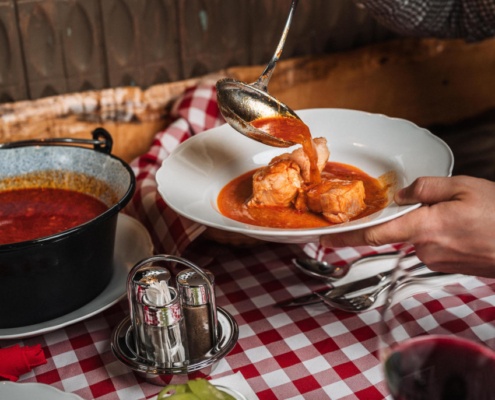
Restaurant tourist traps are another of the classic Budapest scams to avoid near major landmarks. Some restaurants near major tourist attractions show one menu outside and charge different prices inside, or add unexpected service charges.
How to avoid it: Always check that you’re ordering from a priced menu, and look at the bill before paying. Never order a bottle of wine without seeing the price first — and if a waiter tells you wine is only available by the bottle, don’t believe it. One street back from any major landmark will usually get you better food at half the price.
6. Fake Drug Sellers (Jewish Quarter / Kazinczy Street Area)
While we’re on the subject of things to avoid, a word about the fake drug sellers that operate around the Jewish Quarter, particularly near Kazinczy Street.
How to avoid it: Don’t buy drugs on the street. Ever. Not because we’re moralising, but because you’ll simply be cheated. What’s sold as marijuana is usually parsley. What’s sold as something stronger is typically a ground coffee pill or guarana — you can figure out the rest. You’ll be out of pocket, sober, and mildly seasoned. If you understood this section, consider yourself warned. If you didn’t, probably best to move on to the next chapter and not think about it further.

Which Neighbourhoods Are Safe?
Very safe for tourists:
- District V (Belváros) — the city centre, always busy, well-lit
- District I (Castle District) — Buda’s historic heart, very calm
- District VI (Terézváros) — Andrássy Avenue, Opera House area
- District VII (Erzsébetváros / Jewish Quarter) — lively, popular, safe even late at night during the week
Use normal urban awareness:
- District VIII — parts of it are fine, parts are rougher. Not dangerous for a purposeful visit, but not a place to wander aimlessly at night.
- The area around Keleti Station — Budapest’s main international train station has the usual mix of characters you’d find around any major European terminus. Be aware of your surroundings.
The planetarium park area (District X) and Népliget metro stop— not the most welcoming environment. There’s a reason the locals don’t linger there. Stick to the parts of the city with actual foot traffic.
Is Budapest Safe for Solo Travellers?
Yes, and it’s a genuinely great city for it. Solo travel in Budapest is common and well supported by the infrastructure, and the city has a good hostel and social travel culture. Free walking tours in particular, are one of the best ways to meet other travellers on day one.
Solo women travellers: Budapest is generally considered safe. The usual precautions apply — trust your instincts, keep your phone out of sight in crowded areas, and have your accommodation address saved offline. Harassment is not a systematic problem here, but evenings in the ruin bar district can get rowdy on weekends.
Is Budapest Safe at Night?
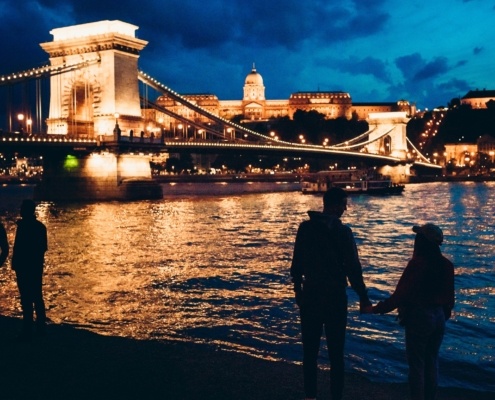
The city centre is lively and well-populated until very late, especially on weekends. The ruin bar strip around Kazinczy utca and Király utca is busy until the early hours — busy means safer, generally.
The Danube embankment is a lovely late-night walk. Buda is quieter but not threatening.
Practical tips for nights out:
- Keep your wallet in a front pocket or inner bag in crowded bars
- Agree on your Bolt pickup point before you need it — the ruin bar streets are hard to navigate for drivers
- Drink water. Budapest’s summer heat plus nightlife is a combination that catches people off guard.
Is the Tap Water Safe to Drink?
Yes. Budapest’s tap water is clean, safe, and of good quality. You don’t need to buy bottled water.
Emergency Numbers in Hungary
| Service | Number |
| General Emergency | 112 |
| Police | 107 |
| Ambulance | 104 |
| Fire | 105 |
| Tourist Police (English-speaking) | +36 1 438 8080 |
The Best Way to Avoid Budapest Tourist Scams
Get oriented on day one.
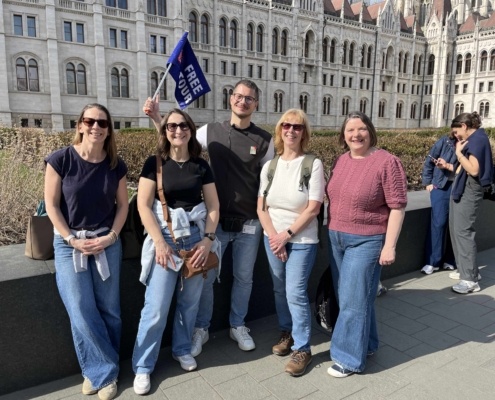
Most tourist mistakes — wrong neighbourhoods, dodgy exchange booths, overpriced restaurants — happen because people don’t know the lay of the land yet. A two-hour walk with a local guide on your first morning fixes most of this before it becomes a problem.
Our free walking tours cover not just the history and highlights of Budapest, but the practical stuff too — where to eat, where to exchange money, which areas to explore and which to skip. Your guide has been living and walking this city for years. Use that knowledge.
Join a free walking tour with Trip to Budapest →
Tip-based, daily departures, English-speaking local guides. The best two hours you’ll spend on day one.
Bottom Line
Thankfully, most Budapest scams to avoid are prevented easily with a little awareness and common sense. Budapest is safe. Don’t let anyone talk you out of visiting. Just arrive informed, keep your wits about you in the tourist hotspots, and you’ll have a brilliant time.
The city is too good to miss over concerns that a little preparation will completely dissolve.