13 Unique Memorials and Statues in Budapest

Welcome to Budapest, a city adorned with a rich tapestry of statues and memorials that tell tales of its past. In this exploration, we’ll delve into 13 unique sculptures that stand as silent storytellers, each with its own historical significance and cultural resonance. These memorials offer insights into local culture, history, and artistic expression. We believe their presence often enriches the overall journey for all those travelers seeking a deeper connection with Budapest. So let’s see our favorite statues in Budapest:
 

statues in budapest

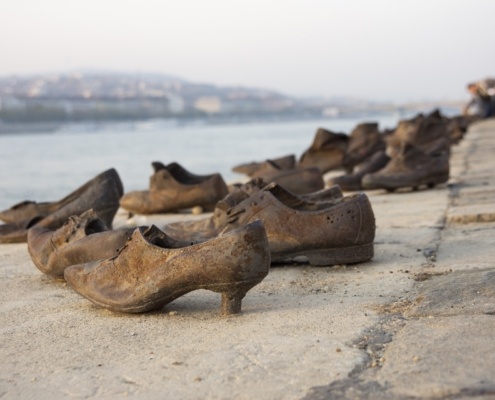
Shoes on the Danube

On the edge of the Danube embankment, a short walk from the Parliament, you’ll discover a collection of 60 pairs of shoes sculpted in bronze—representing a variety of styles. This poignant installation marks the site where Jewish men, women, and children were executed during the winter of 1944-45 by the Arrow Cross Party Militiamen. Before facing their tragic fate in the river, victims were compelled to remove their shoes, as these items held significant value during that time. The 60 pairs of shoes are positioned along the riverside, serving as a solemn memorial to commemorate the 60th anniversary of the Holocaust. During our Free Budapest Tour, we make a stop at this meaningful site, providing an authentic and personal summary of Budapest’s Holocaust history in just a few minutes. Take a moment to gaze at the shoes and the river beyond. This site stands as a powerful reminder of the atrocities of the past and a call to ensure that such horrors are never repeated.
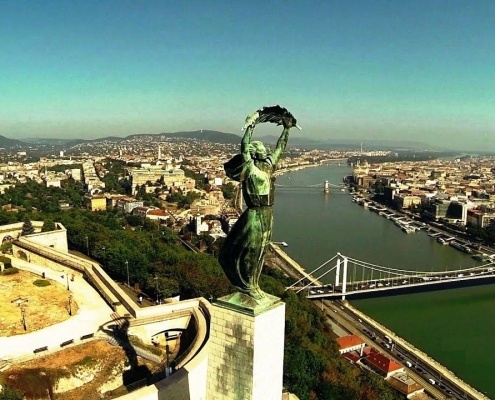
Liberty Statue on Gellért Hill

Situated atop Gellért Hill, visible from every downtown vantage point, this statue was erected in 1947. It serves as a poignant reminder of the Soviet liberation of Hungary during World War II, marking the end of Nazi Germany’s occupation. The bronze statue, standing at 14 meters, graces a 26-meter pedestal, holding a palm leaf. The monument’s model was Erzsébet Gaál, a 28-year-old woman discovered on the streets by Zsigmond Kisfaludi Strobl. The statue underwent a transformation in 1992 during a cultural event when the woman bearing the palm branch was covered in a white shroud for a few days. This evolution marked the statue’s shift from the spirit of Communism over the city to a ghostly presence. 
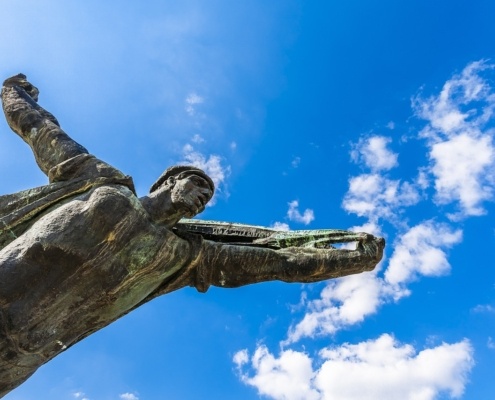
Statues in Memento Park

Memento Park, located outside Budapest’s center, is a must-visit! This Eastern European gem showcases political statues that once adorned Budapest’s streets from 1947 to 1988. With the fall of European communism in 1989, the statues in Memento Park underwent a transformative fate. As Central and Eastern Europeans liberated themselves from oppressive ideologies, symbols like Marx, Engels, Lenin, and Hungarian party figures lost their authority. The swift removal of these symbols across Eastern Europe within weeks, if not days, consigned them to history’s trash heap. Over 30 years later, memories of the dark days of communism persist, ensuring the lessons are not forgotten. In Budapest, a distinctive approach emerged. An entrepreneur gathered the city’s discarded statues, creating Memento Park—a curated display in a vast field on the outskirts. This unconventional park now stands as a testament to human resilience and a tangible reminder of the ideological shift shaping Budapest’s cultural landscape. During the Free Communism Tour, we introduce socialist realist art and explore how these statues affected our childhood during communism.
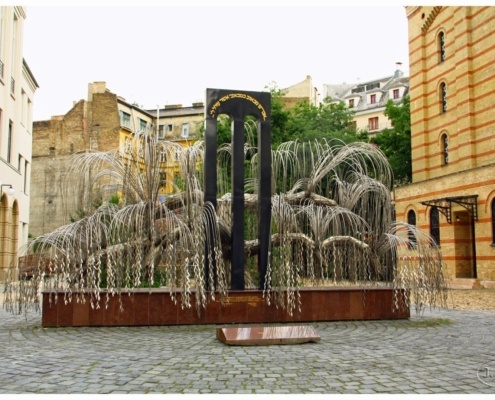
 

Weeping Willow Tree Memorial

In the courtyard of the Dohany Street Great Synagogue, there stands an iron weeping willow tree known as the Tree of Life. This poignant structure, adorned with 6,000 leaves, serves as a solemn reminder of the approximately 600,000 victims of the Hungarian Holocaust. Beyond Jewish individuals, the victims include Roma, gay people, and others. Most leaves bear engraved names, inviting visitors to touch them, and fostering contemplation about the innocent lives lost. The park’s construction was funded by a renowned American actor from the 1950s, originally named Bernard Schwartz. Born to Hungarian Jewish parents who had left Hungary before World War II, he adopted the popular actor name Tony Curtis and achieved legendary status in America, boasting a career that spanned six decades. During our Free Jewish District Tour, we make a stop at this meaningful site, providing an authentic and personal summary of Budapest’s Holocaust history in just a few minutes.
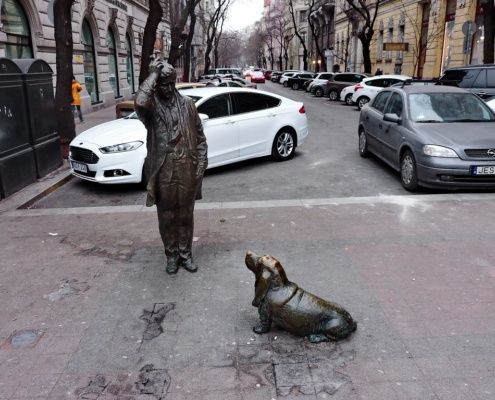


Detective Columbo Statue

Detective Columbo, portrayed by Peter Falk, is honored with a statue located in Falk Miksa Street in Budapest. The sculpture, erected in 2014, captures the iconic pose, complete with Columbo’s trademark raincoat and cigar. Peter Michael Falk, born in New York City to Russian immigrant parents, proudly traced his ancestry to Russia, Poland, Czechia, and Hungary through his grandparents. Interestingly, Columbo’s beloved basset hound never officially received a name. When the detective first rescued the dog, he toyed with the names Fido or Beethoven but ultimately settled on simply referring to his faithful companion as Dog or You.
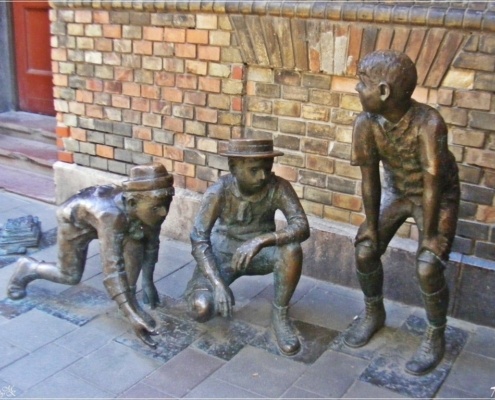
Paul Street Boys

This bronze sculpture in Budapest’s Práter Street brings to life a scene from Ferenc Molnár’s classic novel, “The Paul Street Boys.” This tale is about the schoolboys’ adventures in Budapest’s Józsefváros neighborhood in 1889. The sculpture vividly portrays a moment from the story known as ‘einstand,’ where boys returning from school play marbles. Two teams are engrossed in the game, while a third, seemingly indifferent, secretly watches with envy. Standing before these bronze figures, you might feel an urge to join the marble game. If you find these statues intriguing, consider reading “The Paul Street Boys.” The novel promises an engaging journey through the characters and history that inspired this evocative sculpture.
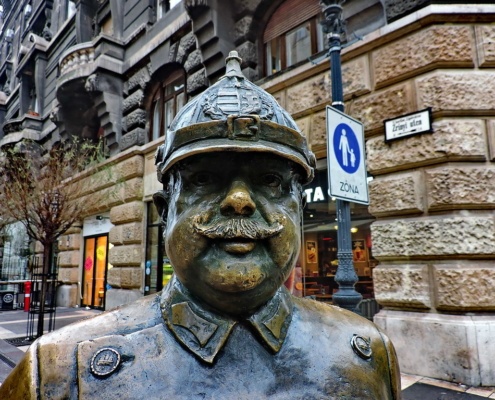
The Fat Policeman

This life-sized bronze sculpture portrays a calm 19th-century policeman overseeing order and traffic on the street. The Fat Policeman statue is located approximately 150 meters west of St. Stephen’s Basilica, towards the Danube River. What sets this statue apart is its notable belly, widely regarded as one of the most touched bellies in Budapest. The shiny, round belly is a playful representation of Hungary’s affection for hearty, substantial foods like gulyás (goulash) or lángos (deep-fried flatbread). According to a popular legend, rubbing his belly ensures you’ll enjoy delicious food in Budapest. Don’t miss the chance to encounter this iconic statue as you stroll near the cathedral—it’s a unique and charming part of the Budapest experience. Take our daily Free Budapest Tours to learn about traditional Hungarian food and discover the most authentic places to eat in Budapest.
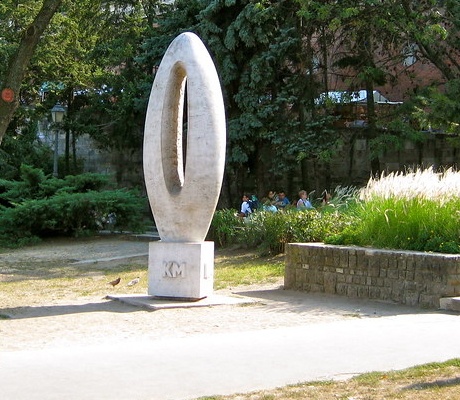
Zero Kilometer Stone

Situated by the famous Budapest Funicular, the Zero Kilometer Stone is a three-meter-high limestone monument with a “KM” inscription, marking the starting point for all road distances in Hungary. Created by sculptor Miklós Borsos, this cool-looking monument was unveiled in 1975, replacing the original destroyed during World War II. Find it easily on Clark Adam Ter, near the western end of Széchenyi Chain Bridge.
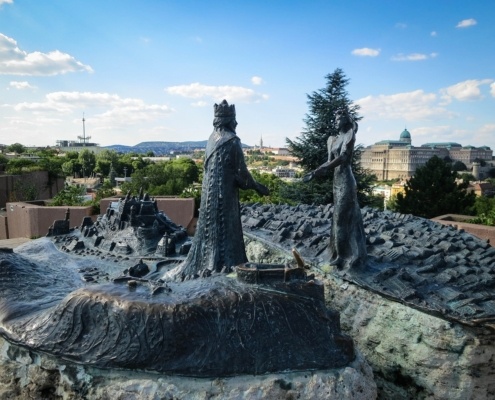
statues in budapest

The Garden of Philosophers

This garden offers a peaceful retreat away from the bustling city, nestled on the side of Gellért Hill. The statues within the circle symbolize the belief in “better mutual understanding” with representations of Jesus, Buddha, Lao Tse, Abraham, and Ekhnaton. Additionally, statues of Gandhi, Bodi Dharma, and Saint Francis stand just outside the circle. The dramatic symbolism beautifully conveys the idea that various cultures and religions can coexist harmoniously. As you appreciate the tranquil surroundings, take in a spectacular view of Buda Castle Hill from the garden.
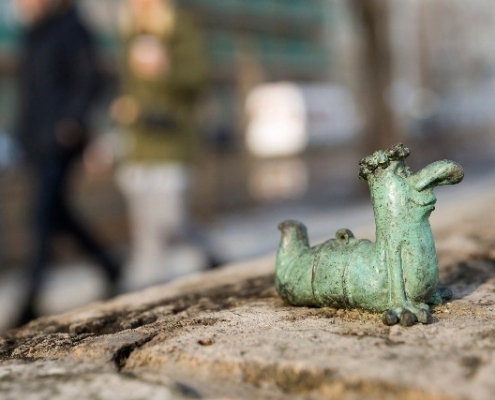
One of the miniature statues of Mihály Kolodko in Budapest depicting a Hungarian cartoon

Mini Statues of Kolodko

Budapest conceals nearly 30 miniature statues, skillfully placed throughout the city by Mihajlo Kolodko, a Ukrainian artist with Hungarian roots. You must keep your eyes peeled to spot these hidden gems amid the hustle and bustle of the busy streets and squares. Each mini-statue carries a meaningful story, often drawing inspiration from Hungarian folklore and history in Kolodko’s distinctive style. Join our daily Free Budapest Tours to discover the fascinating tales behind these statues.
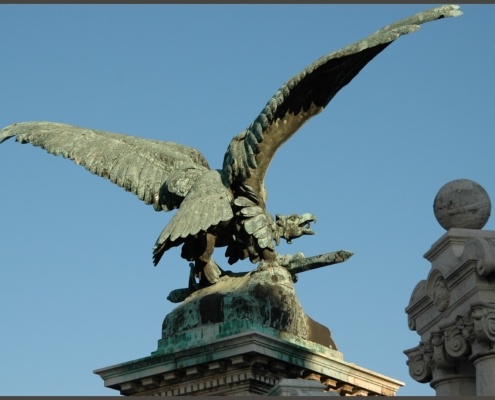
 

Turul Statue

Discover the bronze turul bird statue on our Free Buda Castle Tour, close to the Royal Palace. Find it near the Habsburg steps and Habsburg Gate on the east side. The turul bird is a key figure in an ancient Hungarian folktale. According to the legend, it played a role in Árpád, the chieftain of the Magyar tribes, leading the Hungarians into the Carpathian Basin around 896 AD. The bird dropped a sword here in Budapest, marking the Hungarian homeland. Besides the interesting story, enjoy a fantastic view of the Danube and the Pest side of the city from this spot.
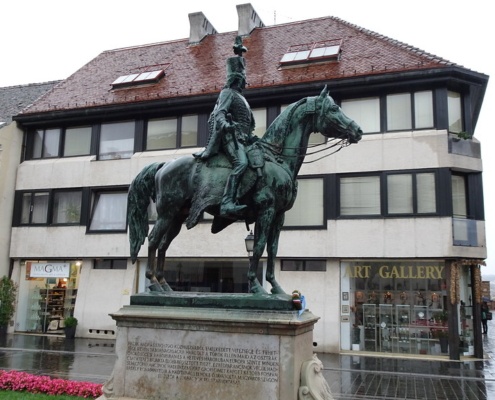
Hadik András Statue

While walking from Matthias Church toward the Hospital in the Rocks, you’ll come across the statue of Hussar General András Hadik, mounted on his horse. Erected in 1937, this bronze statue pays homage to Hadik, a Hungarian Hussar general in the Habsburg military during the 19th century, known for his successful military campaigns. An intriguing detail awaits those who closely examine the statue: the horse’s testicles are shiny yellow, standing out from the patina covering the rest of the sculpture.

During the Communist era, engineering students residing in the nearby dormitory had a unique tradition of polishing the horse’s testicles on the morning of challenging exams, believing it brings them good luck. There’s even a playful suggestion that touching the balls imparts students with extra skills in bed. Join our daily Free Buda Castle Tours to unravel the truth behind these amusing stories.
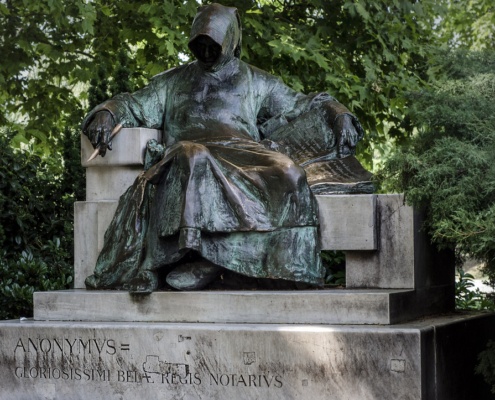
Anonymus 

This enigmatic and almost wizard-like statue is situated in Budapest City Park near Vajdahunyad Castle behind Heroes’ Square. The real Anonymous lived in the 13th century, and his true identity remains appropriately unknown. He is believed to have served as a notary to Béla III of Hungary, composing the chronicle “Gesta Hungarorum” (Deeds of the Hungarians).

The intriguing statue depicts a hooded figure titled Anonymous, the unknown chronicler, holding a pen in the left hand. Visiting writers often rub the pen, seeking inspiration for travel blogs or hoping to bring good luck to their studies. If you are a travel blogger and find success in your writing after touching the pen, consider sending your donations to your tour guides in Budapest.
All You Need to Know for the Best Goulash in Budapest

In this article, we give you all the information you need to find or make the best goulash in Budapest. First things first, to eat like a local, you need to know a little bit about the background of the food, so let’s discover together the journey of goulash in Hungary!

The genesis of “Gulyás” or “Goulash” can be traced back to groups of nomadic herdsmen known as  “gulyás” or “csikós”. These men, accompanied by their dogs and horses, spent extended periods on the plains tending to their cattle. Cooking over open fires with simple ingredients like millet, lard, bacon, onions, salt, and pepper created a rare dish from fresh meat when available. Gulyás or Goulash dish is one the few authentic contributions of the Hungarian gastronomy, to international cuisine and even so, it usually resembles a stew, whereas it is supposed to be more like a soup.


Evolution of Goulash

As Hungary transitioned into a settled society, so did the recipe for Goulash. Adding paprika, a spice derived from ground peppers, became a defining feature, enhancing both the flavor and the rich, reddish color characteristic of traditional Hungarian Goulash. 

Paprika’s Role

Paprika’s vibrant color and intense flavor became integral to Goulash, transforming it into the iconic dish we know today. The spice reached us during the time of the Ottoman Turkish occupation (16-17th century), and became a symbol of Hungary’s culinary identity. You are real Hungarian when paprika is just as important as salt and pepper on the table…The quantity of paprika we Hungarians put in our national dishes is unbelievable:-)

Goulash as a National Dish

By the 19th century, Goulash had transcended its humble origins, becoming a staple in Hungarian households and a symbol of national identity during political and cultural revival. It gained recognition as a dish encapsulating the spirit of Hungary and its people.


Our Recipe for Gulyás

  • Fry 3 oz of onions in 1.5 oz of lard.
  • Add half a tablespoon of red paprika powder, ½ lb of beef shin (cut into squares), 1 clove of finely chopped garlic, caraway seed, and fresh or tinned lecsó.
  • Season with salt, pour in water, and steam until almost tender.
  • Add 2 lb of potatoes (cubed), covering potatoes and meat with water. Cook on a slow fire for about 2-3 hours.
  • Near the end of cooking time, add small-sized noodles (csipetke).


Where to find the best goulash in Budapest?

If you are visiting Budapest trying a soup of Goulash is a must, but where to find the best one? Of course, every local has their own favorite spot, but there are some undeniable traditional restaurants where you definitely won’t be disappointed. Now we picked our 3 favorite places, but if you want to get further local recommendations for the best goulash in Budapest, join our Free Budapest Tours, or Buda Castle Tour while you are here!

  1. Gettó Gulyás – It is a trendy “stewery” in the Jewish District. It’s very popular, but not without reason! It’s recommended to book the table in advance!
  2. Menza – A bigger traditional restaurant in the heart of the city.
  3. Rosenstein – A family restaurant specializing in Jewish-Hungarian cuisine. One of the best Hungarian restaurants in the whole country. It could be a hidden gem, because it is little bit outside of the classical city center, but booking a table is a must!


And now, Dear Reader, armed with the knowledge of Goulash’s nomadic beginnings, its fiery affair with paprika, and its rise to fame as a national dish, you’re not just savoring a bowl of stew – you’re indulging in a steaming pot of Hungary’s history and traditions.

So, the next time you find yourself enjoying the hearty Goulash, remember that you’re not just eating; you’re time-traveling through the plains of Hungary, embracing the laughter of cowherds and the aroma of centuries past.  We offer the most authentic way to explore Budapest with our licensed tour guides, tested, and trusted on Tripadvisor.


Bon appétit and happy time-traveling with every spoonful!

Hungarian Money Guide – How to pay in Budapest?

Before visiting Hungary, it’s helpful to know a little about our currency, and how it works, that is why we made this Hungarian money guide for you, so you can find every useful information about paying in Budapest. Most importantly we have our own currency:

The official currency of Hungary is the Hungarian Forint (HUF). Take a look at this guide to the Hungarian Forint from using cash machines to cash payment.

Banknotes come in denominations of 500, 1000, 2000, 5000, 10,000 and 20,000. All of them are watermarked, contain an embedded vertical security strip of thin metal, and are designed to be suitable for visually impaired individuals. Six different coins are in use: 5, 10, 20, 50, 100, and 200 forint coins.

Currency Exchange for Travelers in Budapest

You can exchange your currency in Budapest at banks, currency exchange offices, and some hotels. We recommend changing up to 20€ at the airport upon arrival, as the exchange rate is far from being the best there. Additionally, we advise avoiding Orange ‘InterChange’ currency exchange businesses located everywhere in Budapest, as they offer the worst rates compared to other establishments. Our recommended exchange office chain is the Correct Change, they have plenty of offices in the city center and surprisingly they are really correct!

Navigating Cash and Card Payments in Hungary

In the vibrant streets of Budapest, managing your finances efficiently is crucial for a seamless travel experience. While Hungary is increasingly card-friendly, having a mix of cash and card can be a savvy choice. Here’s a breakdown to help you strike the right balance:

The Card Advantage

Hungary, especially Budapest, has embraced card payments, with the majority of establishments accepting cards, even in smaller shops and bars. Using your card for most transactions is convenient and widely accepted. However, it’s essential to be mindful of potential fees from your bank. Some banks charge fees for international card usage, so it’s advisable to check with your bank and weigh the costs. Using your card also ensures a favorable exchange rate compared to withdrawing cash. 

Cash Reserves for Added Convenience

While card usage covers the majority of your expenses, having a small cash reserve (about 1/3 of your total budget) is recommended. This can be particularly handy for tipping our Free Budapest Tour guides, market hall purchases, public toilets, or in the rare instance where card payments might not be accepted Locals often emphasize paying in Hungarian Forints (HUF) rather than Euros, as the latter may incur less favorable exchange rates. Keeping around 20,000 HUF (approximately 50 Euros) in cash can provide a safety net for those few instances where cards may not suffice.


ATMs: Choose Wisely

When withdrawing cash, opt for ATMs located inside or next to bank branches, avoiding those branded as ‘Euronet.’ This precaution ensures a more secure transaction and minimizes the risk of unfavorable exchange rates.

Always choose to withdraw Forints from established banks like Raiffeisenbank, K&H, ERSTE or OTP for better rates. Keep in mind that using ATMs, while convenient, might incur fees depending on your bank back home.


Paying in Hungarian money (HUF) Matters:

Whether it’s for dinner, a glass of champagne at the State Opera House or a local market find, paying in Hungarian Forints is advised. It not only aligns with the local preference but also safeguards you from potential rip-offs associated with using foreign currencies.


Fun facts about Hungarian money: 

Why is Hungarian money called Forint?

The name forint finds its origin in the city of Florence, where gold coins minted since 1252 were called fiorino d’oro.In Hungary, the gold-based currency Florentinus was used from 1325 under the reign of Charles Robert; after that, several other countries followed this example.


Why Hungary Does Not Have the Euro as a Currency?

While Hungary is a member of the European Union (EU), it has not adopted the euro as its official currency. The country has its own central bank, the Hungarian National Bank (Magyar Nemzeti Bank), which maintains control over its monetary policy, including issuing the Hungarian Forint. The decision to join the Eurozone involves various economic and political considerations and much more. To delve into the details, join our daily FREE BUDAPEST TOURS and FREE COMMUNISM TOURS and learn about the current political situation from your local tour guides.”

The Ultimate Neighborhood Guide to Budapest: Castle Hill

Budapest is divided into 23 districts, with tourists frequently spending most of their time in District 1 and District 5, situated in the downtown area on the Pest side of the Danube River. Nestled on the Buda side of the Danube River, Budapest’s Castle Hill, also known as District 1, is a historical treasure trove that will transport you through centuries of captivating stories. With its rich history, stunning landmarks, and quaint streets, it’s a neighborhood that combines the old and the new, creating a truly unforgettable experience. In our first part of the neighborhood guide to Budapest, we share everything you need to know about the most important sight of Buda, Castle Hill.


A Walk Through History

The Castle Hill district stands as a testament to Budapest’s storied past. Rising 60 meters above the Danube River, it has been a hub of activity since prehistoric times. This neighborhood has witnessed over 30 sieges, invasions, and countless reconstructions, making it a true survivor. The 1686 siege against the Ottoman Turks marked the transition to Baroque-style architecture, and even after World War II, Castle Hill has maintained its historic charm.


Must-Visit Landmarks


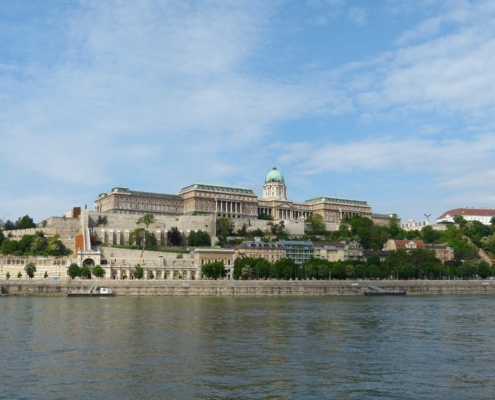
The Royal Palace of Buda sitting on top of the Castle hill next to the River Danube in Budapest

  • Buda Castle (Royal Palace): This majestic structure, once a royal residence of the Hungarian kings, now houses the Budapest History Museum and the Hungarian National Gallery, offering a window into Hungary’s cultural heritage. The entrance fee to the National Gallery is 3,400 HUF, and the entrance fee to the Budapest History Museum is 3,800 HUF. Budapest History Museum focuses on the turbulent history of the 2,000 years of the city now known as Budapest, showcasing what the once separate towns of Buda, Pest, and Obuda were like.

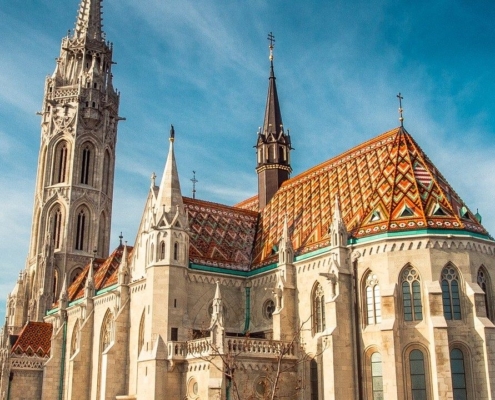
The renovated Matthias Church with its beautiful, colorful roof in the Castle district of the Buda side of the city - Guide to Budapest

  • Matthias Church: With its intricate Gothic architecture and beautifully decorated interior, it’s a masterpiece. It is open from Monday to Saturday from 9 am to 5 pm and on Sunday from 1 pm to 5 pm, with an entrance fee of 2,500 HUF.

Guide to Budapest

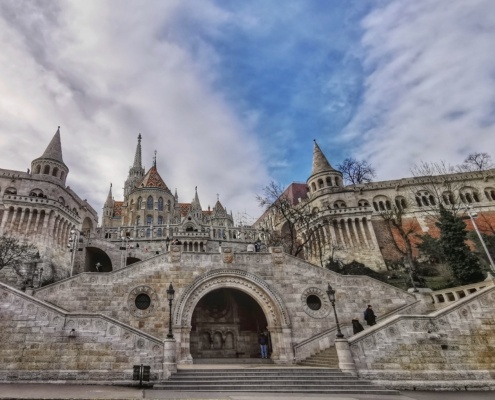
  • Fisherman’s Bastion: For panoramic views of Budapest, visit this fairy-tale-like terrace, especially enchanting when illuminated at night. The entrance fee is 1,200 HUF, and it is free to visit from 7 pm to 9 a.m.

Guide to Budapest

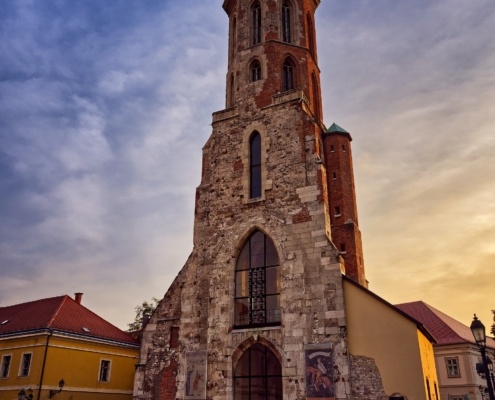
  • Maria Magdalena Tower: Explore the Bell Tower, a survivor of numerous sieges, and enjoy the stunning panoramic view of Budapest. If you feel fit enough, there are about 170 steps to climb. The 24 tower bells ring every hour and are truly melodious. The bronze replica of the 1,000-year-old Hungarian coronation mantle on the church grounds is very interesting in the courtyard of the church.

Blossoming cherry trees in the Buda Castle Area with people walking around in face masks - Guide to Budapest

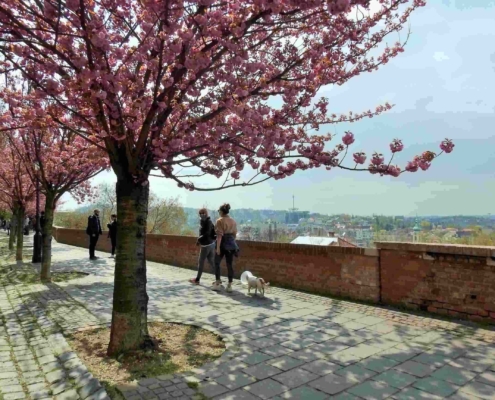
  • Castle Hill Promenade (Tóth Árpád Sétány): This picturesque passage adorned with cherry blossoms in spring offers a perfect selfie spot. Among the sights is the Centenary of the unification of the Pest and Buda side of the river Danube, well created by the famous Zsolnay ceramic factory. You can also find stairs and an elevator leading you to the Hospital in the Rock and Nuclear Bunker Museum. The spectacular view of Buda Hills will definitely make you stop for a moment to take a few selfies.

Guide to Budapest

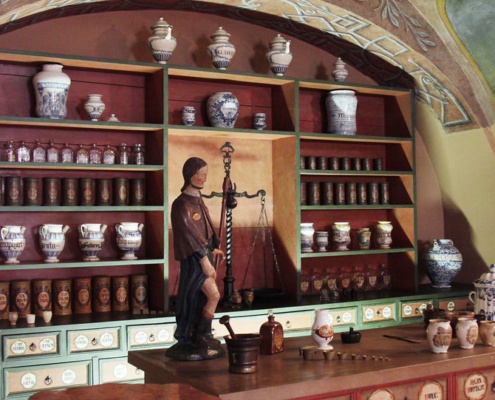
  • Golden Eagle Pharmacy: Step into Budapest’s first pharmacy, now a quirky museum. It’s a small, two-room museum that contains a mock-up of an alchemist’s laboratory, with dried bats and stuffed crocodiles suspended from the ceiling, a small ‘spice rack’ used by 17th-century travelers for their daily fixes of curative herbs, curiously shaped glassware, and a blackened mummy head.

Guide to Budapest

  • Medieval Jewish House of Prayer: The museum includes a small section of ancient gravestones at the entrance. You then walk past a courtyard and visit a small museum room. It was excavated in the mid-1960s, which was followed by renovation works. There are medieval frescoes inside the synagogue with a Star of David that is accompanied by Aaron’s blessings. You can also find Jewish tombstones inside the building, a place of significance. There is another Askenaz shul with unexcavated remains of the 16th century buried beneath private property.

Guide to Budapest

  • Museum of Music History: Discover the rich musical heritage of Hungary and Europe. The Museum of Music History is a museum in Budapest that collects and displays objects related to Hungarian and European music history, including manuscripts, letters, photographs, musical instruments, and legacies of famous composers and musicians. A highlight of this museum is the recording gramophone used by Hungarian composers Bela Bartok and Zoltan Kodaly to capture the authentic folk music of many nations living together in the Carpathian Basin. It is open from Tuesday to Sunday from 10 am to 4 pm, with an entrance fee of 2,000 HUF.


Where to Eat and Find Toilets

  • PRIMA: Grab a snack or traditional Hungarian pastries just opposite Matthias Church in Tarnok utca. Bakery products, sandwiches, soft drinks, and dairy products are all available, with a rich variety of local and imported products and a good wine choice.
  • There are four public toilets available near Fisherman’s Bastion, Maria Magdalena Tower, Rock Hospital and the National Gallery.


Exploring the District

Besides historical sites, Castle Hill boasts cobblestone streets, charming cafés, and unique shops. Take a leisurely stroll along Tárnok Street, appreciate the historical architecture, and savor Hungarian pastries or you can check out the oldest confectionery in the town.


Getting There

Access Castle Hill via the funicular, a scenic walk across the Chain Bridge from Pest, or public transportation. Alternatively, meet us at Batthanyi ter metro exit’s meeting point at 2:30 pm daily for our Free Buda Castle Hill Tours.


In Conclusion

Budapest’s Castle Hill, District 1, is a neighborhood where the past seamlessly blends with the present. It’s a must-visit for history enthusiasts and anyone seeking to immerse themselves in the rich culture and stunning architecture of this remarkable city. Stay tuned for more neighborhood guides as we continue to explore Budapest’s diverse and vibrant districts, and don’t forget to join our daily Free Buda Castle Hill Tours