Tag Archive for: Buda

Is the Budapest Citadel Open in 2026? Full Gellért Hill Guide

The Direct Answer

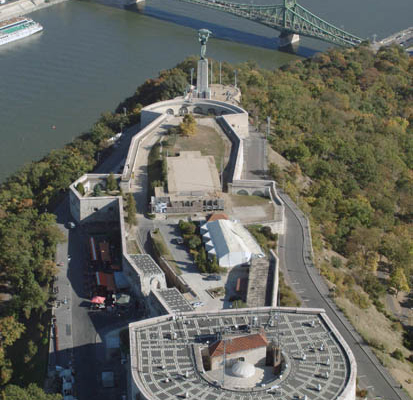
Yes — the Budapest Citadel on Gellért Hill is open in 2026, following a major restoration that closed the site for four years. It officially reopened to the public in spring 2026 and has been transformed into a gorgeous 6,000-square-meter public park with walking paths, manicured gardens, and panoramic viewing terraces set inside a larger 20,000-square-meter green area.

The park itself, the new walkways along the old fortress walls, and the plaza around the fully restored Liberty Statue are completely free to visit, with no tickets or bookings required. The only paid element is the “Bastion of Liberty” exhibition—a multi-level museum inside the western tower that includes access to the Roof Garden 360 viewpoint. This section requires a timed-entry ticket, priced at approximately 4,900 HUF for adults.

Budapest Citadel: What’s Free and What’s Ticketed

Area Access What to Expect
Public Park (Inner Courtyard) FREE Walkways, planted gardens with lavender and roses, and seating areas.
Fortress Wall Walkway & Bastions FREE Spectacular panoramic views over the Danube, Parliament, and Buda Castle.
Liberty Statue Plaza FREE The iconic 14-meter monument, now fully restored and accessible up close.
Bastion of Liberty Exhibition Ticketed (~4,900 HUF) Interactive museum inside the western tower. Timed-entry booking is recommended.
Roof Garden 360 & Terraces Ticketed Exclusive rooftop views, only accessible via the paid exhibition ticket.

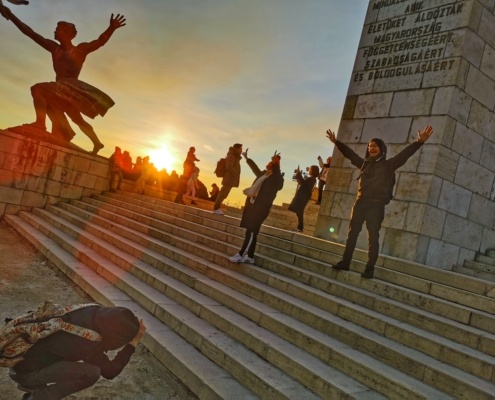
Trip with Friends in Budapest - hidden gems in Budapest - Budapest Citadel

The New Park & Free Viewpoints

The massive renovation has completely reimagined the old military fortress. Where the Citadel previously had only a single entrance that bottlenecked crowd flow, it can now be accessed from three separate directions. The old, closed-off fortress walls have been breached to make the complex more accessible, open, and friendly.

Even without buying a museum ticket, the Budapest Citadel offers some of the best panoramic views in the Hungarian capital. Walking along the restored fortress perimeter pathways gives you sweeping views in nearly every direction. On a clear day, you can view the entire sweep of the Danube, Buda Castle, Margaret Island, and the Pest skyline.

Time Tip: Budget around 30 to 45 minutes if you are only visiting the free park areas. This is plenty of time to stroll the loop, view the Liberty Statue up close, and enjoy a rest on one of the new benches.

How to Get There in the Summer Heat

Gellért Hill is notoriously steep, and climbing it on foot in the middle of a hot July afternoon is not for everyone.Reaching the Budapest Citadel is much easier than many visitors expect, especially if you use public transport instead of walking uphill. If you want to arrive looking fresh, you have two main routes:

🚌 The Easy Option: Bus 27

Reaching the Budapest Citadel is much easier than many visitors expect, especially if you use public transport instead of walking uphill. Head to Móricz Zsigmond körtér (a major transit hub on the Buda side, easily reached via Metro line M4 or Trams 6, 19, 41, 47, 49, and 56). Board Bus 27 and ride it up the hill to the Búsuló Juhász (Citadella) stop. From there, it is a flat, scenic 6-minute stroll to the main fortress gate. Need help using Bus 27, the metro, or Budapest’s tram network? Read our complete Budapest Public Transport Guide before your visit.

🥾 The Scenic Walk: Szent Gellért tér Climb

If you prefer a scenic hike, start at the Buda foot of the Liberty Bridge (Szent Gellért tér). Winding, paved pathways lead up the hill. Along the way, you can stop to explore the unique Gellért Hill Cave Church built into the rock face—a perfect, cool sanctuary to catch some shade. The climb takes roughly 20 to 30 minutes at a casual pace.
New Facilities at the Budapest Citadel

Unlike the old days, when the hilltop lacked basic infrastructure, the newly renovated Citadel is fully equipped to make your visit comfortable:

  • Modern Public Toilets: Clean, permanent restroom facilities are now available on site.
  • Hilltop Café: Sip a cold drink or coffee with a panoramic view of the capital.
  • Food & Treats: Ice cream parlors and fresh chimney cake (kürtőskalács) stalls are open to help beat the heat.
  • Universal Accessibility: Modern elevators and barrier-free pathways now serve different levels of the Round Bastion, making the summit fully accessible for strollers and wheelchair users.

Frequently Asked Questions

Q: Can you visit the Citadel in Budapest in 2026?

A: Yes! Following a major multi-year restoration, the Citadel officially reopened in spring 2026. The new public park, viewing terraces, and walking paths are open daily.

Q: Is the Citadel free to visit?

A: The outdoor public park, fortress-wall walkway, and Liberty Statue viewpoint are 100% free with no tickets required. Only the indoor “Bastion of Liberty” museum exhibition and its top roof deck require a paid ticket (around 4,900 HUF).

Q: How do I get to the Citadel without a brutal climb?

A: Take Bus 27 from Móricz Zsigmond körtér directly to the Búsuló Juhász (Citadella) stop. This is a quick 9-minute ride, leaving you with only a flat, 6-minute walk to the entrance gates.

Q: Is the Citadel worth visiting if I don’t buy the exhibition ticket?

A: Absolutely. The free park alone provides sweeping panoramas of the Danube, Buda Castle, and the Parliament, and lets you view the fully restored Liberty Statue up close.


Information reflects current statuses following the spring 2026 reopening. Bus schedules and exhibition tickets are subject to change; always check bkk.hu and citadella.hu before planning your trip.
The Ultimate Neighborhood Guide to Budapest: Castle Hill

Budapest is divided into 23 districts, with tourists frequently spending most of their time in District 1 and District 5, situated in the downtown area on the Pest side of the Danube River. Nestled on the Buda side of the Danube River, Budapest’s Castle Hill, also known as District 1, is a historical treasure trove that will transport you through centuries of captivating stories. With its rich history, stunning landmarks, and quaint streets, it’s a neighborhood that combines the old and the new, creating a truly unforgettable experience. In our first part of the neighborhood guide to Budapest, we share everything you need to know about the most important sight of Buda, Castle Hill.


A Walk Through History

The Castle Hill district stands as a testament to Budapest’s storied past. Rising 60 meters above the Danube River, it has been a hub of activity since prehistoric times. This neighborhood has witnessed over 30 sieges, invasions, and countless reconstructions, making it a true survivor. The 1686 siege against the Ottoman Turks marked the transition to Baroque-style architecture, and even after World War II, Castle Hill has maintained its historic charm.


Must-Visit Landmarks


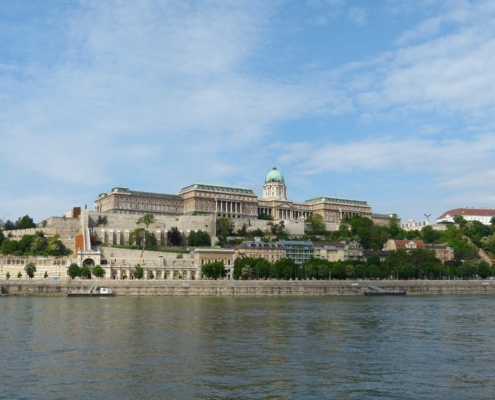
The Royal Palace of Buda sitting on top of the Castle hill next to the River Danube in Budapest

  • Buda Castle (Royal Palace): This majestic structure, once a royal residence of the Hungarian kings, now houses the Budapest History Museum and the Hungarian National Gallery, offering a window into Hungary’s cultural heritage. The entrance fee to the National Gallery is 3,400 HUF, and the entrance fee to the Budapest History Museum is 3,800 HUF. Budapest History Museum focuses on the turbulent history of the 2,000 years of the city now known as Budapest, showcasing what the once separate towns of Buda, Pest, and Obuda were like.

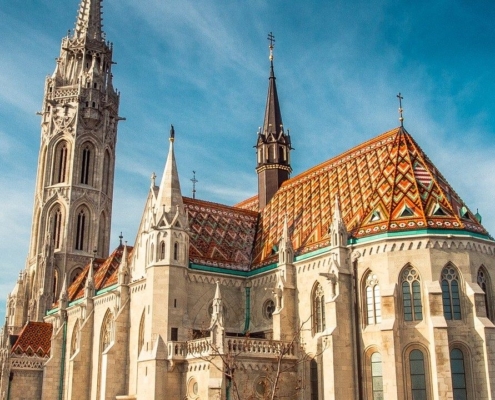
The renovated Matthias Church with its beautiful, colorful roof in the Castle district of the Buda side of the city - Guide to Budapest

  • Matthias Church: With its intricate Gothic architecture and beautifully decorated interior, it’s a masterpiece. It is open from Monday to Saturday from 9 am to 5 pm and on Sunday from 1 pm to 5 pm, with an entrance fee of 2,500 HUF.

Guide to Budapest

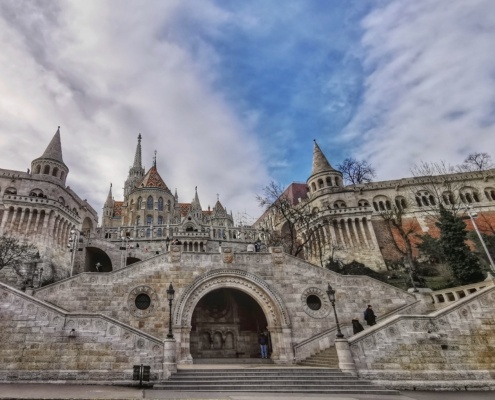
  • Fisherman’s Bastion: For panoramic views of Budapest, visit this fairy-tale-like terrace, especially enchanting when illuminated at night. The entrance fee is 1,200 HUF, and it is free to visit from 7 pm to 9 a.m.

Guide to Budapest

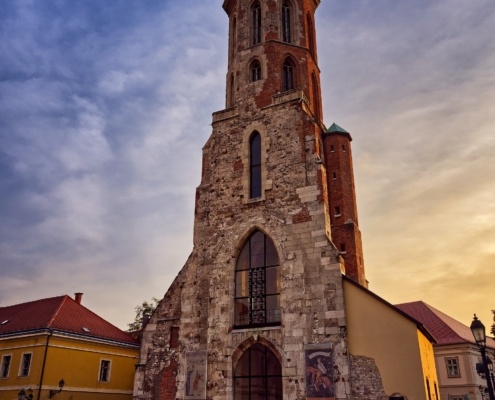
  • Maria Magdalena Tower: Explore the Bell Tower, a survivor of numerous sieges, and enjoy the stunning panoramic view of Budapest. If you feel fit enough, there are about 170 steps to climb. The 24 tower bells ring every hour and are truly melodious. The bronze replica of the 1,000-year-old Hungarian coronation mantle on the church grounds is very interesting in the courtyard of the church.

Blossoming cherry trees in the Buda Castle Area with people walking around in face masks - Guide to Budapest

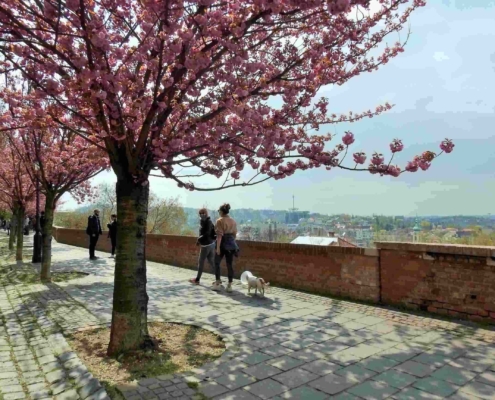
  • Castle Hill Promenade (Tóth Árpád Sétány): This picturesque passage adorned with cherry blossoms in spring offers a perfect selfie spot. Among the sights is the Centenary of the unification of the Pest and Buda side of the river Danube, well created by the famous Zsolnay ceramic factory. You can also find stairs and an elevator leading you to the Hospital in the Rock and Nuclear Bunker Museum. The spectacular view of Buda Hills will definitely make you stop for a moment to take a few selfies.

Guide to Budapest

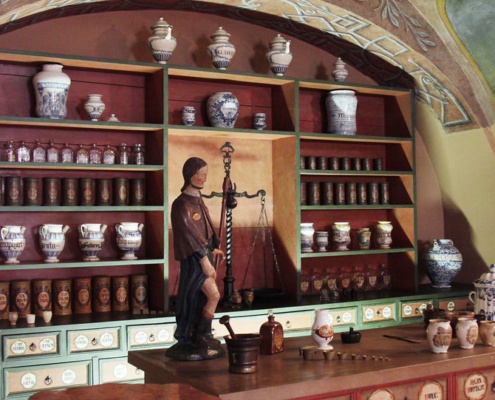
  • Golden Eagle Pharmacy: Step into Budapest’s first pharmacy, now a quirky museum. It’s a small, two-room museum that contains a mock-up of an alchemist’s laboratory, with dried bats and stuffed crocodiles suspended from the ceiling, a small ‘spice rack’ used by 17th-century travelers for their daily fixes of curative herbs, curiously shaped glassware, and a blackened mummy head.

Guide to Budapest

  • Medieval Jewish House of Prayer: The museum includes a small section of ancient gravestones at the entrance. You then walk past a courtyard and visit a small museum room. It was excavated in the mid-1960s, which was followed by renovation works. There are medieval frescoes inside the synagogue with a Star of David that is accompanied by Aaron’s blessings. You can also find Jewish tombstones inside the building, a place of significance. There is another Askenaz shul with unexcavated remains of the 16th century buried beneath private property.

Guide to Budapest

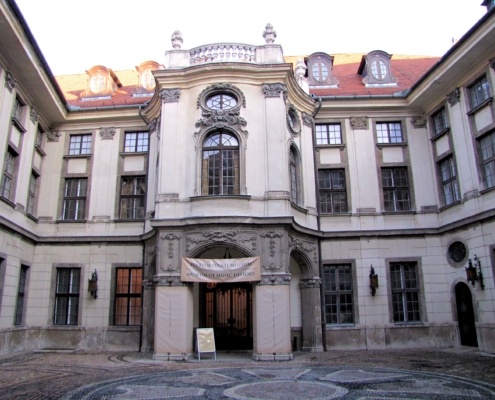
  • Museum of Music History: Discover the rich musical heritage of Hungary and Europe. The Museum of Music History is a museum in Budapest that collects and displays objects related to Hungarian and European music history, including manuscripts, letters, photographs, musical instruments, and legacies of famous composers and musicians. A highlight of this museum is the recording gramophone used by Hungarian composers Bela Bartok and Zoltan Kodaly to capture the authentic folk music of many nations living together in the Carpathian Basin. It is open from Tuesday to Sunday from 10 am to 4 pm, with an entrance fee of 2,000 HUF.


Where to Eat and Find Toilets

  • PRIMA: Grab a snack or traditional Hungarian pastries just opposite Matthias Church in Tarnok utca. Bakery products, sandwiches, soft drinks, and dairy products are all available, with a rich variety of local and imported products and a good wine choice.
  • There are four public toilets available near Fisherman’s Bastion, Maria Magdalena Tower, Rock Hospital and the National Gallery.


Exploring the District

Besides historical sites, Castle Hill boasts cobblestone streets, charming cafés, and unique shops. Take a leisurely stroll along Tárnok Street, appreciate the historical architecture, and savor Hungarian pastries or you can check out the oldest confectionery in the town.


Getting There

Access Castle Hill via the funicular, a scenic walk across the Chain Bridge from Pest, or public transportation. Alternatively, meet us at Batthanyi ter metro exit’s meeting point at 2:30 pm daily for our Free Buda Castle Hill Tours.


In Conclusion

Budapest’s Castle Hill, District 1, is a neighborhood where the past seamlessly blends with the present. It’s a must-visit for history enthusiasts and anyone seeking to immerse themselves in the rich culture and stunning architecture of this remarkable city. Stay tuned for more neighborhood guides as we continue to explore Budapest’s diverse and vibrant districts, and don’t forget to join our daily Free Buda Castle Hill Tours. 

The Ultimate Neighborhood Guide to Budapest: The District XI.

The Buda side is generally known to be the more local side of the Danube. It’s less preferred by visitors, but exactly that is why the sights and hidden gems can be very pleasant surprises. If you want to hang out with some local students, artists, and intellectuals or you enjoy artist coffeehouses and nature Újbuda might be the perfect place for you to discover. In our neighborhood guide to Budapest, we discover the XI. district or so-called Újbuda. It is one of the 23 districts of Budapest, Hungary, and Kelenföld is a neighborhood located within this district. Újbuda, which translates to “New Buda” in English, is situated on the Buda side of the city. 


Why is worth visiting Újbuda?


Transportation Hub

 Újbuda, particularly the Kelenföld area, serves as a transportation hub in Budapest. Trams (47, 49, 18, 19, 41), buses (7), and the metro (M4)  pass through this neighborhood, making it easily accessible from various parts of the city.

Local Life

Walking along Bartók Béla út offers a glimpse into the everyday life of Budapest. You can observe people going about their daily routines, providing an authentic experience of the city’s atmosphere. It is a pretty nice neighborhood to live or stay. It was just selected in the top 5 districts to live in Europe by TimeOut Magazine.

Gellért Hill

 A popular destination for hikers and picnickers, Gellért Hill is just a 15-minute uphill walk from the Liberty Bridge area. It offers panoramic views of Budapest and features attractions like the Cave Church (Sziklakápolna), a unique church built into the natural caves of the hill.

Bartók Béla Street

 Bartók Béla út has a lively and eclectic vibe with a mix of modernity and history. Along the street, you’ll discover numerous art galleries, adding to its artistic charm.

Feneketlen Tó

 The “Feneketlen” lake, despite its name, is not bottomless. While swimming is not allowed, you can enjoy picnicking, leisurely strolls around the lake, or simply relax on benches while taking in the scenic surroundings. It’s a popular spot for families and couples.

Allee Shopping Mall

Opened in 2009, Allee Shopping Mall boasts 150 outlets, 19 restaurants, and a 13-screen multiplex cinema. It’s a great place for shopping, dining, and entertainment.

Fehérvári úti Piac – Local Food Market

 This market features a variety of food vendors offering fresh produce, baked goods, meats, cheeses, and other culinary delights. It’s an ideal place to find high-quality ingredients and grab a quick meal.

Saturday Organic Market

 Located next to Bikas Park Metro stop, this market showcases delicious meats, cheeses, fruits, vegetables, and other organic products. It’s a must-visit for those interested in fresh, local goods.

Local Eateries

 Among the panel high-rises in the area, you’ll find local delicatessens and eateries. “4 Muskétás” is a favorite operating since 1994, known for its meat-heavy menu and the Musketeer Menu and Muskeeter Platter options.


Enjoy your exploration of this vibrant neighborhood in Budapest! 

Remember,  visiting the outer neighborhoods of Budapest, rather than just staying in the city center, can provide a more well-rounded and authentic experience of the city. 

Ask your Free Budapest Tour guides for further activities. 

Sights worth visiting in Old Buda – Óbuda

Sights of Óbuda – recommended by the Free Budapest Walking Tours Team

Besides taking some of our free tours in Budapest, it is also worth to wander around some areas where walking tours do not go very often. Let’s see the sights of Old Buda (Óbuda in Hungarian which is also known as the 3rd district of the Hungarian capital).

  • Roman amphitheater and Aquincum Museum: before the Hungarians settled down in this area, there used to be a Roman settlement here called Aquincum. The Aquincum Museum, which has huge a collection (objects and finds), presents the heritage of ancient Rome to those interested in a unique way. Next to the museum is the Romkert, one of the largest Roman archaeological parks in Hungary. During the tour of the area, visitors can get to know a part of the civic city of Aquincum, as well as the most typical public buildings and private houses of the city center, which were built in the 2nd-3rd centuries AD.


  • Kiscelli Museum: the building was originally built as a monastery, and was later bought by the furniture manufacturer Miksa Schmidt, who gave the building and its park to the capital. Today’s museum presents the history of Budapest and also has a significant fine art collection. The courtyard of the building complex, reminiscent of the Romantic era, is also a kind of exhibition space where you can see sculptures and works of art. The museum is surrounded by the Kiscelli park forest, recently renovated and expanded with a modern forest playground, where from spring to autumn we can take really pleasant walks and even have a picnic.


  • Roman beach (Római part in Hungarian): After Óbudai Island to the north, Római-part is a popular spot for those who want to relax after the hustle and bustle of the city. This stretch of the Danube coast is busy with visitors all year round, whose souls and bellies are taken care of by the cozy restaurants, stalls, and open air places that offer excellent gastronomic experiences. If you can, spend as much time as possible on the Római coast walking, running, cycling, or enjoying the waters of the Danube, you certainly won’t regret it.