Happy Holidays!

In this post we would like to wish all of you all over the world HAPPY HOLIDAYS AND A PEACEFUL NEW YEAR! May 2021 be calmer and more organized than 2020 for all of us…

Latest Hungarian Covid-19 related news

Since our last blog post, not much has changed, please read about the latest Covid-19 related restrictions in Hungary in our previous blog article:

Traditional Hungarian Christmas and New Year’s dishes

Let us share a few sentences and pictures of what we eat around Christmas and New Year’s Eve 🙂

  • Halászlé: Fisherman’s soup – it is a hot, spicy paprika spice based fish soup. It is a folk item of Hungarian cuisine, a bright-red hot dish prepared with generous amounts of hot paprika and carp or mixed river fish. It is native to the Pannonian Plain, particularly the river Danube and river Tisza regions. It is also a popular dish among ethnic German “Donauschwaben” and their descendants, for them it is known as “Karpfensuppe”.
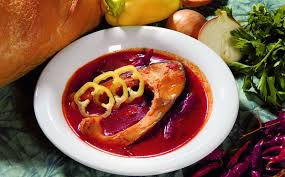
A bowl of Halászlé or Fisherman's soup which is a hot, spicy paprika spice based fish soup eaten traditionally at Christmas in Hungary

  • Töltött káposzta: Stuffed cabbage – big cabbage leaves filled with a meatball made of minced meat, rice and spices; cooked with a lot more cabbage (sauerkraut) and of course the Hungarian paprika spice. Add some sour cream to make it even more delicious and even more Hungarian! 🙂
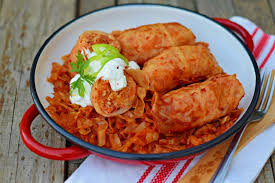
Rolls of Töltött káposzta or Stuffed cabbage in English, which is a cabbage roll filled with a mixture of minced meat, rice and spices

  • Bejgli: Poppy seed/Walnut roll – it is a pastry consisting of a roll of sweet yeast bread with a dense, rich filling of poppy seed, minced walnuts or minced chestnuts. It is popular in Central Europe and parts of Eastern Europe, where it is commonly eaten at Christmas and Easter time.
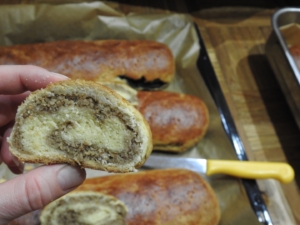
A picture of our home made bejgli - a Hungarian Christmas delicacy filled with poppy seed or  minced walnuts

Our home made bejgli based on a recipe by one of our grandma’s 🙂

  • At New Year’s Eve traditionally we do not eat poultry because they say good luck flies away with them…
  • But we do eat for example: Lencsefőzelék: Lentil stew or pottage – this is a type of thick Hungarian vegetable stew or soup, similar to pottage. Főzelék is a special category in Hungarian cuisine, not quite like a soup, and thinner than a stew. We eat lentils, because according to Hungarian superstitions it makes you rich in the upcoming year.
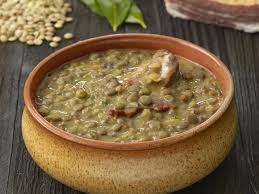
Lentil stew or pottage - this is a type of thick Hungarian vegetable stew or soup, similar to pottage


Once we are back on track in 2021, you can learn even more about Hungarian cuisine and culture on our free tours! Cannot wait! 🙂

News & The joint story of the Hungarian paprika spice and a chemical engineer

Read the latest Covid-19 related news and a new story in our series about famous Hungarian people and things 🙂

Covid-19 situation in Hungary

We are still in the rising period of the 2nd wave of the pandemic. Since our last post, thins hasn’t changed much, let us summarize shortly what are the latest valid restrictions:

  • The borders of Hungary are closed at least until the 1st of February (there are only a few exceptions)
  • There is a curfew between 8pm and 5 am at least until the 11th of January
  • Restaurants can only serve take-away and home delivery orders
  • Hotels cannot accommodate guests except for business travelers or guests that are here for the purpose of economy or education
  • Gyms, pools, museums, public libraries, cinemas, zoos, ice skating rinks are closed
  • Everyone must keep wearing masks on public transportations, indoors, and outdoors on public areas, too (in cities that have more than 10.000 inhabitants) – in parks, nature and while doing sports masks do not have to be worn
  • We are still not running our daily FREE WALKING TOURS in Budapest until further notice, all gatherings are prohibited

The joint story of chemical engineer Ernő Obermayer and the world-famous Hungarian Paprika spice

Ernő Obermayer (1888-1969) was born in Somlószőlős, Hungary, and graduated in Budapest with a degree in chemical engineering. In the two centers of domestic paprika production, Kalocsa and then in Szeged,  he achieved excellent results in the breeding and development of the world-famous paprika. He managed to introduce several spicy and non-spicy or sweet varieties, 80% of the domestic spicy varieties are the result of his experiments.

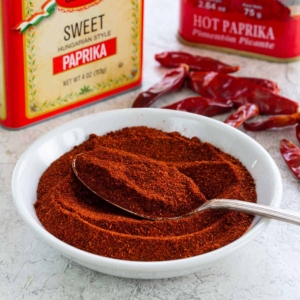
The Hungarian paprika powder is well known all over the world and it is available in hot and sweet versions as well

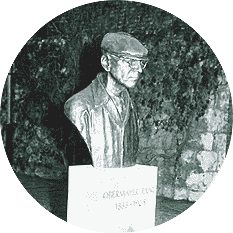
Bust of Ernő Obermayer, a chemical-engineer that experimented with Hungarian paprika


Ernő Obermayer


It is interesting to mention that Albert Szent-Györgyi, the scientist who discovered Vitamin C and whose work was recognized with the Nobel Prize in Medicine and Physiology in 1937, told in an interview what role his wife, chance and the paprika from Szeged played in his world-famous Hungarian success: “An evening my wife gave me peppers for dinner, which I didn’t feel like eating, but I didn’t have the courage to say that. Looking at the peppers it came to mind, thath I had never tried this plant for research and told my wife that I would take this to the lab the next day rather than eat it. I already knew that night that this vegetable was a treasure trove of vitamin C.”
In his laboratory at the University of Szeged, he successfully produced large amounts of vitamin C from freshly picked sweet peppers, and it turned out that peppers are the richest source of vitamins among all vegetables, it has four to five times as much Vitamin C as lemon for example.

Ernő Obermayer, our world-renowned chemical engineer and farmer, achieved internationally recognized results in the breeding of Hungarian sweet peppers, but in addition to paprika, he was also involved in the cultivation of rice, grain, soybeans, cumin, castor and cotton.

Both the Kalocsa and Szeged Spicy Pepper grists have been included in the Collection of Hungarikums. (FYI: Hungarikum is a collective term indicating a value that is worthy of distinction and highlighting within a unified system of qualification and registry. It also represents the high performance of Hungarian people thanks to its typically Hungarian attribute, uniqueness, specialty and quality 🙂 )

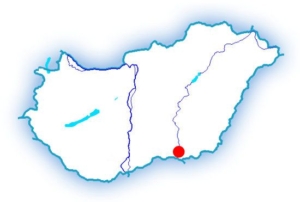
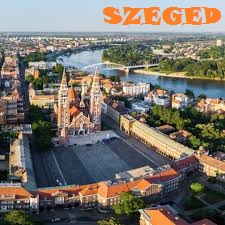
To commemorate him and his work, a bust of Ernő Obermayer was unveiled in Szeged (a nice and cozy city on the south of Hungary, next to our 2nd biggest river, the Tisza) and a memorial plaque was unveiled in his hometown, Somlószőlős.

Szeged is one of the biggest and coziest cities on the south of Hungary next to our second biggest river, the Tisza       Photo of the Cathedral of Szeged and inner city lying next to the second biggest river of Hungary, the Tisza


Once you can traveler again to Hungary, you can learn more about Hungarian inventions and discoveries on our General free tour of Budapest 🙂

(This story was based on a post of HUstory’s Facebook page)


Latest news + A new series of stories on our blog

In this post we would like to share the latest Covid-19 related news of Hungary and we are also starting to make a series of posts in which we always introduce you a Hungarian person/thing that is known all over the world or at least known widely in the world 🙂

Latest Covid-19 related news of Hungary

Since our last post on the 1st of December, there haven’t been many new restrictions, but what we shared in the previous post, too. The borders of Hungary remain closed until the 1st of February 2021 (there are a few exceptions only) and there is a curfew from 8pm till 5am. We are still not running our daily English and Spanish free tours in Budapest. You can read more details about restrictions in Hungary in our previous blog article.

New series of stories about famous Hungarian people and/or things

From now on, we are going to share a few stories that we hope you find interesting.

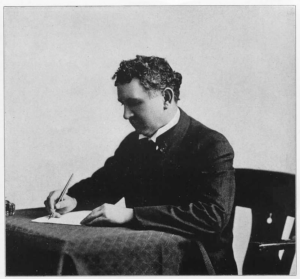
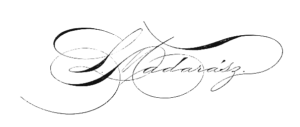
Our first story is about Louis Madarasz (1859-1910), American calligrapher of Hungarian origin, artist of calligraphy. Also, the secrets of the Coca-Cola logo … 🙂
His grandfather, László Kisfaludi Madarász, was the police minister of Lajos Kossuth, important politican in Hungarian history, in the War of Independence in 1848-49, which was fought by Hungary against the Austrian, Habsburg Empire. We were part of it since the 1680’s when Austria led a Christian army to liberate us from the Ottoman Empire. His grandfather, László Kisfaludi Madarász, initiated the dethronement of the Habsburg house. In 1850, the grandfather fled with his family to America, where he worked as a farmer until his death, living in retreat like as a hermit. He had enormous respect among the American Hungarians living in exile.
Louis Madarasz, the protagonist of our story was already born in Texas in 1859, but he always considered his Hungarian origins important, and towards the end of his life he also visited the land of his ancestors. He was captivated by calligraphy as a teenager and then his whole life was defined by the magical world of it. In the late 1870s, he enrolled at the New York University of Business, where he gained a reputation for selling artistically crafted, handwritten invitation cards and greeting cards.

A picture of Louis Madarasz, famous calligrapher who might have been the one who created the Coca Cola signiture

He is considered one of the most talented and skilled penman of all times. He ran a successful business, made cards, captions and entire albums written with his special letters. He specialized in writing on black paper with white ink. He worked faster and more accurately than anyone else, his style was unique. He taught his art, writing in “Madarász Style”, in many schools.
He was a versatile talent, he excelled in chess, and as an actor he performed in Shakespeare plays. On December 23 1910, after he had been ill for a long time, Louis Madarasz wrote his last beautiful Christmas card to his friends and clients and then rested in peace forever…
Here comes the suspected story of the Coca-Cola logo: the company’s then-accountant, Frank M. Robinson, was officially credited with “drawing” the original version, but some speculated Louis Madarasz dreamed it and put it down on paper first … if so, he took the secret with him to the grave. The following images include Luis Madarasz’s signature and the Coca-Cola logo, everyone can decide for themselves… 🙂

Picture of the signiture of Louis Madarasz, famous calligrapher, who wa probably the one who created the Coca Cola style signiture

Picture of the world famous Coca Cola signiture probably created by a Hungarian calligrapher

Latest news – December 1st 2020

Let us share the latest news with You in this blog post.

Border closure extended

Officially the latest border closure of Hungary was valid until the 30th of November, but the government decided to extend it with a couple of months, until the 1st of February. No foreign citizens can enter the country, there a few exceptions. They are going to see this week and next week if the Covid-19 related restrictions need to be tightened by Christmas. You can read the latest restrictions in our previous blog article:

Vörösmarty square Christmas market moves to the internet

The biggest annual Christmas market of Budapest, which has been chosen to be one of the best Christmas markets of Europe several times, was cancelled a couple of weeks ago due to the still rising number of Covid-19 cases in Hungary. The market has been organized for more than 20 years and annually about 800.000 people visit it. This year, they decided to make a website for craftsman and artisans that usually sell their products on the Vörösmarty square in Novembers and Decembers. This website is a page that collects the circa 50 craftsmen that participate in the program and introduce them and their products with pictures and links, so it is not exactly a web shop where you can buy their products, too. Here is the website, if you would like to have a look: https://budapestikaracsony.hu/

‘Karácsony’ is Christmas in Hungarian 🙂

Hope that You are doing well and safe! We cannot wait to guide you around our beautiful city again!

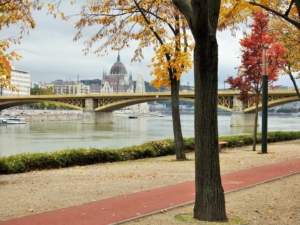
Here is how nice our Parliament building looks like in autumn from the Margaret island:

This is how beautiful the Hungarian Parliament building looks like in autumn from the nearby Margaret Island